There are nights when my head hits the pillow and I realize there’s just too much in my head to be able to fall asleep. My cure? A bath and a book. So I grabbed Ransom Rigg’s Tales of the Peculiar with it’s beautifully lush green cover gilded with gold vine. There’s just something about it. Then there’s the amiable “historian” of the peculiars, Millard Nullings, Esq., EdD, MBCh. who is compiles the tales of the peculiars. I can only hope this is the first installment.
Memorable character: Each short story brings its own set of unique characters but the tale of “The First Ymbryne” is an absolute favorite that opens with “The first ymbryne wasn’t a woman who could turn herself into a bird, but a bird who could turn herself in a woman”. It brought me back to all that I loved about Rigg’s first installment of his series and meeting Miss Peregrine herself. And meeting Ymeene is no different. Strong and fearless.
Memorable scene: In “The Woman Who Befriended Ghosts” the reunion of Hildy’s dead family with her living family is the penultimate beauty of both the creepiness of the story of a girl who could see ghosts and the themes of family (through blood or loyalty) throughout his series and this book of tales.
Memorable quote: The humor of each tale lies in the narrators nonchalance. Take for example the case of the cannibals descending upon villagers. “He went on to reassure the shocked villagers that they were civilized cannibals and never killed innocent people. They, and others like them, had worked out an arrangement with the king by which they agreed never to kidnap and eat people against their will, and in turn they were allowed to purchase, at terrific expense, the severed limbs of accident victims and the bodies of hanged criminals. This comprised the entirety of their diet.”
I advise that anyone who became obsessed with Rigg’s genius in his Peculiar series pick up this book immediately and face it OUT to admire the cover, but even those that haven’t been entangled in the world of peculiars can still appreciate the creativity in this handsome collection. More, we want more!


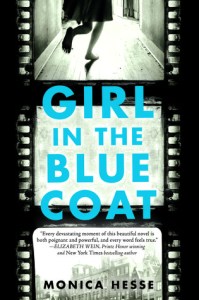 I usually have to distance myself by a day or two after finishing an amazing book and truly being able to write about it. Haven’t we all been there where we close a book and stare at the cover thinking about all the ways we were moved by it and how it will affect our world view? Monica Hesse’s Girl in the Blue Coat is one of those books. You can



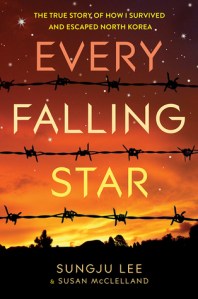 This needs to be a purchase for every library from middle school through high school and that every adult should read as well when it comes out in September. A narrative of how a boy survived and escape North Korea. Written by Sungju Lee and Susan McClelland, Every Falling Star: The True Story of How I Survived and Escaped North Korea is a harrowing account of Sungju’s time in North Korea and the journey to South Korea as a defector. In line with any child soldier narrative from African countries especially Ishmael Beah’s A Long Way Gone, accounts of growing up during the Cultural Revolution in China, Patricia McCormick’s Never Fall Down about Cambodia’s Khmer Rouge, or in recent fictional reads like The Bitter Side of Sweet by Tara Sullivan that describe child exploitation, Lee expresses himself in a genuine and heartfelt manner so that anyone can understand the pain and suffering that exists at the hands of the North Korean government. It’s the ease of his writing that make this a book for any age and no age. The need for these narratives is overwhelming.
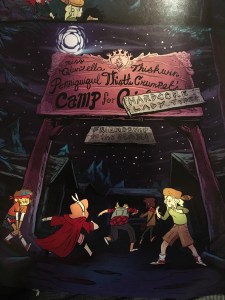 where the girls fight mythical beings and dinosaurs while earning their badges and being their awesome selves where “friendship to the max” is celebrated. And because the illustrations and coloring is equally as formidable as the writing and character development, it has lasting power. The design of the issue is static with an introduction of the badge the girls will be earning overlaid with scrapbook-style pictures of the girls’ adventures before the action begins. This repetition is comfortable before you buckle up for the ride.