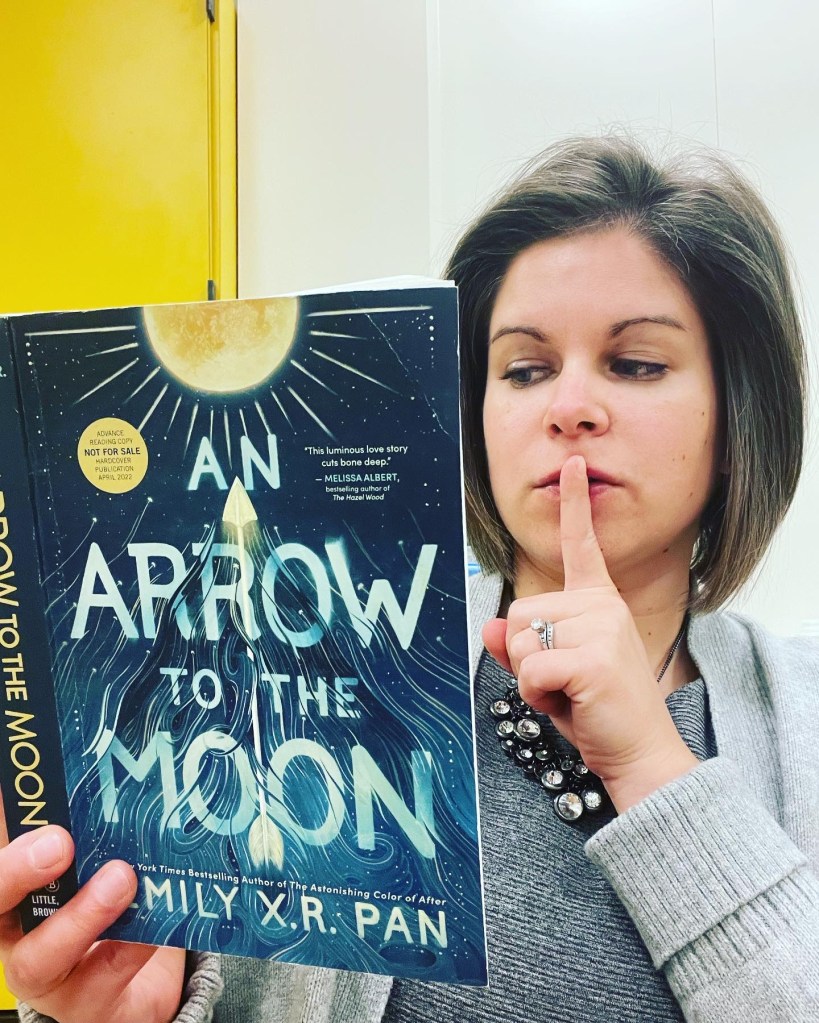
We’ve all heard of wingmen and wingwomen, but really let’s talk about wingbooks.
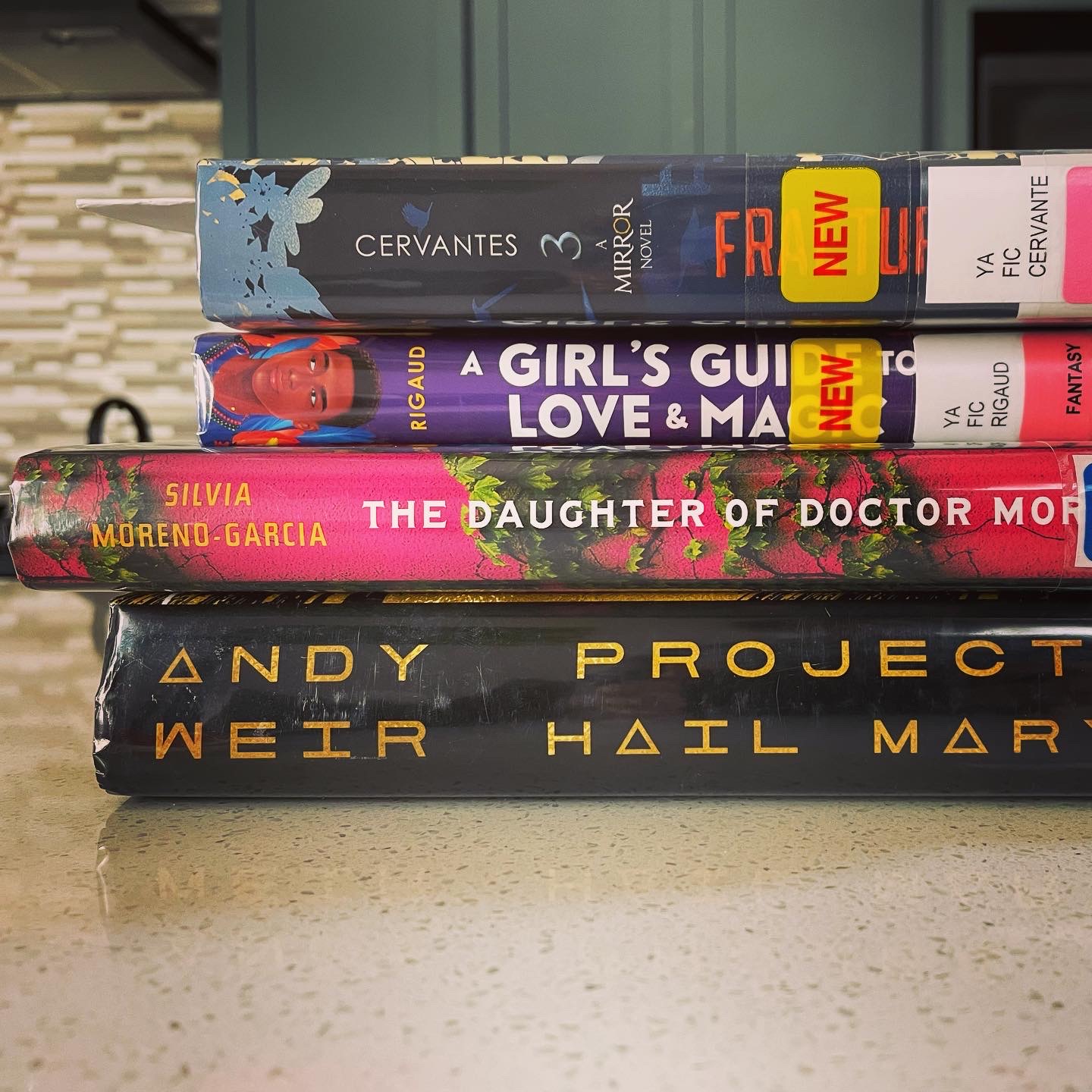
Last night I accompanied my kids to an event that I thought I’d have time to sit and read at, so I packed three, sorry that’s a lie, four books in a bag along with my water and tea. Ultimately, I read one page and that was upon arrival to the location.
But, I knew they were there if and when I needed them. That’s the value of wingbooks.
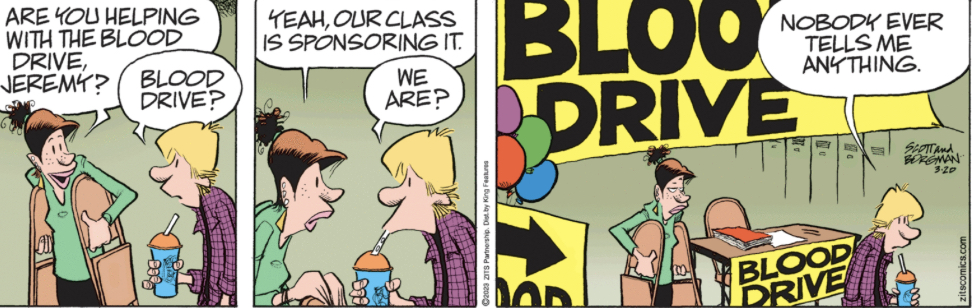
Last week I posted about Of sleepless nights and grey hairs about our upcoming author visit. That even though we’ve been doing them for a decade, it’s still stressful each time. However, like childbirth, you forget the pain and realize that you’d be willing to do it all again. I was certainly frustrated in the days beforehand because our school is currently experiencing a spate of pulled fire alarms, the business office surprised me with additional paperwork that put the visit in jeopardy, and while advertisements were everywhere, students were still surprised when I talked to them about the visit. The Zits comic from about a week prior sums it up:
While some are expected, like the fact that most people wait until the last minute to do anything, so signs ups were fast and furious up until literally minutes before the events started, others were unpredictable. I had prepped Candace Fleming ahead of time of the possibility of a fire alarm and announced the protocols for students during the visit that when it did not actually happen, she was a little disappointed. But I’d rather lower my expectations and be pleasantly surprised than caught off guard.
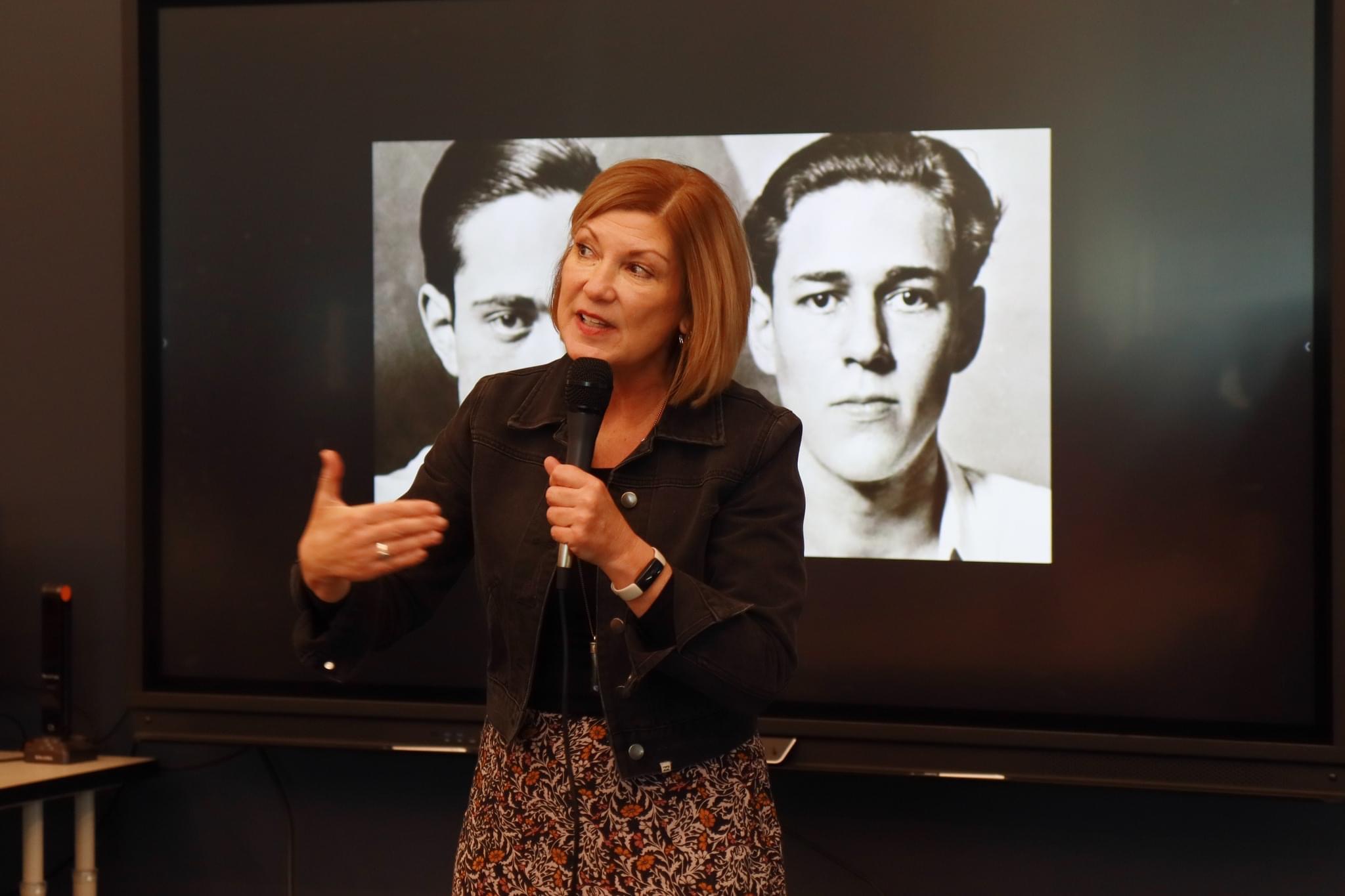
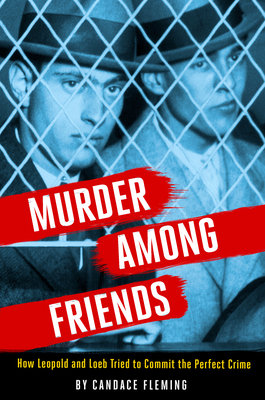
Ultimately the three presentations went swimmingly. Not only were students fascinated by her topics and pictures and stories, they spent time afterward hanging around her to get their books signed, chat, and take selfies. With a small break after the first presentation, I organized a small lunch with a few female students under the umbrella of finishing Women’s History Month with our female author with female power players in our school (one from our literary magazine, one the editor-in-chief of the school newspaper, and one that belonged to the Women’s Empowerment club). It came together with donations from community organizations and a little money from the school and prep work with teachers to engage the students in their classes, particularly from our science department and of course, true crime fans since Candace Fleming’s newest book is the YA Murder Among Friends about the infamous murder of a fourteen year old boy by two eighteen year olds, Leopold and Loeb.
But in the end, the impact of the visits for how few or how many students come is often unseen. I’ll use this example, serendipitously about a month ago, I received an email from a student who graduated ten years ago. He was writing to seek out the librarian to tell her about the impact an author visit at the school had on him because of the turmoil in his life that he was able to meet this author, was gifted a book to have signed by the author, and to share that the library in general was a safe place for him. He wanted to thank that librarian. To borrow a Taylor Swift line, “Hi, it’s me.” This email came a decade later.
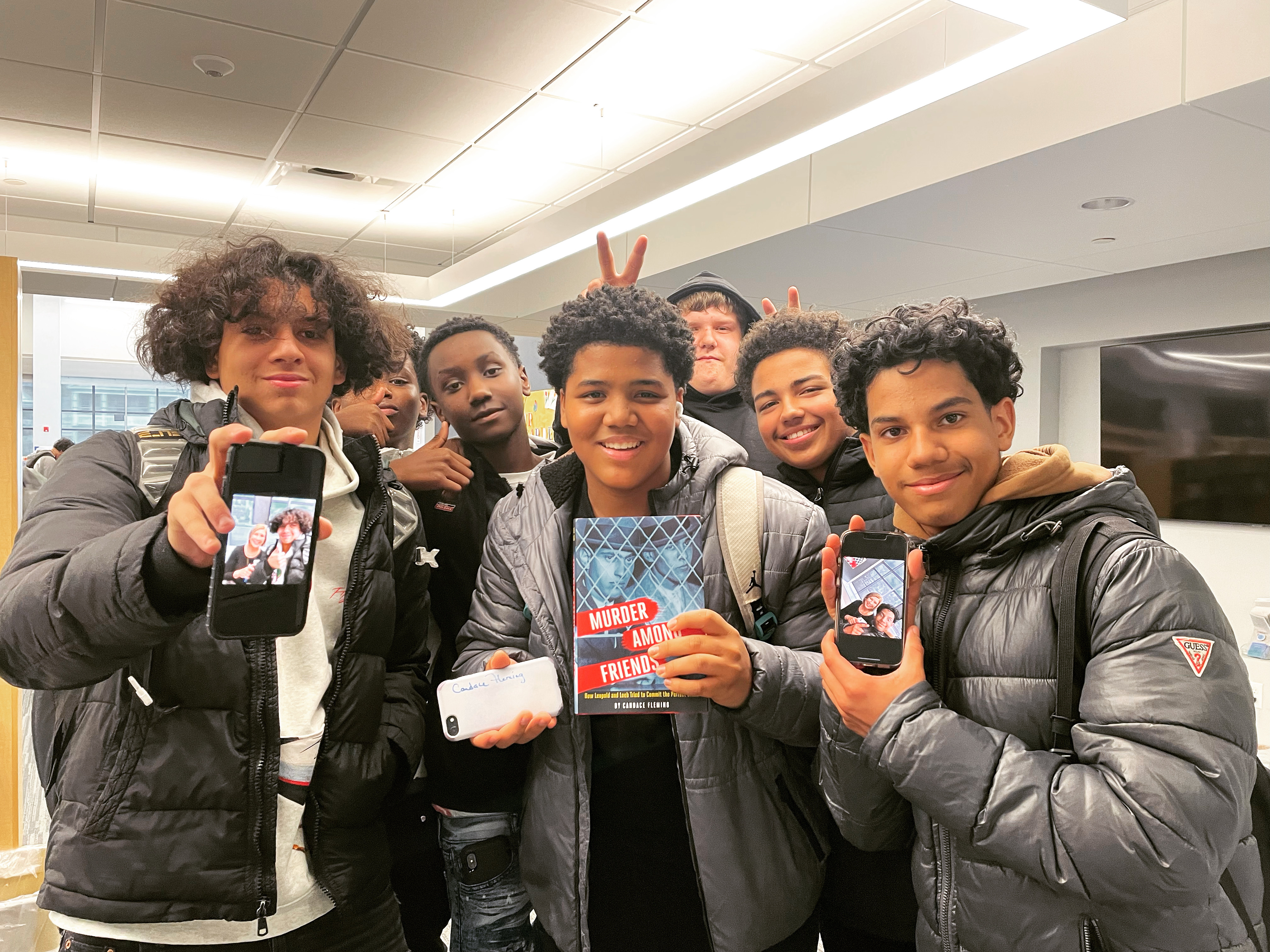
Then, there might be the immediate results of the impact. My favorite image is one we shared on our social media after her last session wrapped up. These boys stayed after to have her sign their phone cases and take pictures and were beaming about the connection. It was unexpected. Yet, a joyous reminder that books and human connections are what we all need.
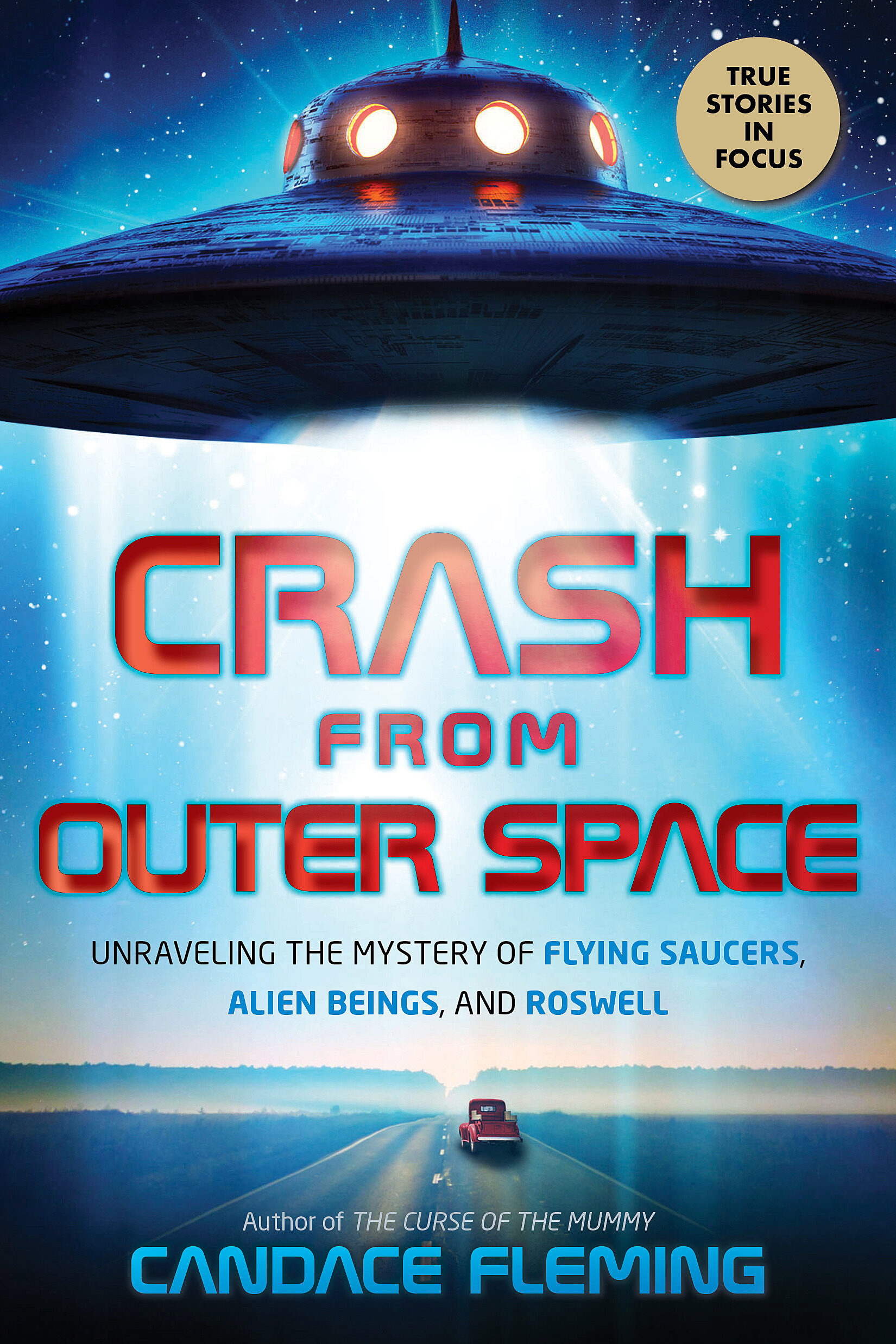
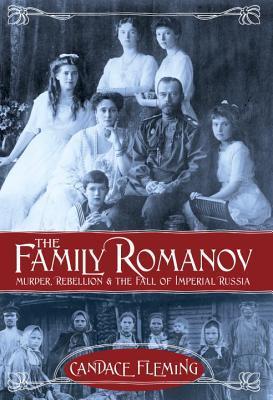
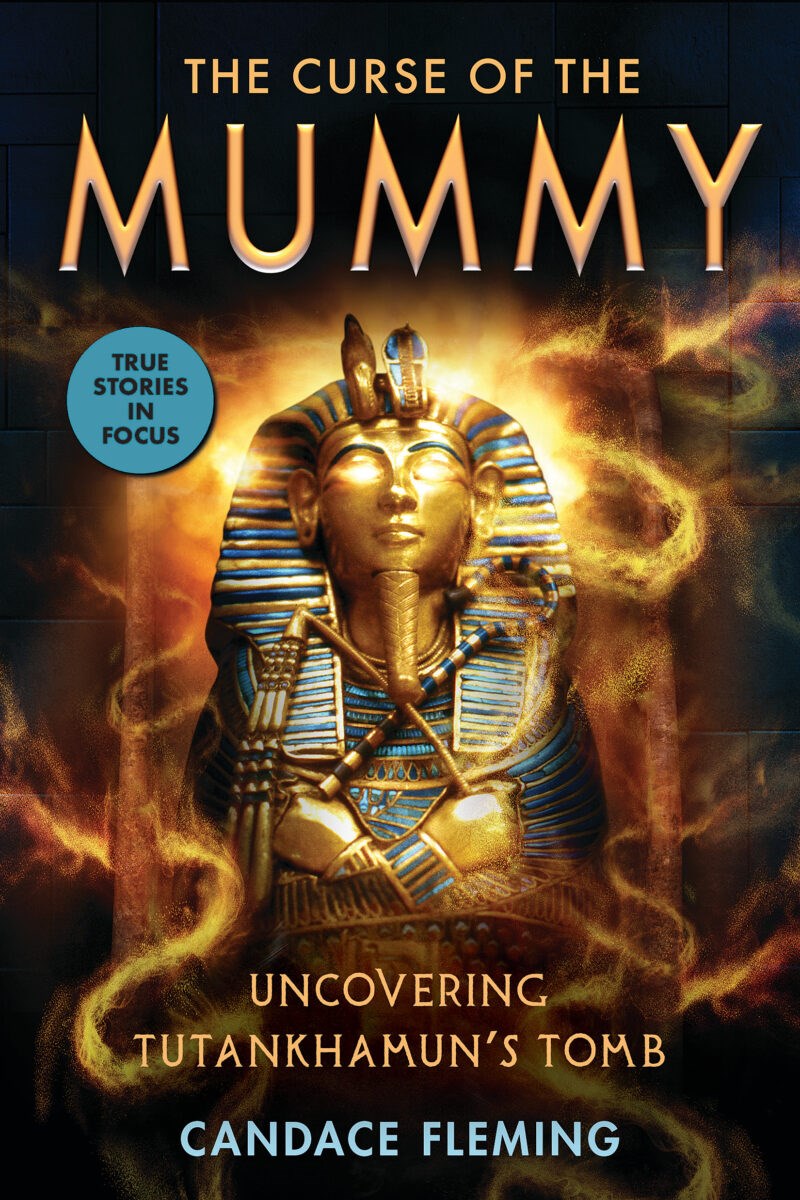
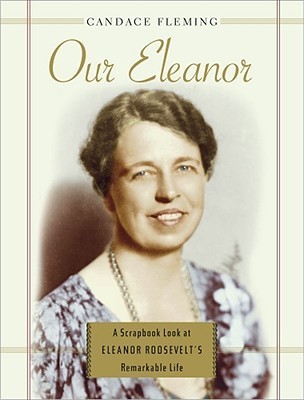
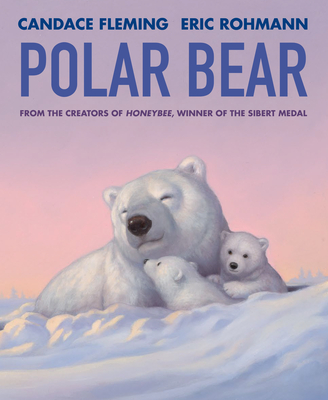
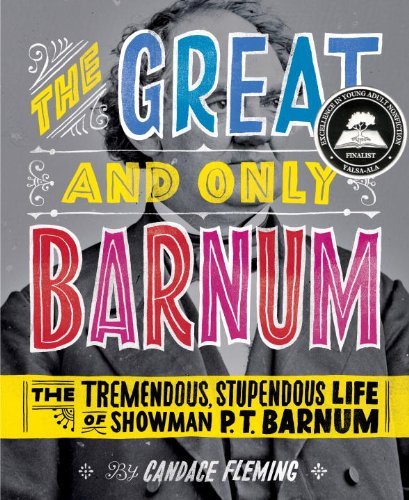
I’ll add, if you’re looking for a visit worth your while, consider Candace Fleming. Her range of picture books through YA meant that when I booked her, several other local librarians jumped on board. In three days, she went to one elementary school, one middle school, and our high school. And the majority of her work is nonfiction, which is what resonated with our students. As she said, she doesn’t have a person light a cigarette in her book, unless she knew it to be true in her research. As an obsessive reader of nonfiction, I love her attention to detail and the stories she chooses to share. She’s also a fabulous human being. We need more Candace Flemings in front of our kids sharing about curiosity and facts. She nor I will likely ever know, but I do hope one or two teens were impacted by her visit and the things she shared.
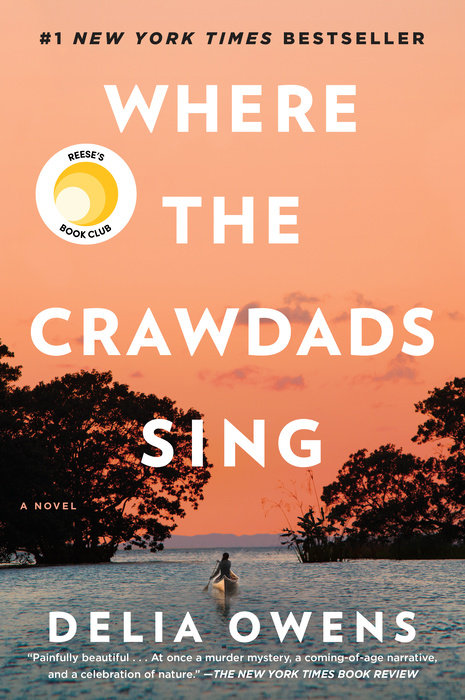
Cue Semisonic’s “Closing Time” and that’s how I’m feeling about reading Delia Owen’s Where the Crawdads Sing.
Yes I know that the movie was just released in 2022 and no, I haven’t watched it. I know that whenever a movie comes out there’s a resurgence in reading the book if it hadn’t been read before (or lovers of the book re-reading it) but still, the height of obsession with the book is well past since it was published in 2018 which seems like yesterday and a lifetime ago all at once. Yet the most wonderful thing about books is there really isn’t ever an expiration date and it can be read and reread at any time. It was a few days ago that finally after seeing it pop up again somewhere in my internet travels that I decided it was time.
I listened to the audiobook which annoyingly had a cover update from the movie (I hate that) but beside a captivating narrator, I found that for as popular with book clubs and reading circles, pop culture lists and Goodreads Choice Awards, I didn’t know anything about the book. It was what I hold dear about reading the book for the first time in 2023 because other than it’s general popularity, I didn’t know a single tidbit of what awaited me which is why my respect for the book deepened. I got to read the book as myself, not as anyone else or through anyone else. My own experiences interpreted what Kya was experiencing. My own experiences sensed the marsh. My own experiences greeted the characters.
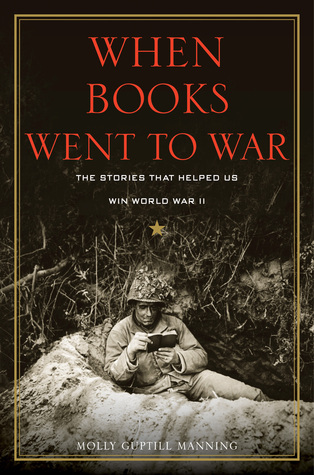
For readers who have moved on, having a conversation about the book has well-passed since vivid thoughts about the book fade over time as new books crowd out the memory of the older books. But I wanted to celebrate here that a book is evergreen. It never goes out of style whether it’s 10 days old or 10 years old. As I wrote this sentence, I remembered Chicken Every Sunday by Rosemary Taylor, a book published in 1943 that was often read by soldiers during World War II. It was mentioned in the book When Books Went to War by Molly Guptill Manning. I promptly went to my indie bookseller who found a 1943 copy of Chicken Every Sunday that I bought, took home, read cover to cover with a cup of tea and my blanket, and sat in the experiences of from a half-century ago, but felt like it was yesterday.
I needed one more TOP list of 2022, so I decided to look back at my posts from this year and highlight my five favorites.
Obituaries: I’m still reading the obituaries every day. I’m still always looking out for an old cemetery to wander around. And I love discovering articles like this one about etching recipes on gravestones (and the woman who went on a quest to make the recipes and revisit the graves).
Fifteen Years: I waxed poetic about my fifteens years in school librarianship.
She’s A Ten, But…: I took the meme and made it my own. Anyone else pack a pile of books to bring to a place that you wholeheartedly know you won’t be able to read ANYTHING but yet, you still need to be prepared?
Down the Rabbit Hole: When one book leads to another or a learning opportunity or a documentary to learn more. I did this with Chernobyl but I’ve also done it with fungi, medicine, and more.
Saga‘s Lesson: Patience: My ode to the best comic series because as much as I want Staples and Vaughan to hurry the heck up, I also never want the series to end.
… for a colibrarian who works like jelly to peanut butter
… for our library teaching assistant to adds flair from the best signage and organization to her endless energy to keep us running
… for events like our first-ever Open Mic Night last Thursday as a collaboration with a social studies teacher and musician to create a cafe environment where our students could showcase their talents in singing, spoken word, and poetry and our first of two Falcon Library After Dark nighttime fun on a Friday night
… for books to get lost in, go on adventures with, and learn from
… for Sora, Hoopla, Libby, Adobe Digital Editions, and Netgalley Shelf to access books and audiobooks digitally on the go
…. for our brand new library with it’s space, big windows, study rooms, and seating options
… for the opportunity to present to other librarians and teachers about reading and books
… for meetups with former students who have long-since graduated
… for blankets, tea, and slippers to make reading comfortable
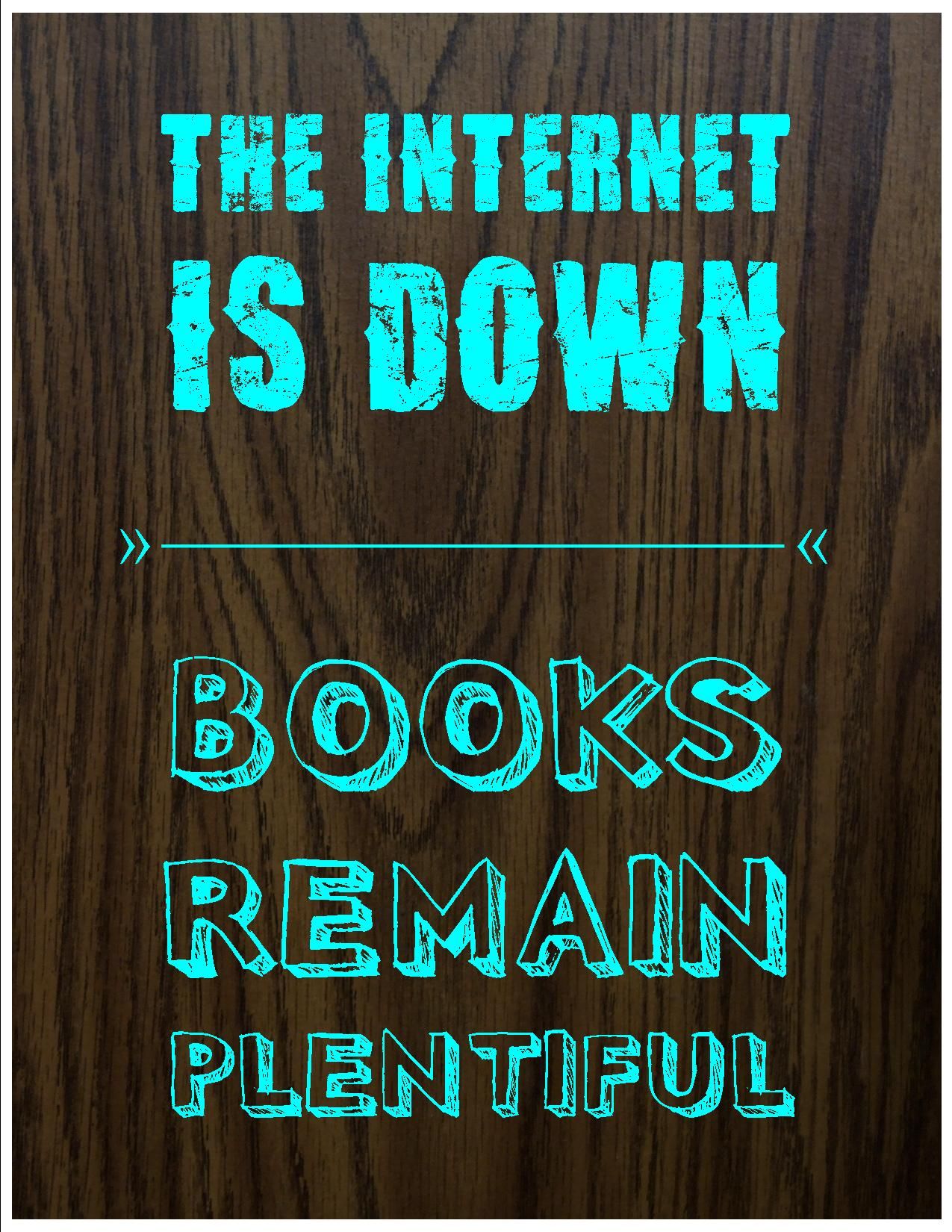
Over the weekend, our large school district experienced a “cyber event” which prompted them to kill the internet for at least three days. Most of us didn’t know until we arrived Monday morning that everything would have to be done without any kind of technology. So after momentary panic, plan B was put in place including the image I’ve been waiting to share on our library’s social media for a while now:
In addition, running an after school club, especially one like my Japanese Culture Club that usually runs about 40 students each week, would look a little different too. But I had fun playing (and losing) a chess match with a newer club member, coloring a page out of a Japanese-inspired coloring book that I keep for club, and doing way more connecting than I normally would. It reminds me of the joy of chill.
I’ll certainly try to channel this chill when I take a busload of them to a Comic Con this weekend. The complete opposite of chill as the adult in charge!
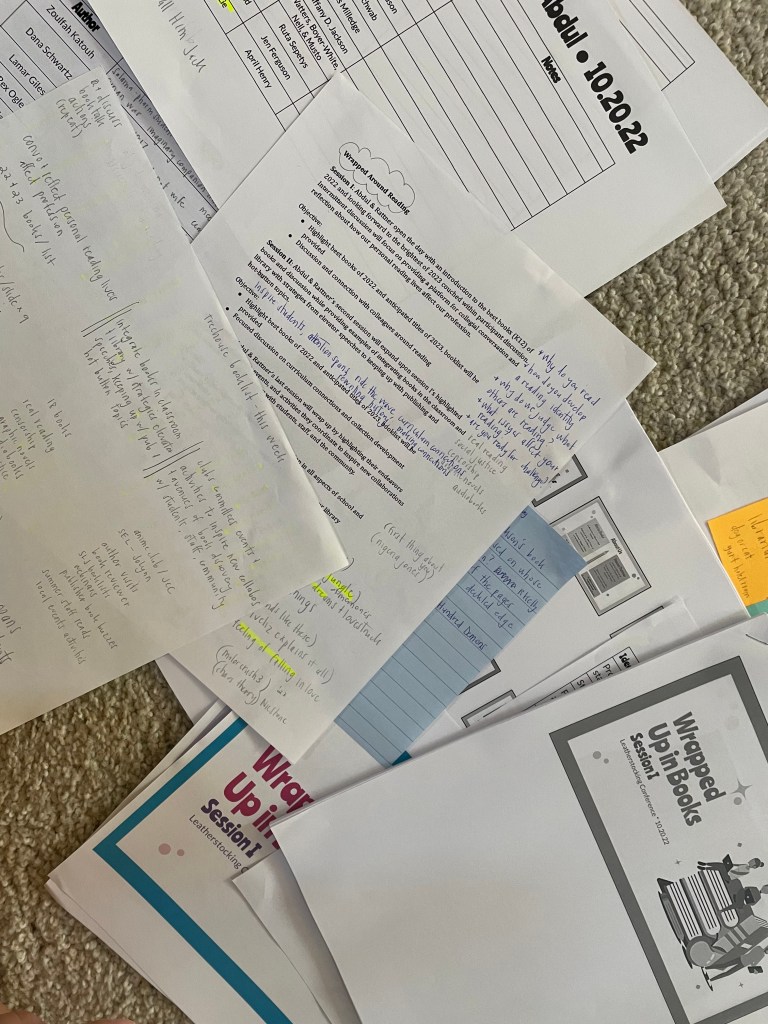
This past Thursday, I was a featured co-presenter at a conference for school librarians in the area I grew up in. Their one-day event was in its thirty-seventh year and my co-presenter, Stacey Rattner and I had been recruited over the summer to talk about books. With three sessions, we could divide them up or co-present, or both and because we often concurrently present, we chose to co-present all three sessions which was especially useful because many of the librarians in the audience work in small districts where they are the K-12 librarian.
Working with a partner is not new to me. As a high school librarian at a large school, I have always had a colibrarian. I’ve also presented at other conferences with librarians I’ve been on committees with (here’s to my Great Graphic Novels ladies!) and my colibrarian. Collaboration is not easy because you’re meshing two people, two opinions, two styles together. With Stacey, we often joke about how polar opposite we are in life and work yet together as librarian presenters with a passion for books and reading, it works, but we need to get on the same (pun intended) page. This means early morning coffee house meet ups or after dinner ciders.
And there are the countless hours I spend stewing in my head to wrap my head around preparing for a presentation from setting the right tone to celebrating book creators to eliciting collegial conversation. Plus the preparation of aids and tools to present and share.
I am a paper and pencil gal. The first ideas and concepts are always handwritten scribbles and lists. Then there’s days of thinking. Then maybe a Slide or two, then back to mapping it out on paper. I’ve come to love my process and rely on it because there are moments of panic that I’m not “there yet” but I trust the process. And the content embeds itself like a rehearsal for a play, though I have never acted before.
Ultimately, it was a valuable scaffold for this past Thursday’s conference because my co-presenter had a death in the family that didn’t allow her to present and I shared for the both of us. Thus, the entrenched preparation and rehearsal felt like second-nature and provides a level of comfort on the day of the event. I have always said that one of the reasons I say yes to presenting whether it be local, state, or nationally is because I have to learn so much more to feel comfortable sharing which makes me a better librarian overall. (And I have an excuse to read as much as I do).
What kind of process do you have for events or activities you do?
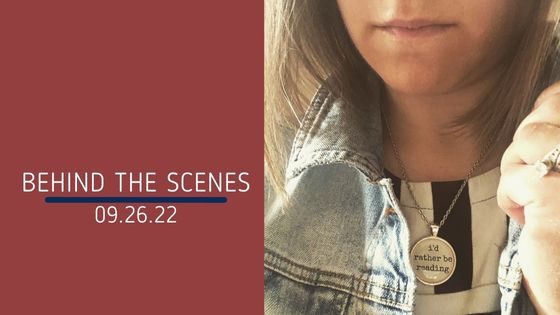
About a month ago, I started thinking about the amount of time I spent behind the scenes orchestrating my reading. It’s a part-time job, really.
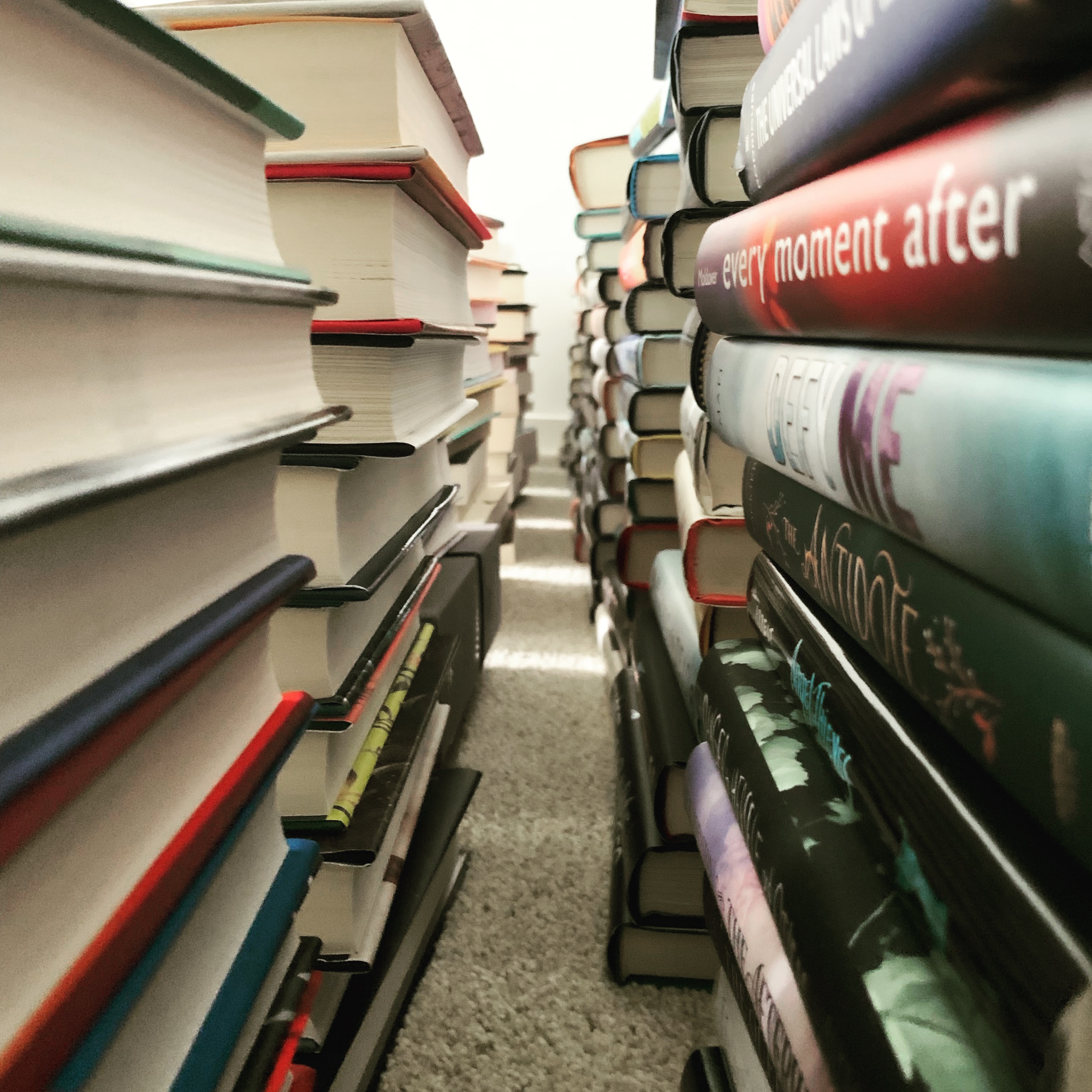
I’m sure it has to do with my reading habits since I tend to mood read which means I always have a large stack of print books, ebooks, and often times even audiobooks ready for my choosing when I finish the previous book. While there are books that have a deadline to be read if I’m on a committee, writing a review for a magazine, or preparing for a class, most often the reading is keeping current on what’s being published, new books by my favorite authors, and visiting older books I hadn’t read at the time but have been recommended or returned to my pile. Of these three needs as an avid reader, I’ll break down what happens behind the scenes.
Keeping current on what’s being published— This means that I spent time reading professional magazines, blogs, social media, and attending curated book buzzes by publishing houses. From there, I’m picking the ones I want to concentrate my energy on because I know it will be useful in our school library, good to recommend to someone, or I want to see what the buzz is all about.
New books by my favorite authors— This means following them on social media and paying attention to those helpful emails that Goodreads sends about new books by previously read authors.
Visiting older books that I hadn’t read at the time but have been recommended or returned to my pile— I tell my graduate students in our YA lit classes that teaching the class is a double-edged sword. They’re hyping ALL THE BOOKS; some of which I haven’t read. And when they make them enticing, I have to add them to my pile again which means I’m revisiting older books that I might have intentionally decided to skip reading, only to regret it now that it’s back on my radar. It’s also looking at lists that come out such as the “end of year” best lists or when I attend a professional development session, or in talking with colleagues or students (whether in my classes or my teens at my high school library).
What comes next after the curation of titles to read is figuring out the best avenue. Here’s what happens at this juncture.
If it’s a new book or upcoming book by a favorite author that means I’m searching on sites like Edelweiss Plus and Netgalley, oftentimes religiously if I’m super excited about a book. Or I’m visiting my local indie bookstore and chatting with my favorite bookseller who might have the galleys. And if there seems to be a glut of titles, I might also spend some time on my local public library’s site reserving copies that are on order knowing that by the time they’re received, processed, and then sent to me, it’ll be weeks.
If it’s a book by my favoritest of favorite authors, it might mean a call to said indie bookstore to preorder it.
And visiting older books means scanning the books digital and print holdings at my public library, looking at quick access sites like Hoopla available through the library, or my own school library. And as those books come in, it’s the exciting trips to the library for pickup which might be one to two that I can walk out with tucked under my arm or lugging a big bag if they all come in at once.
Of course, they have to be read! Managing the books on and off my digital shelves via apps like Libby and Sora when there’s a deadline is as important as adjusting the amount I have at any given time in print too which I build up around vacations and gaps of time I’m able to read. Who am I kidding? There’s always time to read, which is why there are always books coming and going.
It’s a careful curation that to me feels like an orchestration of a symphony managing return dates, read-by timelines, and my exuberance at finally getting to read an anticipated title. As I said, it’s a part-time job in itself and that doesn’t even include the reading time. This careful curation should be talked about more– what kind of process do other avid readers use? How much time would you say you dedicate to the preparation of reading? I’m curious! It’s not that I feel guilty spending the time doing it when I could be reading because I recognize the need and value of culling and organizing the books to read but I do wonder if there are things others do that could help me be more efficient. There is so much that goes on behind the scenes to an active reading life.
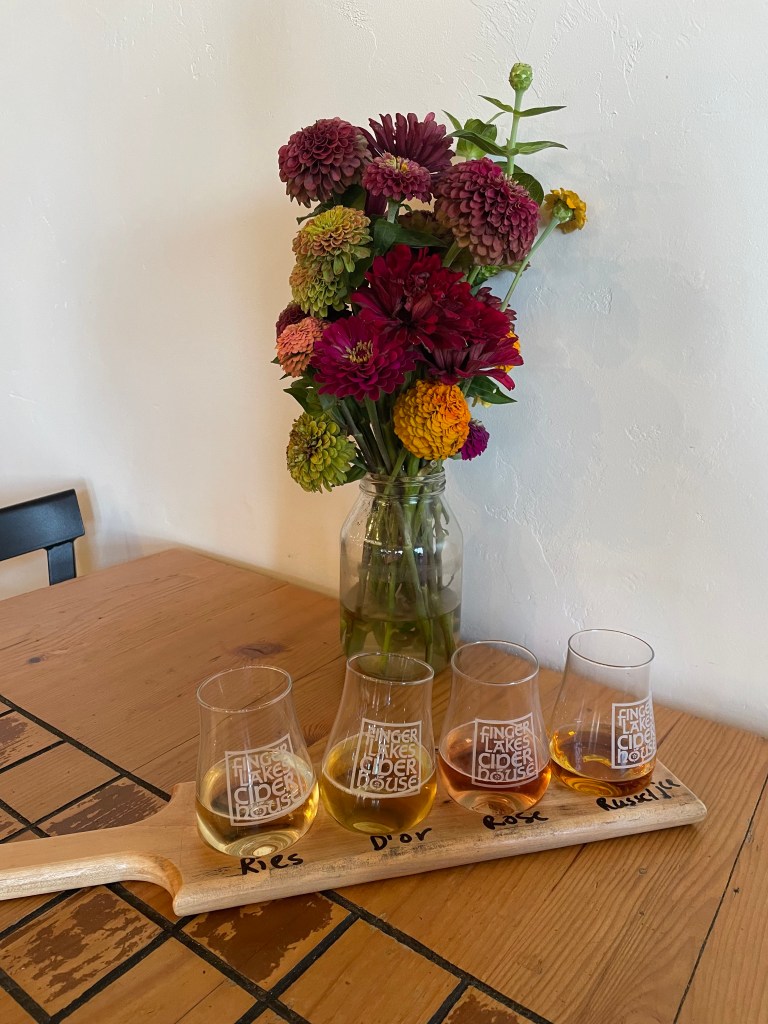
A forty-eight hour getaway this past week to a yurt on cider house property in a section of wine country in New York made me think of work, but it wasn’t a bad thing. About a day into our stay we had visited a few wineries and a distillery and ended up at the cidery for our nightcap and meal. It’s what happened when I bellied up to the counter that made me smile.
There was a live band playing and because of their heavy traffic for food and spirits, they didn’t offer cider flights, just by the glass, so just like that I went from having four choices to only one. A lot of pressure, right? But not for the seasoned cider-tenders behind the counter. She didn’t skip a beat and started asking those basic questions about tastes and interests- I said one buzzword and she lit up, said “I’ve got the one for you I think you’ll love”, and turned to pour it. One sip and it was the perfect cider for me. It’s what I ended up drinking the rest of the night- a cider called Fruit of the Bloom with hibiscus and ginger. The flight would wait until the next day.
I realized I had been librarian-ed. Suddenly I wasn’t the one selling books to teens by conducting readers advisory, I was being sold a cider through a taste advisory. The vast experience and repertoire that comes from countless interactions like this meant that she 1) loved cider, 2) wanted me to love the cider too, and 3) had a full library’s worth of ciders to pick from to match me with one. But the fourth was the special ingredient, more than just the love of cider and wanting me to love it too, she had the passion that comes from the mix of those three elements to make someone else happy. I wanted to hug her for her excitement and realized I probably look like that to most people when I push books.
Since last week, I have been turning over a conversation I had with a student last week during summer school. She had dropped in with a pass from her class to borrow a few books.
I didn’t recognize her, but that’s not uncommon in a school of 2,600 students and a new pool of students who are attending the summer school program from one of our alternative school as well. Either way, I introduced her to the temporary library that we’ve set up in a science classroom to be closer to the summer school classrooms while avoiding the construction around the new library. I asked her if she was looking for something in particular and quickly shared that she wanted manga to which I pointed her to several book carts spilling over with it and told her that if she wanted specific recommendations I could help, otherwise, she was free to browse and could check out when she was ready.
It’s what happened after she checked out the three books that gave me pause.
I handed the three back to her telling her that during the summer, students can keep the books until the start of the school year or bring them back during summer hours to get more. She asked me to hold on to them. I looked puzzled since she had come in to borrow them and didn’t spend any time during available periods in the library to read while she was in the building. And her response was that she would pick them up at the end of the period because she didn’t want to walk back to class with books in her hand because “people don’t know I read”. She further explained that it would be embarrassing to go back to class with them.
Comments like these are different than my interactions with undiscovered readers who are coming in with classes for upcoming projects who tell me they don’t read or don’t want to read. This was a very specific statement that she wanted to hide her reading identity and because I’ve never had this type of conversation before, I didn’t have a ready-made response. But I did respond.
I told her I could absolutely hold on to the books until after class, but did add that she could also be her awesome self and walk back to class with them because she might discover others who have read and like the same manga series and have something to talk about. She asked that I hold on to them. I told her I’d see her after the period was over.
She returned when the bell rang, however my one piece de resistance was that I inserted this Post-it into one of the books that I hope might give her just a moment to think about being proud of a reading identity because she is a reader.
It’s not particularly earth-shattering in its insight, plus I wanted it to be a positive message celebrating this identity and encouraging her to share it with others. Being proud of herself for having a world of entertainment and learning between the pages of books and finding her way to the library.
Now I’m thinking about the upcoming school year and all those readers who keep invisible. I don’t want to “out” their reading if they wish to keep it quiet, however there might be others who just need a bit of encouragement to join the many who read. How can I reach them?





 Readers Be Advised