The day after Thanksgiving makes me want to go back– to kitchen utensils, food memory, and reading Bee Wilson’s newest book, The Heart-Shaped Tin: Love, Loss, and Kitchen Objects.
When it was released on November 4th, I picked it up that day from the indie bookstore I had preordered it from. I read the first story and had that conflicted feeling I always do with amazing books– I wanted to rip through it and read it in one sitting to gobble it up like a succulent turkey on the Thanksgiving table, but I also wanted to savor it like the apple pie for dessert knowing the meal is at its end with a cup of tea. I decided on the later, reading about a story a day to finish it on my birthday. The book is a collection of stories that begin and end with Wilson’s own object: a heart-shaped tin that she had baked her wedding cake in but felt different now that her divorce was final. It made her think about her own attachment to kitchen objects and made her explore how others feel about their own too. What happens between the pages is a meet-and-greet with others who remember vivid feelings or feel close to relatives in their kitchens. One that sticks out is a mug in Barry’s kitchen:
“Long after he discarded the past bowl, Barry says that there are still certain objects that bring back periods of his life in a way that nothing else could. They are not museum pieces. Over and above admiring, they are for using, and when he uses them his memories come alive again, he says… He could not bear to lose this mug because it ‘radiates’ with such memorable experiences. When the mug is not in use, Barry says it is as if the memories of that Mexican trip become ‘dehydrated,’ like a dried flower. But when he pours coffee in it and holds the mug in his hang, ‘it blooms again.'”
The vivid description of a dehydrated flower that blooms again with use packs a punch. The others stories are just as unique and emotional. It’s similar to an experience several days ago when I made golabki, a dish that my grandmother would make on occasions like my birthday because it was my favorite and my mother makes a version for Christmas Eve. I’d attempted it once or twice but always had to pivot at the last minute turning it into lazy golabki but never quite recreating the taste which I’m convinced is more about others preparing it for me. But this time, I got super close to that taste, the feeling, the love and at the same time I usually enjoy it, my birthday.
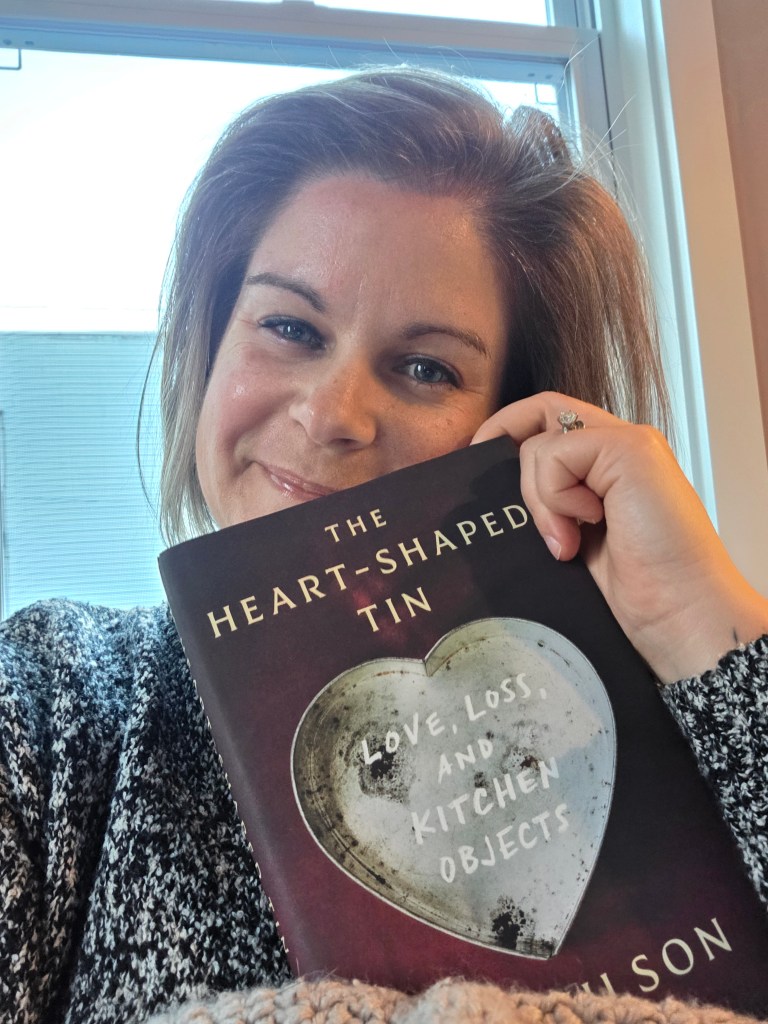
As the holidays creep closer starting with Thanksgiving and ending with Christmas celebrations, give yourself a treat. Buy yourself a copy of Wilson’s book, savor a story or two a day, and use it as an exercise to remember and create your own story as Wilson’s did with all of the people she met and interviewed for this book. We all have a story to contribute to a topic like kitchen utensils and food memory just like a conversation I had with my sister-in-law’s father after our meal describing to me the three types of plates we were using for Thanksgiving at her house that included a set from her great grandmother, grandmother, and mother. I thought that the seed of that story would fit perfectly into Wilson’s book and that I might have to reread it.











 Thanks for Edelweiss, I read a digital advanced copy and implore Balzer + Bray to fast track this book’s publication because I can’t possibly wait until September 1st to share Punching the Air with the teens (and staff) at our high school library. I think I have 12 copies on our order list and am debating whether to add more. Likewise, I’ve already mentioned it to a few art teachers about doing a collaboration using it.



 Readers Be Advised