RSS

Category Archives: Middle grade

Obsession continues

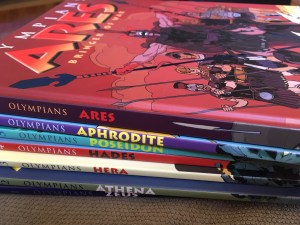
It can only be described as binge reading. In one afternoon, I read through the seven books that I had my hands on in George O’Connor’s Olympians graphic novel series. I’m one short, with Apollo having come out in January, yet it’s not in our collection yet (oh, it will be). The next one scheduled is for 2017.

In order, the series showcases thus far2016-08-03 13.44.44
  1. Zeus: King of the Gods (2010)
  2. Athena: Grey-Eyed Goddess (2010)
  3. Hera: The Goddess and Her Glory (2011)
  4. Hades: Lord of the Dead (2012)
  5. Poseidon: Earth Shaker (2013)
  6. Aphrodite: Goddess of Love (2014)
  7. Ares: Bringer of War (2015)

But, because O’Connor is dynamic, the books focus on the central figure while introducing readers to others, both god and mortal along with the world in which they inhabit or fight for. The stories are concise and focused with beautiful images, simple text, and a story arch. But as an adult reader and high school librarian, I find the additional information after the story to rival the actual graphic novel. There are profiles of some of the main characters that could literally be posters hung on a wall (hint, hint :01 First Second). Then there are “Geek notes” that add the R above “geek” for a dash of humor, additional resources, discussion questions, and if that wasn’t enough, an author note which allows a glimpse into O’Connor’s world: his favorite gods and goddesses, the writing and illustrating process, and embarking on this monumental task. It’s a lesson in passion and perseverance. He serves the middle grade/YA reader along with the librarians and teachers who could use his content. As a package, it shows his mission is not to simply tell a good story, but to serve a larger purpose and that’s to educate kids about these mythical people and creatures with respect and research.

Memorable character: Without having read Apollo yet, the most memorable character was Persephone, highlighted in Hades’ story. Her transformation is like any teenager who fights with her mother and tries on many identities until she comes into her own. Having been whisked away by dark horses to the underworld, her reluctance is turned into acceptance as she creates an image and a name for herself (literally as her name was Kore until she named herself Persephone) as Hades’s wife. I’m also a fan of Demeter’s story in mythology anyway, so knowing that the focus of Hades’ story is almost about everyone else except him demonstrates that most do not know Hades because he chooses to remain elusive. He seems to prefer to be misunderstood.

Memorable scene: Like the Robert Frost poem in which “two roads diverged in a yellow wood”, Heracles had a decision to make, take the harder and more dangerous path with a woman waiting cloaked in darkness or the easier one with a beautiful woman standing bathed in sunlight. Heracles chose the darker path, on a road to become a god, but having to complete twelve labors before coming close enough. The language and imagery was among my most memorable thus far.

Memorable quote: In Aphrodite’s story, she brings to life Pygmalion’s statue named Galatea whom he created in Aphrodite’s likeness but who fell in love with his ivory statue and instead of offering it to her at her temple, asked that she may live. And Aphrodite willed it and attended his wedding to Galatea where she was cloaked. When he stopped at her feet with his new wife, Galatea felt compelled to thank her and her reply was “There is nothing to thank me for. Love like your husband has is love that must be shared. Be happy together. You were made for each other.” Oh how true that was!

I advise that everyone include this series on their shelves, whether it’s in mythology or graphic novels. It should make a rotation on end caps, in booklists, and book trailers. I’m glad I came to the party a bit late on these ones as I don’t think I could have waited each year for a new one to come out (like I’ll have to for the last ones in the series), but good things come to those who wait.

 

Six sensational books I enjoyed… because they’re similar to others I’ve enjoyed

How’s that for a mouthful of a title? Recently I’ve been on a tear reading both in traditional and e-book formats digesting as much as I can while enjoying the summer sun, the pool, the quiet of everyone else being in bed. And of course with the pace at which I read, it’s inevitable that I’d compare books to each other. So here are a few recent reads that I enjoyed in part due to their similarity to others (that you should also read if you haven’t). 26LettersArranged

  1. The Girls by Cline similar to an all-time favorite of mine The Virgin Suicides by Eugenides
    • The almost indifferent narration of Evie’s life with “the girls” on a cult compound conjuring the Manson family is eerily similar to the Lisbon sisters. Both also include an opportunity for readers to step off the pedal of emotion: in The Girls, Evie’s time with the girls are flashbacks while the present life she leads is reflected off of a stoned son of a former boyfriend and his girlfriend while the neighborhood boys look on from the Lisbon household drawing conclusions about them based on what they see.
    • Memorable character: There’s a reason I named my first dog Lux because I wanted to be reminded of the most memorable sister (for me) of the Lisbon girls. The one that was the most daring, she wanted with a passion.
  2. Every Falling Star by Lee similar to A Long Way Gone by Beah
    • I just posted about Lee’s book and it’s similarities to the narrative of a boy soldier from Sudan as first-person stories about their trials in working toward freedom, though Every Falling Star is a rarer look as he’s defected from North Korea.
  3. Last Seen Leaving by Roehrig similar to Wink Poppy Midnight by Tucholke 
    • There’s a glut of self-discovery that happens in both. Flynn is confused about his newly ex-girlfriend’s disappearance as much as Midnight is confused about Poppy’s actions especially when Midnight’s attentions turned to Wink. Everyone needs to admit things they don’t want to admit about themselves and others and this is hard. This struggle is tangible in both stories where the characters are the sole focus and the mysteries that surround them are secondary. A lovely look at human behavior.
  4. Lucky Penny by Hirsh similar to the Lumberjanes series by an array of authors including Stevenson
    • There’s so much girl empowerment in both. Penny’s luck has run out and she’s been fired from her job and lost her apartment, but resourceful Penny moves into her friend’s storage unit, lands a laundromat gig, and falls in love with the boy at the gym where she needs a cheap (or free) membership to shower.This is all helped along by powerfully graphic images as with the girls from the camp for hardcore lady types.  Penny is willing to kick butt too when she needs, along with a vivid imagination and a sense of humor.
    • Memorable Scene: When Penny is standing in her hamburger underwear doing her wash at the laundromat where she works when her young boss walks in.
  5. Bubonic Panic When Plague Invaded America by Jarrow similar to her first in the series Red Madness: How a Medical Mystery Changed the Way We Eat 
    • Informational texts like these making learning science so accessible, but it also makes us appreciate how far science has come and makes us wonder what the future holds, too. There’s a systematic approach to her stories that showcase the advancement of medicine through the tribulations of disease (at times annihilating whole villages and half of a city’s population). But it’s the slow and measured way that scientists explore and test their theories that always provides the breakthrough.
    • Memorable quote: Spoken by the Frenchman Alexandre Yersin in the 1880s, “To ask for money for treating the sick is a bit like telling them, ‘Your money or your life,” which is why he stuck to working in a lab rather than taking on a private practice.
  6. Awkward by Chmakova similar to Drama by Telgemeier
    • Another pair of graphic novels, the innocence of middle school and figuring out where you fit it is hard business. Both deal with being members of clubs, too. The battle rages in Awkward between the art club and science club while Callie is a member of the drama club in Telgemeier’s story. Both artfully demonstrate the crazy world of middle school from weird teachers and those that drink the tears of students to those who are discovering their sexuality, interests, and abilities. We all remember those days.
 

Survival at all costs

EveryFallingStarThis needs to be a purchase for every library from middle school through high school and that every adult should read as well when it comes out in September. A narrative of how a boy survived and escape North Korea. Written by Sungju Lee and Susan McClelland, Every Falling Star: The True Story of How I Survived and Escaped North Korea is a harrowing account of Sungju’s time in North Korea and the journey to South Korea as a defector. In line with any child soldier narrative from African countries especially Ishmael Beah’s A Long Way Gone, accounts of growing up during the Cultural Revolution in China, Patricia McCormick’s Never Fall Down about Cambodia’s Khmer Rouge, or in recent fictional reads like The Bitter Side of Sweet by Tara Sullivan that describe child exploitation, Lee expresses himself in a genuine and heartfelt manner so that anyone can understand the pain and suffering that exists at the hands of the North Korean government. It’s the ease of his writing that make this a book for any age and no age. The need for these narratives is overwhelming.

Memorable Character: Obviously Lee himself closely followed by his friend and confidante and fellow ‘gang’ member Young-bum. Lee is naive at the beginning, believing that his family who lives comfortably is heading to a vacation spot, when instead their family has been ostracized and sent away. From here, all bets are off and both Lee’s father and mother flee. With Lee having to defend himself and unable to protect the homestead, he forms a gang of kotjebi, whose sole purpose is to watch out for each other and survive through any means necessary. It gets downright ugly. And while hope seems lost, my favorite quote deals with this very thing…

Memorable Quote: “‘To live on the streets means we have nothing left,’ I finally said, then stopped. So many thoughts were moving fast inside my mind, I couldn’t catch just one. ‘Our families-our pasts- feel like they never existed,’ I began again. ‘We’re little more than animals now. At least that’s what the merchants say about us, and the other kotjebi, too. The government once called us the kings and queens of the nation… Everyone has abandoned us. Everything has been taken away from us, except hope. You taught me that we can only give hope away. No one can take it. And you also taught me that hope is what makes us human. That, and love. It’s time to let you go,’ I ended.

Memorable Scene: It will be no secret from the beginnings of the book that the gang of boys that Lee moves with suffer from two deaths, but who of the two is the mystery until they happen. It’s the second that is the most heartbreaking and will bring the most hard-hearted to tears. I will not spoil it, but it is Lee’s reality and a poignant example of the loss of any innocence that remained (though I would question any based on Lee’s story).

Readers are advised to be sure to order multiple copies of this culturally diverse story from a time period not so far in the past but in a place that holds so much mystery. Nothing that Lee write is gratuitous, allowing a range and variety of readers to access his admired story both for having the courage to tell it and to survive it.


Can’t, I’m booked

After spending a few days away from home without time to read, I’m excited to say that this week will be some much needed and hotly anticipated time with books that have been patiently waiting. Here’s what’s on the agenda.

BooksAreCalling

  • Twisted by Hannah Jayne
  • The Darkest Corners by Kara Thomas
  • Currents by Eva Moraal
  • Last Seen Leaving by Caleb Roehrig
  • The Whispering of Trees by C.Y. Bourgeois
  • Lumberjanes: Beware the Kitten Holy by Stevenson and Co.
  • Paradise Lost by John Milton
  • Traitor Angels by Anne Blankmann
  • Once Was Lost by Natalie Richards

I look forward to being able to update everyone on my favorites and the disappoints (if there are any!) in the coming week! Until then, what’s on your TBR list?


A sight to see

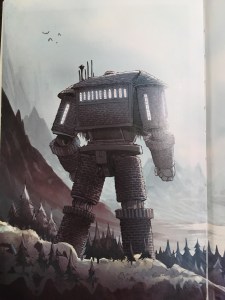
After finishing up a long holiday weekend where the biggest spectacle is beautifully-colored fireworks with the right amount of boom and pace to inspire awe that’s the thought I had when I finished The Stonekeeper, the Amulet series’ first book by Kazu Kibuishi. No2016-06-29 19.36.46t only will I continue to ride this adventure wave of a series, I look forward to the stunning visuals that Kibuishi provides. It’s a true visual treat and I’m not one to slow down to engage with the pages as much as I probably should, yet I did with this one.

Memorable character: I’m going to throw out to you that my favorite character isn’t actually the kids or fun robotic characters or Miskit, it’s actually Emily and Navin’s mom. The woman loses her husband, then with moans and groans from her kids, realizes that the best place to bring her kids is an old family home both to save money and I’m sure to find something to hold on to. I loved her can-do attitude in getting out the pails and Pine-sol to spruce up the creaky place and her willingness, always, to protect her kids, even when she’s gobbled up by a blob. No wonder her kids are so eager to save her because I certainly know a few kids who’d look the other way and continue on their adventure.

Memorable Scene: When the house moves! How gorgeous a visual even with little to no color in the scene, but this is exactly the type of creativity and adventure that makes this series worth investing in. Even the previous scenes when Miskit, disguised as a boatman, ferries the kids across the water are luscious and rich. Mmmmm!

I can’t wait to put the rest of the series on my TBR pile and be sure to order enough copies to handout like it’s my job. Oh wait, it is my job!


Hollow out time for Wolf Hollow

WolfHollowThere’s something about reading a beautifully-crafted and lyrical children’s book that instantly reminds you of the classics like Charlotte’s Web, Tuck EverlastingPeter Pan, and James and the Giant Peach.  Lauren Wolk’s Wolf Hollow will become a contemporary classic if I have any say.

Annabelle has tried to befriend Betty, a new girl living with her grandparents in their Pennsylvania town, but it’s difficult. Betty wants Annabelle to bring her things or she’ll beat her. And Betty does in addition to terrorizing a friend of Annabelle’s and a younger brother. But the absolute worst occurs when Betty begins blaming an innocent military veteran who lives on the outskirts of town. And mild hysteria comparative to a witch hunt ensues. Yet Annabelle knows the truth and is able to spend time with Toby, the veteran and neighbor, hearing stories about his life so moving that Annabelle’s confession to readers is that “I held very still and waited, trying not to hear it all, hoping, even at just eleven, almost twelve, that I would never have sons of my own.”

Tragedy is at the very root of the book in powerful scenes that transcend readership and touch on society’s reactions to marginalized individuals, but also what the power of kindness can do to overcome these baseless conclusions.

It should be on everyone’s reading list from children that is the intended audience to adults since they can connect instantly with Annabelle’s upbringing and Toby’s post traumatic stress. Yet one of the best elements is its resolution: messy, aggressive, powerful, and for most readers unsatisfactory in that while there is some hope, a lot was lost in the process. This ending is my kind of ending.


Six sensational cultural stories

This slideshow requires JavaScript.

After finishing Tara Sullivan’s The Bitter Side of Sweet two days ago, I was moved by sibling relationship between Amadou and Seydou, but also blown away by the atrocity that is child labor on cacao farms in African countries. It was pointedly apparent when the boys taste chocolate for the first time and are shocked that what they farm is a treat for children across the world, while they are beaten and starved and forced to work to farm the bean. So with a return to my six sensational lists– here are my favorite multicultural stories that span interest level.

  1. The Bitter Side of Sweet by Tara Sullivan: A tragic circumstance brings Khadija to the farm where Seydou and Amadou are forced into labor and her willful disobedience and a farming accident press the three to escape their captivity in a fast-paced action story with a powerful message.
  2. Touching Snow by M. Sindy Felin: Karina’s Haitian family is fearful of authority and being deported even after Karina’s stepfather visciously attacks her within inches of her life. As she heals, she is also coming of age and questioning both her sexuality and her purpose.
  3. Garden of Stones by Sophie Littlefield: With three generations of women involved in the story, it’s ultimately about the Japanese internment camps and the relationships, abuses, and survival techniques employed to be able to continue living.
  4. Esperanza Rising by Pam Munoz Ryan: Need I say more about why this book is on the list? A gorgeously lyrical story of Mexican immigrant farming lands in the United States with Esperanza’s beautiful descriptions of the earth’s heartbeat and her mother.
  5. Morning Girl by Michael Dorris: Having read this over ten years ago this character-driven story of Morning Girl and her brother Star Boy as they co-exist in their beautiful country through Christopher Columbus has other plans. The political undercurrent is useful in providing a perspective while the morality creates a complexity that is fitting for older readers.
  6. Keeping Corner by Kashmira Sheth: Leela has led a privileged life until the death of her husband who she’s never met. At her young age, she’s expected to traditionally mourn all while a revolution is taking place led by Gandhi both against British colonists as well as India’s caste system. It’s depth is moving and educational.
 

“The Greatest”

With the passing of a legend, both in sports and in life, I would be remiss not to remind everyone to revisit his greatness in the Charles R. Smith book illustrated by Bryan Collier called Twelve Rounds to Glory: The Story of Muhammad Ali published in 2007. There’s a reason that it remains on our high school summer reading list with multiple copies sitting on our shelf: it’s the interest, the history, the personality, and the unbelievable understanding of who Ali was in a mere 80 pages.

What I loved about it then and continue to love about it now is how it captures Ali’s essence. It’s like watching director Baz Luhrmann re-create Romeo + Juliet for a contemporary audience, yet you’re still hearing Shakespeare’s lines and get it. Smith uses Ali’s prophetic lyricism and skillful word play to deliver punch after punch to the world and his opponents. Combine this with Collier’s skillful renditions of famous fights and it’s a knockout. Readers learn the chronology of his life and his impact during the Vietnam era. This is a bonus to learning about his athletic prowess, being delivered by Ali’s own words. Those who have seen and heard the clips or are old enough to have watched him during his illustrious career can hear his words spoken as they read them on the page.

If you haven’t picked up this book, you must.


I’ll take it sunny-side up too

You know that feeling when you clutch a book to your chest and relish in the delight of reading something so lovely and wonderful and graceful? Yes, that just happened today when I finished reading Jennifer and Matthew Holm’s Sunny Side Up, a graphic novel set in the 1970s featuring Sunshine aka Sunny. I’m not surprised that it’s winning accolades and ending up on recommended reading lists.

In the vein of Raina Telgemeier and Victoria Jamieson, our main chSunnySideUparacter is tween/teen and dealing with life. The realistic, down-to-earth kind of story that makes it an “every person” book, not for a specific subset of readers. In addition, like the other graphic novels’ illustrations, I am on board with the vivid coloring and rounded illustrations that are in stark contrast to darkly explored stories in black and white.

Sunny is staying with Grandpa in Florida for the summer and while it’s not the best fun, meeting the groundskeeper’s son who is fanatical about superheroes, provides an avenue for Sunny to find her voice. After a summer of sleeping on a squeaky, uncomfortable pull-out bed, eating dinner at 4pm, finding her grandfather’s stashes of cigarettes, and feeling like she separated her family, Sunny’s shining moment is when it all comes out. She confesses her frustrations to which her grandfather responds with the most-appropriate sentiments: he’ll stop smoking, they’ll go to Disney World, find a different bed, and that her brother’s issues are not her fault. And as their summer comes to an end, he reminder her to “keep her sunny side up”, which is an endearing sentiment that plays both on how attitude is everything and on her unique, hippie name.

Everyone should remember to keep their sunny side up.


Woodland creatures

As I finish up the invitations for my kids’ birthday party happening at a local nature discovery center, I’m reminded of a few of my favorite outdoor novels. Of course, it wouldn’t be complete without a Gary Paulsen story, but then there’s a movie-adapted nonfiction tale by a master storyteller/investigator, and a newer-ish coming of age juxtaposing a human and an animal that may just be an emerging trend.

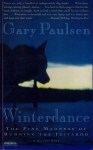
What I love about Gary Paulsen’s Winterdance: The Fine Madness of Running the Iditarod wasn’t so much the story of his actually running it, instead, it was the magical way Paulsen describes his bond with the dogs and the runs he did in preparation. I specifically remember a few scenes where his imagery takes over your five senses and you’re touching, smelling, tasting, hearing, and seeing all of the glorious things nature serves up, if only you took time out to do so. It’s that beauty that he captures that’s perfection.

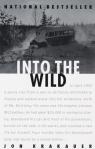
In Into the Wild by Jon Krakauer, the ultimate man versus nature saga trumps the mystery of why Chris would venture to the Alaskan expanse. For me the speculation about all that he must have endured and the lasting image of the young man’s body in the abandoned bus that graces the front cover is fascinating. How could one survive with so little?

And last, Martin Marten, set at the foot of Mount Hood is a spectacular feast that rolls and twists every cool National Geographic WILD show into a side-by-side comparison to the toils of teenage life. Its rich language is as much a treat as the intelligence that shows in how the story is told, yet only a tad maddening as Doyle does not use quotation marks for dialogue: readers must pay close attention to every word in response which plays to its richness.

So here’s to truly wonderful examples of how we all must slow down just a bit and enjoy nature, whether it’s by actually experiencing it or reading about it to make us remember.