RSS

Category Archives: Middle grade

Hollow out time for Wolf Hollow

WolfHollowThere’s something about reading a beautifully-crafted and lyrical children’s book that instantly reminds you of the classics like Charlotte’s Web, Tuck EverlastingPeter Pan, and James and the Giant Peach.  Lauren Wolk’s Wolf Hollow will become a contemporary classic if I have any say.

Annabelle has tried to befriend Betty, a new girl living with her grandparents in their Pennsylvania town, but it’s difficult. Betty wants Annabelle to bring her things or she’ll beat her. And Betty does in addition to terrorizing a friend of Annabelle’s and a younger brother. But the absolute worst occurs when Betty begins blaming an innocent military veteran who lives on the outskirts of town. And mild hysteria comparative to a witch hunt ensues. Yet Annabelle knows the truth and is able to spend time with Toby, the veteran and neighbor, hearing stories about his life so moving that Annabelle’s confession to readers is that “I held very still and waited, trying not to hear it all, hoping, even at just eleven, almost twelve, that I would never have sons of my own.”

Tragedy is at the very root of the book in powerful scenes that transcend readership and touch on society’s reactions to marginalized individuals, but also what the power of kindness can do to overcome these baseless conclusions.

It should be on everyone’s reading list from children that is the intended audience to adults since they can connect instantly with Annabelle’s upbringing and Toby’s post traumatic stress. Yet one of the best elements is its resolution: messy, aggressive, powerful, and for most readers unsatisfactory in that while there is some hope, a lot was lost in the process. This ending is my kind of ending.


Six sensational cultural stories

This slideshow requires JavaScript.

After finishing Tara Sullivan’s The Bitter Side of Sweet two days ago, I was moved by sibling relationship between Amadou and Seydou, but also blown away by the atrocity that is child labor on cacao farms in African countries. It was pointedly apparent when the boys taste chocolate for the first time and are shocked that what they farm is a treat for children across the world, while they are beaten and starved and forced to work to farm the bean. So with a return to my six sensational lists– here are my favorite multicultural stories that span interest level.

  1. The Bitter Side of Sweet by Tara Sullivan: A tragic circumstance brings Khadija to the farm where Seydou and Amadou are forced into labor and her willful disobedience and a farming accident press the three to escape their captivity in a fast-paced action story with a powerful message.
  2. Touching Snow by M. Sindy Felin: Karina’s Haitian family is fearful of authority and being deported even after Karina’s stepfather visciously attacks her within inches of her life. As she heals, she is also coming of age and questioning both her sexuality and her purpose.
  3. Garden of Stones by Sophie Littlefield: With three generations of women involved in the story, it’s ultimately about the Japanese internment camps and the relationships, abuses, and survival techniques employed to be able to continue living.
  4. Esperanza Rising by Pam Munoz Ryan: Need I say more about why this book is on the list? A gorgeously lyrical story of Mexican immigrant farming lands in the United States with Esperanza’s beautiful descriptions of the earth’s heartbeat and her mother.
  5. Morning Girl by Michael Dorris: Having read this over ten years ago this character-driven story of Morning Girl and her brother Star Boy as they co-exist in their beautiful country through Christopher Columbus has other plans. The political undercurrent is useful in providing a perspective while the morality creates a complexity that is fitting for older readers.
  6. Keeping Corner by Kashmira Sheth: Leela has led a privileged life until the death of her husband who she’s never met. At her young age, she’s expected to traditionally mourn all while a revolution is taking place led by Gandhi both against British colonists as well as India’s caste system. It’s depth is moving and educational.
 

“The Greatest”

With the passing of a legend, both in sports and in life, I would be remiss not to remind everyone to revisit his greatness in the Charles R. Smith book illustrated by Bryan Collier called Twelve Rounds to Glory: The Story of Muhammad Ali published in 2007. There’s a reason that it remains on our high school summer reading list with multiple copies sitting on our shelf: it’s the interest, the history, the personality, and the unbelievable understanding of who Ali was in a mere 80 pages.

What I loved about it then and continue to love about it now is how it captures Ali’s essence. It’s like watching director Baz Luhrmann re-create Romeo + Juliet for a contemporary audience, yet you’re still hearing Shakespeare’s lines and get it. Smith uses Ali’s prophetic lyricism and skillful word play to deliver punch after punch to the world and his opponents. Combine this with Collier’s skillful renditions of famous fights and it’s a knockout. Readers learn the chronology of his life and his impact during the Vietnam era. This is a bonus to learning about his athletic prowess, being delivered by Ali’s own words. Those who have seen and heard the clips or are old enough to have watched him during his illustrious career can hear his words spoken as they read them on the page.

If you haven’t picked up this book, you must.


I’ll take it sunny-side up too

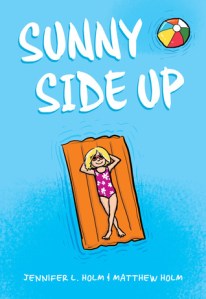
You know that feeling when you clutch a book to your chest and relish in the delight of reading something so lovely and wonderful and graceful? Yes, that just happened today when I finished reading Jennifer and Matthew Holm’s Sunny Side Up, a graphic novel set in the 1970s featuring Sunshine aka Sunny. I’m not surprised that it’s winning accolades and ending up on recommended reading lists.

In the vein of Raina Telgemeier and Victoria Jamieson, our main chSunnySideUparacter is tween/teen and dealing with life. The realistic, down-to-earth kind of story that makes it an “every person” book, not for a specific subset of readers. In addition, like the other graphic novels’ illustrations, I am on board with the vivid coloring and rounded illustrations that are in stark contrast to darkly explored stories in black and white.
Sunny is staying with Grandpa in Florida for the summer and while it’s not the best fun, meeting the groundskeeper’s son who is fanatical about superheroes, provides an avenue for Sunny to find her voice. After a summer of sleeping on a squeaky, uncomfortable pull-out bed, eating dinner at 4pm, finding her grandfather’s stashes of cigarettes, and feeling like she separated her family, Sunny’s shining moment is when it all comes out. She confesses her frustrations to which her grandfather responds with the most-appropriate sentiments: he’ll stop smoking, they’ll go to Disney World, find a different bed, and that her brother’s issues are not her fault. And as their summer comes to an end, he reminder her to “keep her sunny side up”, which is an endearing sentiment that plays both on how attitude is everything and on her unique, hippie name.

Everyone should remember to keep their sunny side up.


Woodland creatures

As I finish up the invitations for my kids’ birthday party happening at a local nature discovery center, I’m reminded of a few of my favorite outdoor novels. Of course, it wouldn’t be complete without a Gary Paulsen story, but then there’s a movie-adapted nonfiction tale by a master storyteller/investigator, and a newer-ish coming of age juxtaposing a human and an animal that may just be an emerging trend.

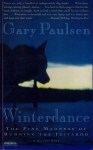
What I love about Gary Paulsen’s Winterdance: The Fine Madness of Running the Iditarod wasn’t so much the story of his actually running it, instead, it was the magical way Paulsen describes his bond with the dogs and the runs he did in preparation. I specifically remember a few scenes where his imagery takes over your five senses and you’re touching, smelling, tasting, hearing, and seeing all of the glorious things nature serves up, if only you took time out to do so. It’s that beauty that he captures that’s perfection.

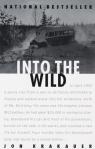
In Into the Wild by Jon Krakauer, the ultimate man versus nature saga trumps the mystery of why Chris would venture to the Alaskan expanse. For me the speculation about all that he must have endured and the lasting image of the young man’s body in the abandoned bus that graces the front cover is fascinating. How could one survive with so little?

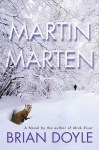
And last, Martin Marten, set at the foot of Mount Hood is a spectacular feast that rolls and twists every cool National Geographic WILD show into a side-by-side comparison to the toils of teenage life. Its rich language is as much a treat as the intelligence that shows in how the story is told, yet only a tad maddening as Doyle does not use quotation marks for dialogue: readers must pay close attention to every word in response which plays to its richness.

So here’s to truly wonderful examples of how we all must slow down just a bit and enjoy nature, whether it’s by actually experiencing it or reading about it to make us remember.


Childhood

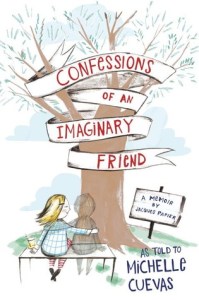
This gorgeous middle grade story has the sweetest mix of doodles and drawings, musings memoir-style from our narrator, Jacques Papier, and strong writing by Michelle Cuevas. ImaginaryFriend

In the best ways, it’s a combination of Saint-Exupery’s The Little Prince, the movie Toy Story, and all of the warm, fuzzy feelings from your own childhood sprinkled with sugar– even as Jacques discovers that he’s not the sibling of Fleur, but in fact her imaginary friend. Jacques’ identity crisis explodes as he tries out other “friends” before the sentimental arch of the story comes full-circle.

Walk down memory lane with this title.

 
Leave a comment

Posted by on December 10, 2015 in Fiction, Middle grade