This post was originally published on the Times Union Books Blog earlier today.
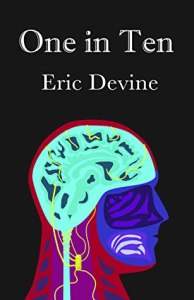 Not everyone knows what a book birthday is but it’s not too complicated either. Simply put, it is the day that a book hits store shelves and digital devices everywhere– the publication date. In a two short days, local author, Eric Devine will be celebrating the release of his sixth book, One in Ten on April 21st.
To use the Goodreads synopsis: “Eric Devine crafts a novel about addiction and alliance, alongside a fight to find the truth within a government system selling one story while acting out another. It will leave readers questioning whether this is a near-future dystopian, or a prescient, contemporary tale” by following “Kenny Jenkins fresh out of his third heroin rehab at seventeen. He is among the last to be released before the U.S. government seizes control of all rehabilitation centers. It intends to end the heroin epidemic by any means necessary. Kenny fights to stay sober, afraid of what he faces if he can not, but his addict is stronger than his resolve and he ends up in the government program: One in Ten.”
In preparation of his book launch, I conducted an email interview and here is what Devine, a high school English teacher, husband, and father shared about his writing habits and ideas, audience, and the book itself.
As a seasoned writer does it get any easier to find ideas to write about and/or dedicate the time to write?
I believe writers, seasoned or not, always have ideas. We’re drawn to making up stories out of almost any situation. I’ve been doing that my entire life, so the idea portion isn’t a problem, it’s finding the one that is the best out of all of them and then trying to tell that story, which speaks to the time dedication end. You have to be disciplined with any craft, but simple discipline doesn’t result in phenomenal results, and in this case, stories. Trying new perspectives, or a different style, taking a different approach (like writing the ending first), all of those are necessary and non-linear and messy. They are vital and time-consuming as well. Therefore, the dedication changes. It’s not merely writing every day, it’s about how you write or even forcing yourself to pause to absorb more of the world around you in order to have the material necessary to write.
Like so many writers, you have a day job that prevents you from making writing your primary focus but if you had the choice, would you make writing your full-time profession?
I would love the ability to write all day, but even for full-time writers, that’s not the writer life. If a publisher is investing in you for say a book a year, you are churning out work at a breakneck speed so you have time to edit it, and then get started on the next one, while also promoting the release of the previous novel. It’s difficult to manage, and the publishing world is fickle and capricious. You don’t really ever have control. I can’t live like that, so I’m perfectly content with my job and my writing.
You write primarily for a teen audience and this new book is no different, what drives you to write for this audience and have you considered writing for another?
I enjoy writing for teens because they are the people who I see on a daily basis, as a teacher, trying to find their way. The more time I have spent with them, the more I have come to realize that there are very significant crossroads in one’s life as an adolescent. Having enough sense to choose wisely can change the trajectory of one’s life. Books have the power to deliver vicarious experience in a way that movies or a Netflix series do not. They are visceral and informative, and I believe can provide tools for teens. I like that I can help guide someone with a story. I like the ability to show the world in a way that many teens don’t know exists, and for those who do, recognize their struggle.
I have tried writing for a Middle Grade audience and I can’t. The work is too dark. I believe I could write for an Adult audience because much of my work trends toward the upper end of YA, but I don’t know if I have the perspective yet to connect with an adult world.
Your books have spanned realistic fiction and mystery and now you’ve got a science fiction title while many other writers “stay in their lane” and only write for one subgenre, what inspires you to change it up?
I don’t like the expression of “staying in one’s lane.” I think that is a modern concept that should not be applied to artists. By nature we want to create whatever comes to mind and not be limited by genre or pigeonholed as writing particular stories. Those placeholders provide too much restriction and too much comfort at the same time. I like writing stories that grab readers’ attention and never let go. To do that today, especially with a teen audience, takes work. Therefore, I’ll bob and weave into whatever terrain I feel like in order to tell the story in the best way possible. The audience appreciates that, too. How many times have you read a book from a genre and it’s a carbon copy of the previous? It’s best to mix it up, for everyone’s enjoyment.
And particularly, what was the catalyst for writing this seemingly science fiction but creepily realistic discussion on addiction, rehabilitation, and surveillance?
In all honesty, the series Black Mirror. I adore that show for the way it discusses how technology can both enhance and disrupt our society. The more I thought about addiction, particularly heroin and the opioid epidemic, the more I wondered how technology could be used, because we are not really treating people, we’re supplying Band Aids. Take it a step further, and what does it look like if our government were to take over to “fix” the situation with technology? Exactly, a hot mess, in which profit is the goal, and the people addicted are pawns in a game that is not about their lives, but the extension of technology. It may a bit too close to the bone for what we are watching play out in our country right now, which is why this story does not feel necessarily like Sci-Fi, but rather, near-future contemporary.
Your blog highlights your struggles with self-publication for One in Ten while the others were with a publisher, why is it important for you to share your story with others?
The Publishing world is a business and I think a lot of writers (myself included) are potentially misguided in their path toward becoming an author. As an agent of mine often said, “Publishing is the crossroads of art and commerce.” However, the reality is that it skews more toward the commerce end of the equation. Now, there’s nothing wrong with that. Business is business. But expression and art do not need to fall victim to that platform. In this age of connection and communication, no author necessarily needs a publisher. That used to be true, but if you have enough hustle in you, the entertainment industry is wide open. Therefore, I want people to consider what works best for them, and if my process can be an example, awesome.
Share your top five suggestions for what teens should be reading right now.
I’ll suggest authors, because sometimes one title doesn’t connect, but another will, and I can’t only suggest five. Sorry. In no particular order: A.S. King, Angie Thomas, Jason Reyonlds, Becky Albertalli, Julie Murphy, Libba Bray, Patrick Ness, Adam Silvera, Neal Shusterman, Jay Kristoff, Nicola Yoon, Tomi Adeyemi, Stephen Chbosky, and Adam Rapp.
Are you getting more writing done under social distancing quarantine?
No, quite the opposite. I haven’t been able to read or write for the past three weeks. We are living through an historical event about which there will be a demarcation of before and after. I have to figure out how to write contemporary fiction that somehow incorporates all of what this moment means. I have ideas aplenty, and I will eventually move forward, but this goes back to the discipline of writing. Right now, writers need to take note, journal, and feel this crisis. If you don’t you will never be able to properly articulate what this is, what this has done, and what it will mean going forward.
What does your writing desk look like?
I write sitting in my father-in-law’s overstuffed recliner. It needed a home after he passed, and once it entered my office, I knew that the desk was gone and this was where I was meant to sit and create.
If you’re yearning for more, follow Devine’s blog but without a doubt, check out One in Ten. It will be available for purchase or download knowing that until travel and businesses reopen, any events that Devine had scheduled will be postponed.



 Fast forward to 2020 and my digital reading of The Dark Matter of Mona Starr which I had on my TBR on Goodreads since it was announced she’d be releasing a new graphic novel. Then boom. I sat down and in one sitting didn’t move an inch while I poured over the illustrations and words. I knew I’d be writing about it. My initial reviews always go up on Goodreads which are usually fresh and raw after reading (and as soon as I can string a somewhat coherent sentence together after being awestruck) and in that review I said that I needed Gulledge to do a series focused on female character struggles that can be used as guides just as both of these are.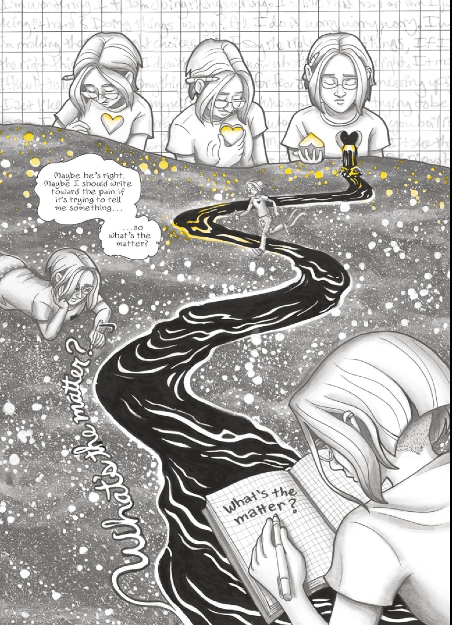

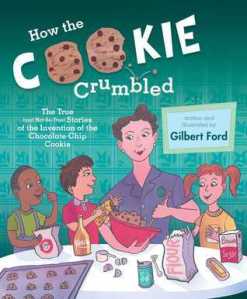 Moving on to an informative picture book, this one details the life of Ruth Wakefield, inventor of the chocolate chip cookie. Ford provides the three versions of how people think the cookie was created and has fun providing you with a well-rounded tale of her passion for food and how her toll house became part of the “Nestle’s Toll House Cookie” recipe stamped on each chocolate chip bag you buy.
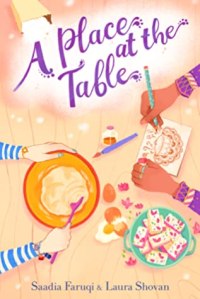 Faruqi and Shovan are publishing A Place At the Table next month and I couldn’t be happier that this book exists. When I read it, I felt a warmth for the characters and the food that filled me up with love. Sara is Pakistani American and Elizabeth is Jewish and they both end up in the Southeast Asian cooking class run by Sara’s mother after Sara moves to the school. They befriend one another and find that their connections run a bit deeper as both of their mothers are not naturalized American citizens. But as the title implies, the girls work through typical middle grade angst by finding a place for each other at the table.
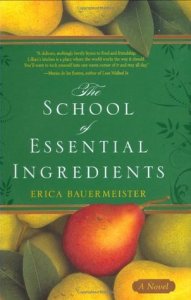 And last is an adult title that was recommended to me by a friend. While the book is over ten years old, it will resonate with those who can appreciate all the ways that food affects our lives be it romance or in mourning, friendship or solitude. It’s a series of vignettes that are all centered around Lillian’s cooking school “The School of Essential Ingredients” that she runs on Monday nights. It follows the attendees in various parts of their lives and how they all came to be together in the class. The languid storytelling is part of the appeal, like savoring a meal, and enriches the understanding. I also found myself pausing and re-reading lines that hit me to my core as a cook, baker, lover of food. As said by two participants in the class: “Here’s to kitchens. And here’s to what comes out of them.”

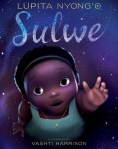 And last, another powerhouse name (in this case two!) attached to a powerhouse book. This one is Sulwe written and inspired by Lupita Nyong’o and illustrated by Vashti Harrison. If I could live inside the illustrations and surround myself with the colors of this book, I would which is ultimately what the story discusses: color. Sulwe feels estranged from others because of the darkness of her skin which is the darkest of her entire family and while she hears that her skin is beautiful, she doesn’t feel like it. She hears taunts and connects words with their connotations that are all too often negative. It isn’t until a magical evening that she’s told the story of the day and the night where she sees the importance of everyone’s differences and how they’re dependent on one another like the sisters of daytime and nighttime.
 Maybe it’s because I’m a woman or maybe it’s because I’m a librarian, but either way, I want to take a moment to celebrate books about periods. They’ve been kind of having a moment. And I knew I wanted to share a post about periods two days ago when I finished Lily Williams and Karen Schneeman’s graphic novel published by First Second this past January called Go With the Flow. It’s a celebration of menstruation and friendship alongside actively advocating for rights.
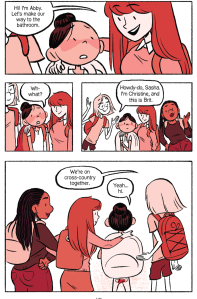 But let’s also give it up for the most memorable scene where Sasha’s blood-stained pants are showing as the girls usher her to the bathroom and why the book works so well in its graphic novel format. Most can empathize or sympathize with her situation and it’s the kind of thing that is discussed in other books discussing periods: the truthful portrayal.




 Fat Tuesday is also Paczki Day. Paczkis are Polish doughnuts usually with jelly filling and rolled in either powdered sugar or granulated sugar. They’re made on Fat Tuesday in preparation for the Lenten season’s austerity. This past Monday, I homemade them and was excited to share them with my family, colleagues, and neighbors who all know my love for baking.


 Readers Be Advised