I’m going to feature two “six sensational” lists: one for YA and MG and one for adult, so stay tuned for the adult list coming in a few days. But let’s focus in on the best published in 2017, not just what I read, but specifically what was published. And it was hard. So hard. Please don’t ask me to rank them one to six, simply it is a list of the six most sensational.
The irony is that I either specifically posted about the book I picked or had it in mind when I was posting about another topic. So beside a recap of why it belongs on this list, I’m linking to the previous post too.
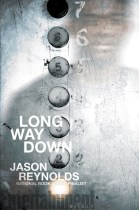 1. Long Way Down by Jason Reynolds
Here is the entire post where I featured Reynolds’ book, but he’s been making the rounds on social media and in pop culture by being featured as the sexiest author and professing the importance of poetry in turning kids on to literature. We need to listen to this voice in young adult and middle grade literature. Not only is he successful for both audiences, he inspires both youth and teachers and librarians.
 2. Goodbye Days by Jeffrey Zentner
You’ll see more about Jeffrey Zentner in a post in April, since he’ll be visiting our high school library and it was after reading Goodbye Days that solidified the need for a visit. Clearly The Serpent King took everyone by storm, but to follow it up with another rock-solid, thoughtful, and contemporary story made him someone to pay attention too. Here was the original post on Goodbye Days. It makes us think about the different people we are in different situations and also the consequences of one bad decision.
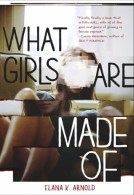 3. What Girls Are Made Of by Elana K. Arnold
I know ’em when I see ’em and I will always read Arnold’s books. They are haunting, imaginative, and unique. Not for every reader, but when they’re the right ones, it’s like magic. The post focused on the tragedy of the main character which was painful but evocative, which is obviously why it also made the National Book Award finals. The book is deep and painful like Demetrios’ Bad Romance and worth taking note.
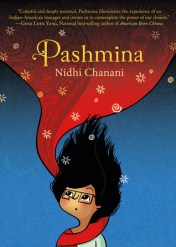 4. Pashmina by Nidhi Chanani
While I didn’t post directly about Chanani’s graphic novel for middle grade readers, I had it in mind for the post Cover love. Specifically after reading this article on the cover development of the graphic novel. As a reader, I’m always curious about the design process for the superb covers and what went wrong when they turn out bad (and I’ll not talk about the publishers who slap the movie posters on the covers of books-turned-to-movies because UGH, I can’t even go there).
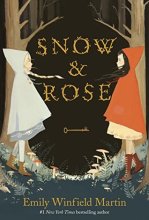 5. Snow & Rose by Emily Winfield Martin
It is no secret that I’m a fan of a fairy tale retelling as evidenced by my obsession with the Beau Rivage series Sarah Cross pens. And this one was a sleeper, an ARC I received at an event that I got lost in. As with the best ones, I featured the book in this post, and think its value is in the cyclical storytelling that focused on family and friendship in a magical forest. Martin is a captivating writer that does not hide darker elements with the fluffier side of fantasy.
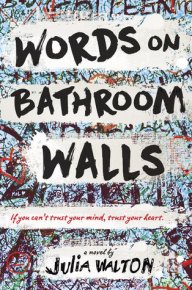 6. Words on Bathroom Walls by Julia Walton
Score another one for young adult novels that focus on mental health topics but the humor and engaging characters are what caught me off guard and the reason for the post on Walton’s book. Adam has schizophrenia and is dealing with everyone’s fear of him while trying to find a balance and a relationship. The character development was fully-realized from the main character through secondary characters and provided a balance of perspectives and included a very recent tragedy to demonstrate the fear society sometimes has for those with mental illness.


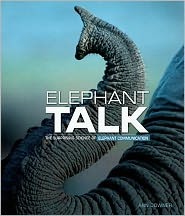 Elephant Talk: The Surprising Science of Elephant Communication by Ann Downer-Hazell is exactly what the title and subtitle tell you it’s about as a short nonfiction explanation of how elephants communicate and how humans have studied and learned about these animals as people like Jane Goodall did with primates. It’s one of two reasons I went on a solo trip to Africa after I got my Bachelor’s degree– to see a wild elephant.
 Europe
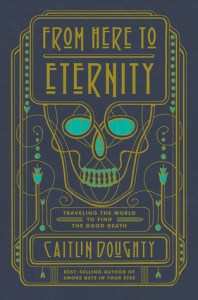 It begins with a single step (actually, some money and a plane ticket) and I know a few places that are on my list, but in the meantime, I want to add a recent read that gave me the traveling bug again: Caitlin Doughty’s From Here to Eternity: Traveling the World to Find the Good Death. I’m a super fan of hers. I love her YouTube channel and everything she stands for. So her 2017 publication took her work a step further and highlights all the ways the dead die and are cared for after death. Not to pick one method over another but to highlight the similarities and differences in American death culture and what happens around the world for better or worse. She wants to educate and educate she did in her humor and curiosity.
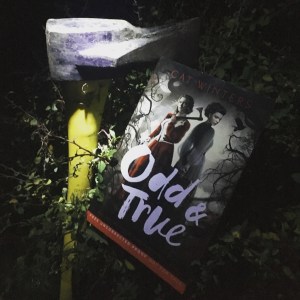 Odd & True by Cat Winters
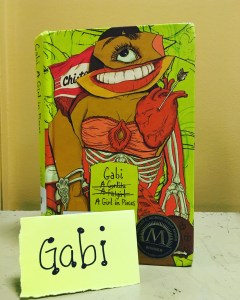 Gabi, A Girl in Pieces by Isabel Quintero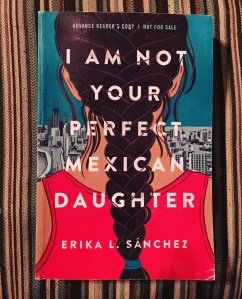
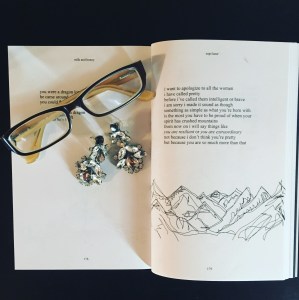 Milk and Honey by Rupi Kaur
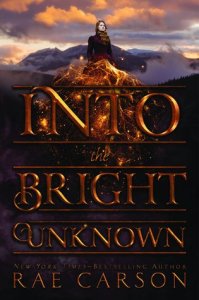 Carson’s book was a riveting ending that didn’t quite have the explosions and bang bang shoot ’em up that book number two did nor was it the magic of being introduced to a strong female character, Leah Westfall, in the first (you can never get back that first-read feeling). This book felt mature. It was about each of the ragtag group that trudged through the American west to set up Glory together, all while the pains of prejudice and lawlessness reigned. Carson was so vivid in her descriptions of the west and then California where most of the third book takes place that I actually dreamed of the west. It was a fitting ending and I won’t spoil it for you here, but there is hopefulness for the future of the fictional characters and a completeness to their story.
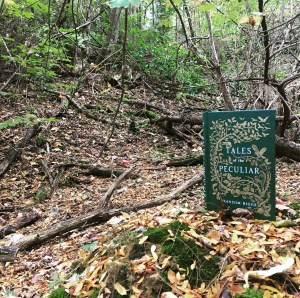 Tales of the Peculiar by Ransom Riggs is an addition to the Miss Peregrine’s series. This book is a collection of short stories written under the guise of a historian for peculiars and tells the tall tales that only another peculiar can tell. Some are light-hearted but some are downright depressing. But it brings out the best in Riggs’ creativity and is a perfectly natural (see what I did there?) addition to the family of books.
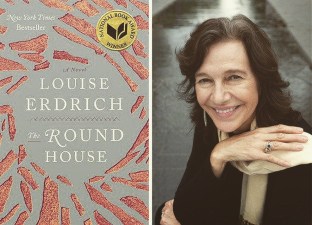 The Round House by Louise Erdrich is an adult novel written in 2012 that is a multi-layered and emotionally-draining portrayal of a family torn apart on the North Dakota reservation of the Ojibwe tribe. This is the kind of book you dive into with every fiber of your being and continue to think about after you’re finished. It’s likely a book I will re-read when I don’t often do that.
 Into the Bright Unknown by Rae Carson is the final book in her Gold Seer trilogy that I finished about fifteen minutes ago. I bought it on it’s book birthday because I had to have it and finished it within a few days, though if I could ignore adulthood, I could have been done the following day. Carson demonstrates the facets of immigration and race relations in the 1850s during the Gold Rush though it began years before that in the south after Leah’s parents were murdered and she needed to run, hiding herself in plain sight as a boy and meeting up with a band of interesting people all pushing their way west. If I can provide more encouragement to read the series, know that I had at least one night of dreams set in the wild West myself that demonstrates Carson’s command of setting.
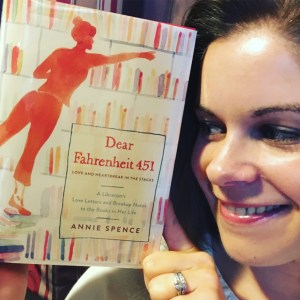 Dear Fahrenheit 451: A Librarian’s Love Letters and Break-Up Notes to the Books in Her Life by Annie Spence is a must-read for librarians (duh) and avid book lovers. Her uniquely humorous style provides glimpses into her reading habits and her life. Her and I are kindred spirits because we share an all-time book favorite The Virgin Suicides by Jeffrey Eugenides. Her approach had me laughing and smirking making for awkward public interactions. But readers certainly can find ways to incorporate this style– a love letter to your books– into some epic internal conversations or as part of your next book group meeting. Love, Alicia.
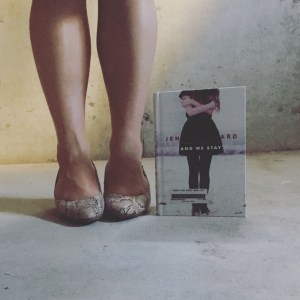 And We Stay by Jenny Hubbard has one of my favorite covers. So while it’s not winter and I wasn’t going to dress in all-black, you get the point. This young adult novel features poetry and inspiration from Emily Dickinson in one of the ways I appreciate contemporary YA authors– bringing back the old by incorporating it into the new. The main character has experienced something tragic and is now at a boarding school and channeling Emily Dickinson to heal. The mystery unfolds over the course of the book and readers get to go back in time and revisit some of Emily Dickinson’s best poetry while Hubbard flexes her own poetry muscles and has Emily writing her own which is just as beautiful.
 Lab Girl by Hope Jahren is an adult biography that I have recommended widely since reading. While I will never know what it’s like to be a scientist, I felt like I understood the life of one, with the added benefits of chronicling Jahren’s personal life alongside her academic one. Without a doubt, it is eloquently written and organized in a studious manner, with three sections being named for plant life weaving these plants into the story of her own life and her lab partner. It’s as serious as it is cerebral with commentary on mental health, family, friendship, and science itself.
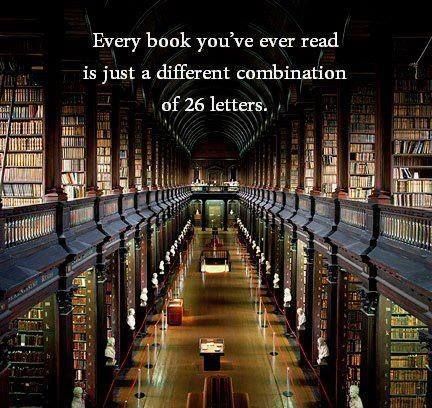 Doesn’t that absolutely capture the magic of books? Twenty-six letters and so many books that I have fallen in love with. How is that even possible?
 The first, Girl in a Bad Place by Kaitlin Ward is a copy I’m reviewing for VOYA, so you can read the full review there, but suffice it to say that when a girl is in trouble, sometimes she finds the path of least resistance and when that path leads to dangerous individuals, it’s important to have a girl friend to keep it real.
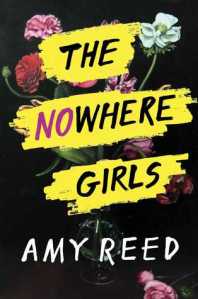 And keepin’ it real is what a group of girls in The Nowhere Girls by Amy Reed does when a new girl moves in to the house formerly housing another student who moved after a traumatic rape. The school and community’s lack of justice for her and subsequent girls who have tolerated this behavior are ready to stand and fight led by three very unique girls who empower others’ voice. Erin’s autism is useful as she continually discusses how she is underestimated by others. Rosina’s pressures include the conservative Mexican-American expectations of her family as she explores her sexuality and sense of duty. Then there’s Grace, the new girl, who provides fresh perspective couched in a liberal church community that her mother heads. What is admirable and respected in the story are the richness of the voices, but the very real conversations Reed has with her readers.
 And while the third book is an adult essay collection with a great deal of sexual content, the rawness of the approach is what won me over. I hadn’t read any of Gay’s other works that include Bad Feminist and Hunger: A Memoir of (My) Body so I cannot speak to those but each story while sometimes with similar character profiles or development allows for reflection. I’m the first one to admit I love dark books and this one fits the bill as Cornelius Nepos says “after darkness comes the light.”


