There is no greater purpose for me than when someone, anyone, approaches me to ask for a book recommendation. Be it a student, a faculty member, or my own mother. Multiply this love by one thousand when I’m asked to present to others about books and reading.
This week I’ll be presenting with some of my favorite people: people who love books and spread the love and their appreciation for what books can do. Specifically children. But where do you begin to organize a presentation about them? You most certainly need a thread. A theme. A focus. Because without it I’d literally be a rambling, excitable mess spewing sunshine and rainbows for the printed page and those that write them.
Sometimes the theme is a given, like the hottest books of the year (or yet to come), sometimes like in past presentations they were about books that can inspire activism or that celebrate the vibrancy of people’s life experiences. This one didn’t necessarily have a theme other than to give librarians a chance to hear about books, whether they’ll be adding them to their collection, reading them, recommending them, or sharing them with content teachers. It’s also about celebrating what books can be for us.
After mulling it over, I settled on approaching my talk of young adult books with the theme of names, as in “what’s in a name?” Fabulous titles and authors, the books of my favorite students, books for a specific type of student all inspired by the fact that in a lineup that includes covering elementary, middle school, and high school…. I’m going first! If you’ll be at the presentation on Thursday, you’ll hear more about why I’ve decided to take this approach, but until then, keep reading! And if you won’t be at the presentation, keep reading! And then read my follow up post later this week with some of the titles I shared.
I couldn’t have asked for a more sun-filled day to spend with my kids at the Hudson Children’s Book Festival in Hudson, New York. And so close to home! I really can’t believe in its 10-year history this was my first time but it was the perfect time with my nine year old boys.
Two weeks ago when I asked whether they’d be interested in attending, I don’t even think there was a two-second pause before they answered yes. So off we went, making quick work of the drive and getting to park right at the school, though barely.
I had a few assignments, namely to meet a few authors for my librarian friend Stacey Rattner, reacquaint with authors who have visited our school (I see you Jason Reynolds, Eric Devine, and Jack Gantos), and have my kids scan the books and chat with the superstars of the printed and illustrated world– they even sat for a story time with Hudson Talbott who wrote Wolf to Woof: The Story of Dogs.
So what did we purchase? Two books by Nancy Castaldo: Back from the Brink: Saving Animals from Extinction and Sniffer Dogs: How Dogs (And Their Noses) Save the World. Then, Writing Radar and Jack On The Tracks by Jack Gantos. Plus, a picture book for their cousin for her upcoming birthday (but shhh, we can’t spoil the gift). Could I have walked out of the Festival without the money needed to put flooring in our new addition to the house? Yes, but I’m a responsible book nerd. The impulse was there, but we kept it in check.
It was an inspiring event with all levels of amazing authors. The vibe is absolutely incredible and filled with book love. But I wasn’t done yet. I have never spent time in Hudson so I couldn’t not stop at The Spotty Dog Books & Ale and have a beer at the bar while we perused books and book paraphernalia.
I was not disappointed.
I ordered myself a porter while my kids explored the art supplies. Both felt it necessary to purchase a fountain pen exactly like Jack Gantos’ one. While Gantos’ was purchased in Japan and was red, the boys found their own “waterfall” version. Could I have purchased a few book t-shirts and socks, enamel pins, and totes? Absolutely. Give me all the things. But I indulged instead in the ambiance. And it was magical.
Our high school hosted its first author visit in 2011. I’ll never forget it both as a first for the school and a first for my librarian career. It was also Ellen Hopkins (go big or go home, right?) And it just seemed to stick. I can honestly say that it is a part of our school culture now. It’s not if we have an author visit, it is when.
Jeff Zentner was our second author visit of this school year, with our first being Nic Stone as part of a partnership with The New York State Writer’s Institute. Zentner visited this past Thursday and resoundingly captivated our student and staff attendees with his stories from music, publishing, and law. It’s one thing to write for teens and it’s another to know what kind of stories they’ll be engaged in during school visits. Zentner certainly knew our teenagers, regaling them with snapshots of cases he’s tried, a few chords on a guitar, and a no-flash-photography cover reveal for his upcoming book Rayne and Delilah’s Midnite Matinee. In return, our students shared their concerns with writing their own stories, played their music for him, and queried him on politics. He spoke Portuguese with a student, signed posters inspired by his books, and sat “between two ferns” interview-style in a conversation about leading a creative life.
I took notes on inspiring messages he shared, teared up watching our students show off their sound recording studio and music, and smiled from ear to ear at another successful author event when I sipped my tea after the day was done in the darkness of my living room viewing pictures taken by our school’s communications staff.
Days before the visit, an art teacher shared a few images on her social media account with a group of students touring an art museum on a field trip. She quoted her colleague who said “this is why I became an art teacher” as she watched her students enjoying themselves at the museum. I had commented that we all need days like these. And not more than two days later, that day was again knocking at my door because nothing can beat the connection that students make with authors: it could be from reading their books. It could be the motivational messages imparted by them. It could be validating our teenagers’ struggles. Zentner’s words struck a chord when he mentioned that Toni Morrison was 39 when she published her first book, and she is a pillar in the literary world– writing knows no age. Readers want mirrors, windows, and sliding glass doors. Everyone has a story to share.
Are author visits stressful? Absolutely. No matter how many we do, they’re still nerve-wracking. Are they worth it? Every last moment spent on them because I get to talk to the students for days and years after the visit about what we learned from their visit. I still reference Jason Reynolds’ message from his with us two years ago. Plus, I feel more connected to my colleague as we support each other in our efforts to build the best library program we can for our school because they deserve it.
As I close, I’ll share several of my favorite pictures courtesy of our communications person, Jake. And, a picture of a sweet treat I made to celebrate the sweet success of the visit.
March is a month of uncertainty– between weather in upstate New York (a fourth Nor’easter possible next week?!) to party schedules with numerous birthdays (including my own two sons’) and things to plan and schedule. Yet no matter what, I manage to squeeze in some reading. This is certainly not a “six sensational” list nor a glowing review of a five-star book I recently read, instead a snapshot of what I’ve been reading just in case you were about to ask.
Some true crime… The Girl on the Velvet Swing: Sex, Murder, and Madness at the Dawn of the Twentieth Century by Simon Baatz
Who doesn’t love true crime, honestly? Give me documentaries, podcasts, and books about real life crime dramas and I’m hooked!
Some middle grade… Hello, Universe by Erin Entrada Kelly
Read this award-winner so that I can meet up with some librarians and eat some pizza and discuss some books #mykindofparty
Some re-tellings… The Claiming of Sleeping Beauty by Anne Rice writing under her pen name A.N. Roquelaure
Ask me to tell you this story in person
Some nonfiction… Noah Webster: Man of Many Words by Catherine Reef
Who doesn’t love someone who loves words? And to know that many people disliked him made it even more fascinating
Some graphic novels… Speak illustrated by Emily Carroll based on Laurie Halse Anderson’s 2001 classic and another The Breadwinner: A Graphic Novel based on Deborah Ellis’ series of the same name adapted from the animated film available on Netflix that I literally watched a week before this book was shipping to our library through Junior Library Guild
I get that visual content appeals sometimes to a different audience, but I’d say both graphic adaptations captured the mood of the original books in a way that makes me adore them both.
Some feel-good humor and hijinks that never gets old… Lumberjanes: The Moon is Up by Mariko Tamaki
Three words: hecka heart eyes
Some more “love and madness”… Mary’s Monster: Love, Madness, and How Mary Shelley Created Frankenstein by Lita Judge
I’ve already tweeted my adoration for the mashup of beautiful black and white images and the captivating story Judge shares about our favorite haunted woman who created a horror classic
Some women’s empowerment for Women’s History Month… What Would She Do?: 25 True Stories of Trailblazing Rebel Women by Kay Woodward
With a vivid cover and a unique voice, it stands above others being published in recent years focusing on women who made an impression
While these are just a handful, it’s a taste of the wide-ranging reading that I do daily because I follow my interests and passions, want to be sure I have books in my back pocket to recommend to my students, and heck, there’s just awesome books being published every day by awesome authors. If you want to follow every book I read, you can find me on Goodreads.
It wasn’t a secret, but it wasn’t something that I readily discussed- being on a selection committee through the Young Adult Library Services Association (YALSA) arm of the American Library Association (ALA) for 2017. I sat on the Great Graphic Novels for Teens committee with an amazing group of public, school, and academic librarians from across the country deciding on the best graphic novels. And from that list, selecting the top ten. You can see the final list here, just announced last week as part of the yearly celebration of books at the Youth Media Awards. You’ll notice looking back at 2017 that I rarely shared and definitely didn’t review graphic novels because of this appointment but was immersed in this world (no complaints here!)
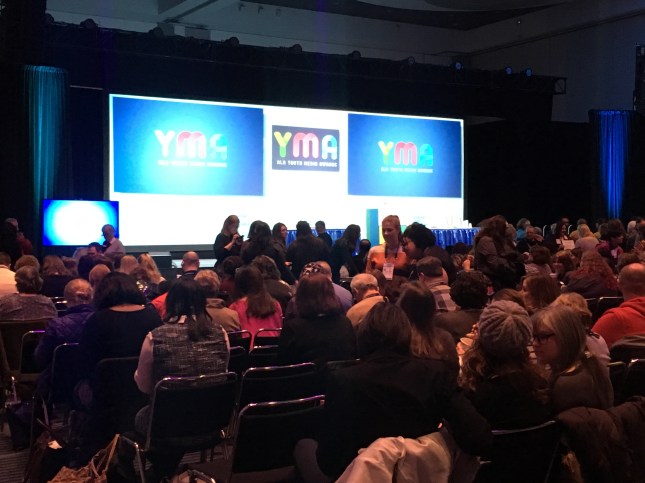
The midwinter ALA conference is smaller in comparison to the annual conference but it packs the biggest punch because of the Youth Media Awards. That’s where winners of awards like the Coretta Scott King and Caldecott Medal are announced. Committees hunker down and make those final decisions and in one hour, people across the country stream it and hundreds sit in person to hear them spoken aloud with the gleaming medal proudly shared on a big screen. There is applause and some exclamations, dancing in the aisles and gasps. All drama and and sparkles.
There’s an added bonus because for some committees naming their top picks, the authors are at the conference to speak about their books and bask in the glory of literature lovers and book pushers after the ceremony itself. I got to listen to some finalists and award winners of the William C. Morris Award and the Nonfiction Award.
It’s an inspiring way to end the conference on the highs of excellence in literature…. on a Monday morning at 8am. I hope it inspires authors to keep writing and contributing to the shaping of young minds and inspires the students who sit in their classrooms and libraries across the country streaming it to one day want to be like them.
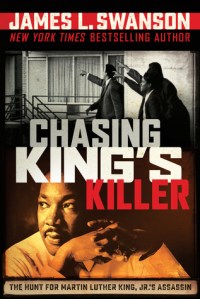
So far, I have read “The President Has Been Shot!”: The Assassination of John F. Kennedy, Chasing Lincoln’s Killer and now finished the newly published Chasing King’s Killer: The Hunt for Martin Luther King Jr.’s Assassin. Yes, James L. Swanson has written adult novels about similar topics, but as a high school librarian I’m more interested in the young adult novels or adaptations, though have it on my list to read the adult ones. I can only imagine how engaging the adult content is if the young adult content is any indication.
What do I mean? Swanson writes the real life dramas as if they were heart-stopping tragic adventure stories, not real life acts of terror and rampage. In the case of each of his books, the parallel stories of (at least) two men on a collision course with one another is riveting. It’s the engaging prose and pictures. Swanson does not distract readers with footnotes or text boxes, instead it is the essence of wonderful narrative nonfiction because it flows seamlessly, uses the elements of story with command, and connects with readers.
As I finished Chasing King’s Killer, I thought out loud to anyone who would listen how tragic this decade must have seemed and hopeless Americans felt: In the span of a handful of years, there were assassinations of John F. Kennedy, Malcolm X, Martin Luther King Jr., and Robert F. Kennedy. Anyone who was standing up for something was torn down by violence. And, like an encyclopedia, I repeated “did you know?” facts to anyone in earshot.
Did you knowthat James Earl Ray was actually a prison escapee when a year later he took Martin Luther King, Jr.’s life?
Did you knowthat Martin Luther King, Jr. was stabbed with a letter opener at a book signing years before his assassination by a mentally unstable woman? He literally could have sneezed and died but in true calm fashion, he asked that the opener not be removed from his chest until he was at the hospital. Good thing because it was a hair away from nicking his aorta.
Did you know that James Earl Ray left the country (and went to more than one) before being apprehended?
I could go on. But it’s the presentation of the information in a balanced way that makes readers appreciate Swanson’s skill. You forget the history you know in order to be swept away by Swanson’s captivating storytelling.
Swanson is a much-recommended author in my high school library because of it’s content equal to it’s beauty. I hope to get a few minutes to meet him in less than a week at the American Library Association’s Midwinter conference where he’ll be on stage with a panel of authors celebrating Martin Luther King, Jr. But I’ll have to get back my already lent copy of the most recent book from the people I’ve shared it with because he’s one author I’d love a John Hancock from.
He’s unforgettable and makes his stories this way as well. Post-It count: high.
This post was originally published on the Times UnionBooks Blog
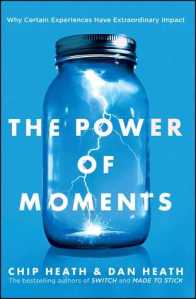
This past October Chip and Dan Heath, brothers and co-authors published their fourth book called The Power of Moments: Why Certain Experiences Have Extraordinary Impact. It was a book that had a powerful impact on me like Reclaiming Conversation: The Power of Talk in a Digital Age by Sherry Turkle (2015) did when I read it over a year ago. These kinds social psychology books shed light on everyday topics and encourage conversation around why people do the things they do, but provide examples and context for understanding it on a deeper level and making changes or becoming more aware. Both of the books are regular references in conversation for me. And with The Power of Moments, there was a relatable opportunity to use the book in my work as well as personal life. (You can see my post about that here).
Then I went on a binge; I downloaded through the public library or borrowed the print copies of their other three: Decisive: How to Make Better Choices in Life and Work (2013), Switch: How to Change Things When Change is Hard (2010) and Made to Stick: Why Some Ideas Survive and Others Die (2006). And again, I was either ferociously highlighting on my eReader or Post-iting the print book when a concept or example struck a chord. There was full engagement with each of them.
Why are the books important? First and foremost, there is a relaxed humor that shows the personality of the brothers. Every now and then you get a taste of it and smile. Second, the books are well-organized. Each has a formula that makes them accessible to every reader. There’s the identified issue that they’re discussing, a quick acronym or mnemonic device to remember the steps, then subsequent chapters that dive into the steps individually. Within the chapters are subchapters that highlight tangible examples. Think businesses like Southwest or the military. Usually it’s followed by a clinic or “what should you do?” that you can investigate (or skip) to apply your newfound knowledge. And then the ever-present summary of the main points. Like I said: well-organized and comforting when moving from book to book. Third, the examples are succinct and useful. Nary is there a long-winded bad example. They’re inspiring which is why the books have received awards from business and leadership fields. Fourth, there is plenty of backmatter like additional reading material and their website with one-page cheat sheets of the concepts, podcasts, and “how to” manuals: they’re not hiding their genius but spreading it around.
What did I learn from Moments? That any moment can use one to all four of the concepts of EPICness, so think 1) elevation, 2) insight, 3) pride, and 4) connection. What did I learn from Switch? That self-control is an exhaustible resource and that if you 1) direct the rider, 2) motivate the elephant, and 3) shape the path you can work toward change. What did I learn from Decisive? To WRAP: 1) widen your options, 2) reality-test your assumptions, 3) attain distance before deciding, and 4) prepare to be wrong. And, what did I learn from Stick? Achieve SUCCESs for ideas by 1) keeping it simple, 2) unexpected, 3) concrete, 4) credible, 5) emotional, 6) through stories and again, keep it 7) simple. Whether you pick up one of the books or all four like I did in a two-week span, you won’t regret the added insight you’ll gain, especially if you’re a fan of social psychology. Have I steered you wrong yet? Right now, the only question you should be asking is which one you’ll start with. And if you’re thinking that, you might want to pick up Decisive first.
A while ago I wrote about Sherry Turkle’s Reclaiming Conversation that I marked up and continue to think about and reference in conversation almost daily. The Power of Moments by Chip and Dan Heath will be another book that I continue to think about and reference in conversation. Published in October 2017, this is the latest collaboration between the brothers and their other book topics include decision-making, ideas, and changes. The Power of Moments deals with memorable moments in our lives.
As I started to shape what I wanted to share in this post, I also remembered that a fellow New York State librarian, Sue Kowalski, often uses the hashtag #momentsthatmatter when she posts to Instagram, usually when sharing pictures of her mother, but friends and family. She knows the value of a moment. I wonder if she could have contributed to the book? In essence, the Heath brothers set out to demonstrate to readers how experiences in our lives have an “extraordinary impact” and drill down to the four elements of powerful moments: Elevation, Insight, Pride, and Connection. They reluctantly share the acronym to easily remember it as EPIC.
They walk through the four elements and hone in on succinct examples and scientific research about how moments can be orchestrated (but recognize they’re hard work to create) and when they occur naturally. I can share that I used about two pads of Post-its as I read the book feverishly taking notes. Especially for educators, there is commentary on how we can create moments that matter using the four elements in schools.
In addition, anyone who wants to think deeper about their own lives can use the book as a tool too: a) creating milestones (using the Couch to 5K example), b) that purpose trumps passion in work, c) that courage is contagious, d) that transitions are natural moment-makers, e) that employees strongly agree that “full appreciation of work done” is the best gift they can receive from bosses, f) that variety truly is the spice of life. And I could go on, but I’m putting it to others to read the book. Read deeply and openly.
I want to “turn up the volume” on moments in my life. There are already elements that I’ve used without understanding the reasons that the book lays bare. And, it’s also why apps are revolutionizing moments– they are creating moments in our lives when we didn’t know there were milestones to celebrate (think: You’ve walked 10,000 steps today! Or, congratulations, you’ve sampled 100 beers from 13 different states!)
If you haven’t read the book, read it. I’d love to form a book group about the topics Chip and Dan Heath present. I know librarians who create these moments for students every day (ahem, Stacey Rattner) and sparkling personalities that savor human interaction (ahem, Sue Kowalski) and apps that helped me run a 15K (ahem, Runkeeper), so let’s work toward creating more of these moments.
As promised, I’ve drilled down my picks for the six sensational adult titles of 2017. What will 2018 bring? I can’t wait to find out.
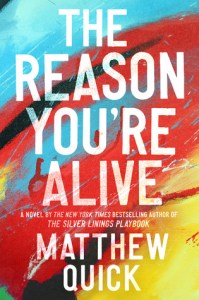
1. The Reason You’re Alive by Matthew Quick
I have read his young adult novels but have never read his adult ones… until now. I’ve recommended this title to more than a few people immediately after finishing it since the cyclical story about redemption is the human story. Do not read if you do not like some tragedy with a side of hope. Well, a lot of tragedy. And the grittiness of the main character is at times difficult to swallow, yet the story is significant: a Vietnam veteran rehashing a lifetime of darkness. But the arc of the story is why Quick is known for his writing acumen.
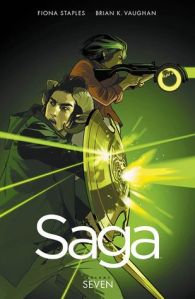
2. Saga by Brian K. Vaughan and Fiona Staples (artist)
You’ll see me in line for volume eight of this graphic novel series that should be hitting stores in a few days, but volume seven came out in April. I was already late to the game since Vaughan and company has been giving readers the science fiction soap opera for years, but I had only just discovered it while sitting on a graphic novel committee for teens and a discussion of Saga came up. I read the first volume, then tore through all available volumes until I was fresh out. Is it filled with sex? Yes. Is it genius? Yes. I wish I could take credit for the ingenuity of the sci-fi characters but the story line at its very core is Shakespeare’s Romeo and Juliet. But much more contemporary. And with more sex. Did I say that already? I know I’ve convinced you, so see you in line on the 27th and not a minute before because you’ll be catching up if you haven’t already been following it.
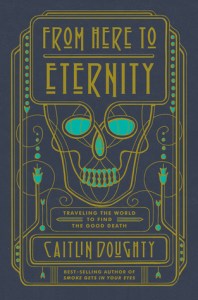
3. From Here to Eternity: Traveling the World to Find the Good Death by Caitlin Doughty
Yes, still obsessed with Doughty’s one-woman effort to transform the death industry. If you didn’t subscribe to her Youtube channel, you will after watching just one episode. She’s fascinating and funny with a side of serious. And this book (one of very few I bought the first day it came out) was no different. The subtitle tells you what you need to know: she traveled around the world and explains the process of death in other countries. In some cases her vivid descriptions led me to Google and also got me thinking, more than she already has, about my own death preferences. She’s a storyteller with a message.
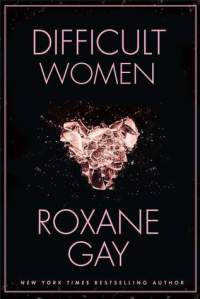
4. Difficult Women by Roxane Gay
This was my first read of Gay’s and I’ve quickly put myself in line for her past work. The collection of stories were a mix of haunting and dark (my favorite kind), serious, realistic, sad, and powerful. They pack a punch to the gut and peek behind the curtain of the lives women lead.
5. Dear Fahrenheit 451: A Librarian’s Love Letters and Breakup Notes to the Books in Her Life by Annie Spence
You don’t have to be a librarian, but you do have to have some kind of book sense to appreciate Spence’s humorous approach to writing love letters and breakup notes to books. In fact, you might be inspired to write a few of your own. And I can tell you I fell in love from the moment she professed her undying love for The Virgin Suicides by Jeffrey Eugenides- it easily makes my favorites list. Though Spence also makes it okay to not like a book because sometimes it’s just not the right time, just like the boyfriend or making a career move. It’s a light read and an easy gift for a bookish friend, but you’ll want to buy a second copy for yourself.
6. The Sun and Her Flowers by Rupi Kaur
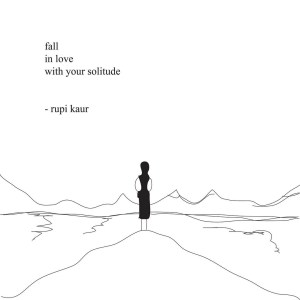
I’m riding the bandwagon of Kaur fans and I’m not ashamed of it. She’s one of a handful of poets that share their poetry via Instagram and it has made them more popular. I own milk and honey and went out to buy her second collection the day it came out. I waited a week and by the end of the sitting had both finished and had about twenty Post-its sticking out of the book. This one felt more personal than her first as readers got to know more about her background and feelings. The sketches are just as important in this one as the first that add a flair unique to her work. Often without capitalization, some poems are mere lines, while others fill the page and she can pack a punch with either.

 There is no greater purpose for me than when someone, anyone, approaches me to ask for a book recommendation. Be it a student, a faculty member, or my own mother. Multiply this love by one thousand when I’m asked to present to others about books and reading.

 It was an inspiring event with all levels of amazing authors. The vibe is absolutely incredible and filled with book love. But I wasn’t done yet. I have never spent time in Hudson so I couldn’t not stop at





 As I started to shape what I wanted to share in this post, I also remembered that a fellow New York State librarian, Sue Kowalski, often uses the hashtag #momentsthatmatter when she posts to Instagram, usually when sharing pictures of her mother, but friends and family. She knows the value of a moment. I wonder if she could have contributed to the book? In essence, the Heath brothers set out to demonstrate to readers how experiences in our lives have an “extraordinary impact” and drill down to the four elements of powerful moments: Elevation, Insight, Pride, and Connection. They reluctantly share the acronym to easily remember it as EPIC.



 1. The Reason You’re Alive by Matthew Quick
 2. Saga by Brian K. Vaughan and Fiona Staples (artist)
 3. From Here to Eternity: Traveling the World to Find the Good Death by Caitlin Doughty
 4. Difficult Women by Roxane Gay
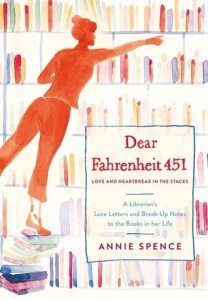 5. Dear Fahrenheit 451: A Librarian’s Love Letters and Breakup Notes to the Books in Her Life by Annie Spence
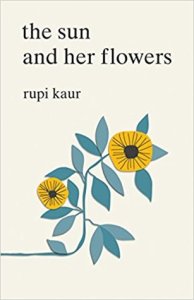 6. The Sun and Her Flowers by Rupi Kaur