I’ve written before about completing Riotgrams Instagram challenges– a photo each day for a month around the prompt set forth that usually aligns in part with holidays, seasons, and suggestions from Book Riot‘s followers. I thought I’d share some book recommendations based on the prompts and my pictures so far this month. Keep in mind it’s only October 15th, which means there’s still a half of a month to go!
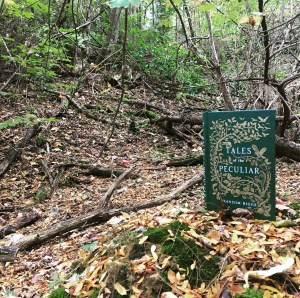 Tales of the Peculiar by Ransom Riggs is an addition to the Miss Peregrine’s series. This book is a collection of short stories written under the guise of a historian for peculiars and tells the tall tales that only another peculiar can tell. Some are light-hearted but some are downright depressing. But it brings out the best in Riggs’ creativity and is a perfectly natural (see what I did there?) addition to the family of books.
This post’s inspiration was “books in nature”.
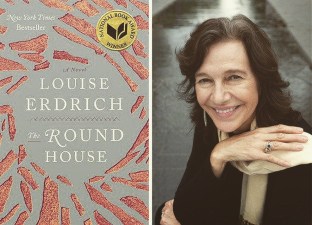 The Round House by Louise Erdrich is an adult novel written in 2012 that is a multi-layered and emotionally-draining portrayal of a family torn apart on the North Dakota reservation of the Ojibwe tribe. This is the kind of book you dive into with every fiber of your being and continue to think about after you’re finished. It’s likely a book I will re-read when I don’t often do that.
This post’s inspiration was “Native and indigenous reads.”
 Into the Bright Unknown by Rae Carson is the final book in her Gold Seer trilogy that I finished about fifteen minutes ago. I bought it on it’s book birthday because I had to have it and finished it within a few days, though if I could ignore adulthood, I could have been done the following day. Carson demonstrates the facets of immigration and race relations in the 1850s during the Gold Rush though it began years before that in the south after Leah’s parents were murdered and she needed to run, hiding herself in plain sight as a boy and meeting up with a band of interesting people all pushing their way west. If I can provide more encouragement to read the series, know that I had at least one night of dreams set in the wild West myself that demonstrates Carson’s command of setting.
This post’s inspiration was “books & candy”.
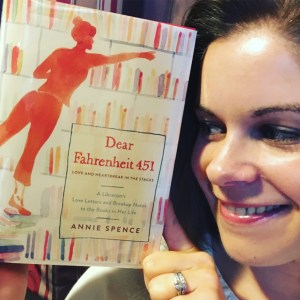 Dear Fahrenheit 451: A Librarian’s Love Letters and Break-Up Notes to the Books in Her Life by Annie Spence is a must-read for librarians (duh) and avid book lovers. Her uniquely humorous style provides glimpses into her reading habits and her life. Her and I are kindred spirits because we share an all-time book favorite The Virgin Suicides by Jeffrey Eugenides. Her approach had me laughing and smirking making for awkward public interactions. But readers certainly can find ways to incorporate this style– a love letter to your books– into some epic internal conversations or as part of your next book group meeting. Love, Alicia.
This post’s inspiration was “current read.”
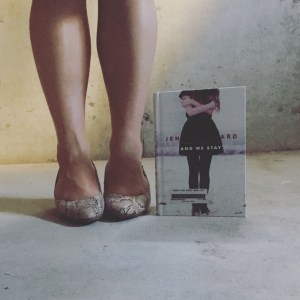 And We Stay by Jenny Hubbard has one of my favorite covers. So while it’s not winter and I wasn’t going to dress in all-black, you get the point. This young adult novel features poetry and inspiration from Emily Dickinson in one of the ways I appreciate contemporary YA authors– bringing back the old by incorporating it into the new. The main character has experienced something tragic and is now at a boarding school and channeling Emily Dickinson to heal. The mystery unfolds over the course of the book and readers get to go back in time and revisit some of Emily Dickinson’s best poetry while Hubbard flexes her own poetry muscles and has Emily writing her own which is just as beautiful.
This post’s inspiration was “three word titles.”
 Lab Girl by Hope Jahren is an adult biography that I have recommended widely since reading. While I will never know what it’s like to be a scientist, I felt like I understood the life of one, with the added benefits of chronicling Jahren’s personal life alongside her academic one. Without a doubt, it is eloquently written and organized in a studious manner, with three sections being named for plant life weaving these plants into the story of her own life and her lab partner. It’s as serious as it is cerebral with commentary on mental health, family, friendship, and science itself.
This post’s inspiration was “underrated read”.
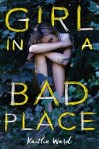 The first, Girl in a Bad Place by Kaitlin Ward is a copy I’m reviewing for VOYA, so you can read the full review there, but suffice it to say that when a girl is in trouble, sometimes she finds the path of least resistance and when that path leads to dangerous individuals, it’s important to have a girl friend to keep it real.
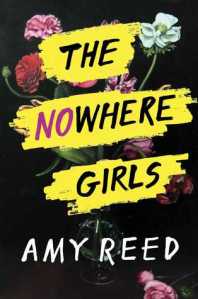 And keepin’ it real is what a group of girls in The Nowhere Girls by Amy Reed does when a new girl moves in to the house formerly housing another student who moved after a traumatic rape. The school and community’s lack of justice for her and subsequent girls who have tolerated this behavior are ready to stand and fight led by three very unique girls who empower others’ voice. Erin’s autism is useful as she continually discusses how she is underestimated by others. Rosina’s pressures include the conservative Mexican-American expectations of her family as she explores her sexuality and sense of duty. Then there’s Grace, the new girl, who provides fresh perspective couched in a liberal church community that her mother heads. What is admirable and respected in the story are the richness of the voices, but the very real conversations Reed has with her readers.
 And while the third book is an adult essay collection with a great deal of sexual content, the rawness of the approach is what won me over. I hadn’t read any of Gay’s other works that include Bad Feminist and Hunger: A Memoir of (My) Body so I cannot speak to those but each story while sometimes with similar character profiles or development allows for reflection. I’m the first one to admit I love dark books and this one fits the bill as Cornelius Nepos says “after darkness comes the light.”


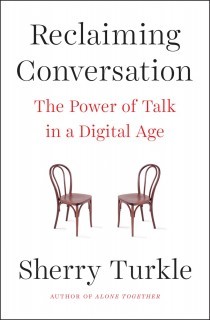 Yes, we need to have digital citizenship lessons, but we have forgotten to continue the lessons on personal citizenship because of and ignorant of our digital lives. We believe we know people because we are connected with them on social media. We believe we are better than or worse than people because of what we see on their feeds. We compare ourselves to Photoshopped images in advertising. We reserve the right to demean others either because we are behind a screen or because we think it is our right. Turkle shares a few stories that I can only compare to why teenagers are less likely to get their drivers license. We have scared them with advertisements, statistics, and more. And the same thing is true in real life. We have scared teenagers into speaking less because they see what happens when people say the wrong thing. The instant screenshot or video immortalizes a misstep. For whatever reason, Turkle’s example of a teenage boy who ignored a phone call from a college recruiter so he could email him instead later was explained by the boy as a fear of saying the wrong thing over the phone. He shared that a phone conversation is too quick for him to think about what he wants to say and the fear of saying the wrong thing drives him to email instead because he can think as he types.
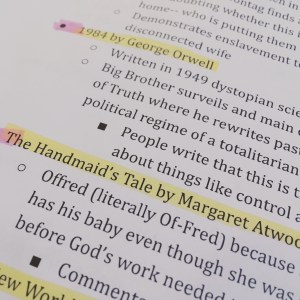 But, I was thinking about the art of the booktalk after spending two days in classrooms talking to tenth graders about choosing a classic book to read for their fourth quarter project. I had a lot of ground to cover and not all of the books I had read. Yet that is nothing new because I booktalk frequently on topics that I may only know slightly and I am a firm believer that you can booktalk a book you haven’t read. I organized the books into categories that helped channel the number that I was talking about and then prepared my cheat sheet (things like publication date, title characters, main ideas, themes or topics, or a relevant current topic that paired nicely). And while this is necessary, I generally don’t


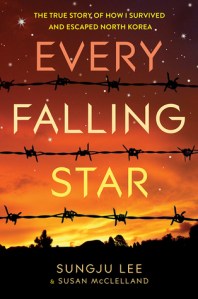 This needs to be a purchase for every library from middle school through high school and that every adult should read as well when it comes out in September. A narrative of how a boy survived and escape North Korea. Written by Sungju Lee and Susan McClelland, Every Falling Star: The True Story of How I Survived and Escaped North Korea is a harrowing account of Sungju’s time in North Korea and the journey to South Korea as a defector. In line with any child soldier narrative from African countries especially Ishmael Beah’s A Long Way Gone, accounts of growing up during the Cultural Revolution in China, Patricia McCormick’s Never Fall Down about Cambodia’s Khmer Rouge, or in recent fictional reads like The Bitter Side of Sweet by Tara Sullivan that describe child exploitation, Lee expresses himself in a genuine and heartfelt manner so that anyone can understand the pain and suffering that exists at the hands of the North Korean government. It’s the ease of his writing that make this a book for any age and no age. The need for these narratives is overwhelming.


