
This originally appeared on the Times Union Books Blog
A letter from a school librarian to her graduates,
Reflection happens periodically: beginning a new adventure, closing the book on a past one, moving on from relationships, at the beginning of a new calendar year, the close of an old one, when a tragedy strikes too close to home. So forgive me for waxing poetic at the close of this school year for five soon-to-be high school graduates (and by soon I mean at the end of this week). This is as much for and about them as it is about how fortunate I am to work as a school librarian.
For DC– having made small talk at the desk or in carrying stacks of books to you at the table over the last few years, I cannot be more happy for someone to move to the next chapter in their life, even if it means I will no longer get to see you. We absolutely have an affinity for the same kind of book, the dark and disturbing ones that really make you think. I have equally enjoyed reading your selections for me as I have had in giving them to you, notably when it’s given us plenty to discuss afterward– what really did happen to Wink at the end of the story? I couldn’t wait for you to finish to see what you thought and you always gave it to me straight. There were misses, but plenty of hits and when you needed a recommendation, my favorite response when I asked you what you were in the mood for was “you know what I like”. Because one of my favorite parts of librarianship is knowing readers and finding those perfect books. The ones that have to be yours and that seem to have been written just for you.
For CC– you might have gotten busy this last year or two with classwork and sports, but however infrequently you did stop down after marathon sessions as an underclassmen, I still thought CC would love this book while reading the dystopian, science fiction or action stories that you loved so much. Once finished, I’d bring the book in, put a post-it on the front with your name to remind me to hand it to you when I saw you next. Then there were the surprises– when nothing I was pitching sounded good and you decided to just take the next closest thing on the counter because the cover looked good and I shrugged and said okay! You are a voracious reader and even though I knew you weren’t getting all of your books from our library, I was never actually worried that you’d be without. Perhaps one of the biggest impressions you’ve made is to remind me that as much as we read statistics on who stops reading by what age and how we can combat it is that there’s no substitute for the students that are standing right in front of us. Help them now and work on reaching everyone else after.
Speaking of boys, for DC– no one can hold a candle to you, my friend. As author Jack Gantos replied in an email to me when I sent him a link to your film debut, “Of course I remember him, no one who meets him will ever forget him.” You’re a thinker and a creator. It wasn’t about books as much as copyright and music and drawing and creating when we talked to you. You wanted to learn from the authors we hosted and ask them pointed questions about “the business” and their own creativity. You were a frequent user of our library and your public one that only solidified your continual quest for knowledge. So knowing the plans you have for yourself, indeed you’ll succeed because you know where to start.
For SJ– your mother works around books, so it was only natural that you’d find your home in the library too. Your intelligence and open-mindedness always sought out the best-written and most diverse titles because you always wanted to be learning something, which no doubt will be your life’s theme. You attended library events and activities like they were your job and we could always rest assured that if there was an event and you were there, all was well. You were a cheerleader for the library both to feed the mind but also to gather with friends and promote peace. Plus, I finally thumbed through the yearbook and saw your message… the pleasure is all mine!
And for JM– perhaps the most prolific library user, you will forever be remembered in the library. Sometimes it was the computer and making sure you had headphones to go with it, but most often it was the countless hours you had spent volunteering, if only to be the first one to see the new books. You quite possibly could be my number match at answering the most frequently asked question: “Miss, have you read all the books in this library?” Though you’ve got me beat on remembering the stories. You love your dystopian and apocalyptic novels principally when there’s an environmental crisis. I could spent over an hour meandering through the stacks with you for you to literally put down every book I tried to put in your hands, only to walk away with nothing and be okay that we’d try again tomorrow. I’d shake my head and feel like a failure, but for you, it was okay, because nothing sounded good today, yet you’d be back tomorrow and we’d find something then. Tenacity and curiosity are your weapons and what makes you the person you are. There’s a reason I always had gum in my desk drawer and I’ll give you a piece any time you ask for one.
Recently at a conference the presenter quoted Doug Johnson who said “the goal of the library is not to get back the books but to get back the readers.” Pause. All the librarians’ hearts just skipped a beat because that is the best line ever. It’s our life’s work. Because if we can capture the reader, it doesn’t matter about what the book is. For us school librarians, we sort of have a due date as students move buildings and obviously when they graduate. It’s bittersweet for sure. Though I always hope that they find a way back, even if it means signing in at the main office and sticking on a visitors pass. But I know too that the same work was accomplished the minute they cross the threshold of their college or public library too, whether I’m there to see if or not.
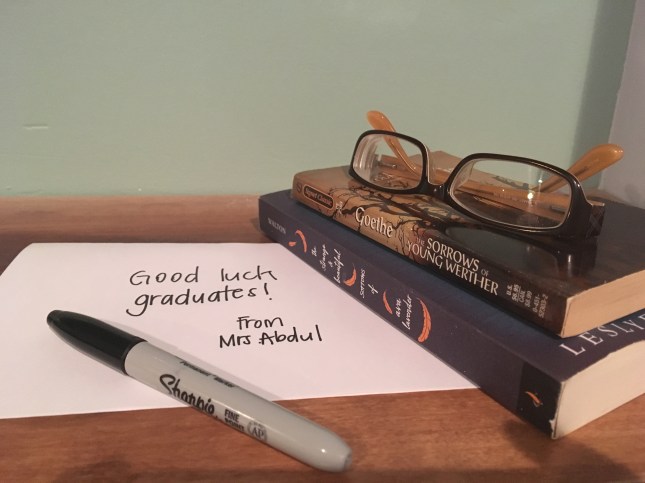
 There’s something about reading a beautifully-crafted and lyrical children’s book that instantly reminds you of the classics like Charlotte’s Web, Tuck Everlasting, Peter Pan, and James and the Giant Peach. Lauren Wolk’s Wolf Hollow will become a contemporary classic if I have any say.
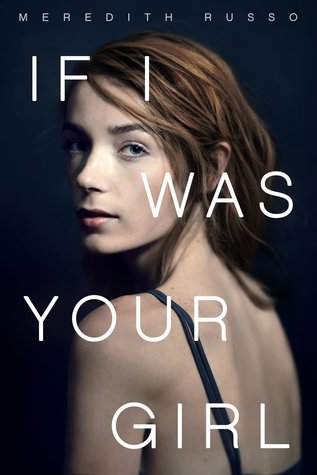 The premise is that Amanda is going to live with her father after a beating in a mall bathroom in the town where she currently lives with her mother. Thinking that Amanda can start fresh in a new place, the obstacles of truly being accepted by her father and then being a girl in a new school are enough to wreck her nerves. But, things are settling in well and Grant, a kind-hearted boy, has already taken an interest in her. And while she wants to tell Grant about her being born a boy, his insistence that he’s not interested in any “secret” puts Amanda at ease. For the first time, allowing herself to truly enjoy being herself, though she has told another girl she befriended at school.


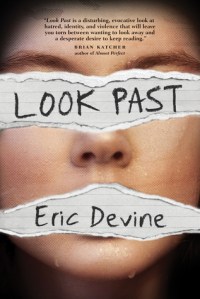 ole focus of the story with a weak storyline for the sake of having a GLBTQ character, newer fiction is going deeper. The stories are mysteries and fantasy and science fiction with characters that are GLBTQ. And that’s exactly what you get in Look Past.
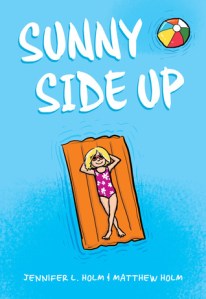 aracter is tween/teen and dealing with life. The realistic, down-to-earth kind of story that makes it an “every person” book, not for a specific subset of readers. In addition, like the other graphic novels’ illustrations, I am on board with the vivid coloring and rounded illustrations that are in stark contrast to darkly explored stories in black and white.


