RSS

Author Archives: Alicia Abdul

Unknown's avatar

About Alicia Abdul

You'll find me drinking tea in a dress and reading... or making lists.

R+J reboot

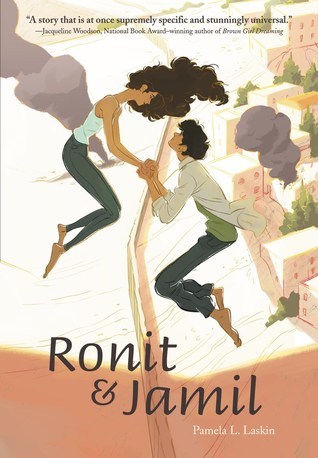
Coming in 2017 is a beauty that re-imagines Romeo and Juliet as Ronit and Jamil. Ronit is an Israeli girl and Jamil is a Palestinian boy whose fate is determined by their families, not by free will, until it isn’t any more and they fight their way to each other. The lovely cover art tells this story.

ronitjamilMemorable character: Clearly you cannot separate our two main characters who are fighting passionately for one another when all others would tell them to quit. They both speak eloquently through Laskin’s gorgeous  poetry, told alternately between the two.

Memorable scene: How can it not be the ending? Will they make it or won’t they make it? The conversations around what is, what could be, and what every reader hopes will happen make it just as complex as Shakespeare’s play. But what kind of blogger would I be if I spoiled it?

Memorable quote: There were so many I highlighted as I read the advance copy via Netgalley but this one showcases the connection Ronit and Jamil feel for one another and that the richness of Laskin’s language, the maturity of the characters, and the electricity of their political, familial, and religious situation is not PG. “My head says / this is dangerous territory, / yet each night / the cloud of my pillow / takes us to a place / where your eyes and mouth / invite me / for supper, / so I stay / not away / my sister / friend / lover”.

Just as any reboot has done from Walter Dean Myers’ Street Love to Sharon Draper’s Romiette and Julio, it’s advised to add several copies both to compile read-alikes to Shakespeare’s plays but also to add diversity to experiences as this does.


Transformation

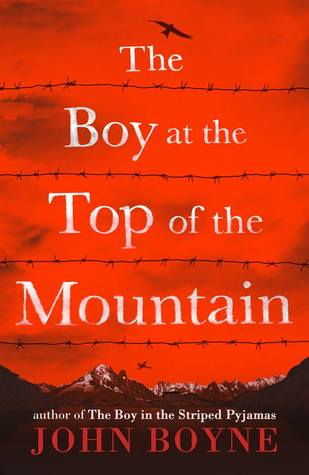
The last of three books referenced in Alexandra Alter’s New York Times article was John Boyne’s The Boy at the Top of the Mountain. There is no way to pick a favorite out of the three and specifically Boyne and Sepetys have both written other blockbusters, it is the magic of storytelling that they weave into the characters and situations during World War II that are intoxicating. I was worried that Boyne’s was going to be a repeat of his popular The Boy In the Striped Pajamas since the main character of The Boy at the Top of the Mountain is introduced to readers as a seven-year old boy. But readers quickly realize that we would be  watching a boy turn into a man in this story. And I use the term man loosely because the reason this book will tug at your heartstrings and make you shout out in anger is that Pierrot makes a dangerous turn from being a loving French boy orphaned by his parents after their deaths into Pieter, a dangerous German boy who becomes Hitler’s protege. This transformation leaves anger, frustration, and death in its wake.

Memorable character: Of course it is the main character, Pierrot, born to a French mother and German father, the latter who survived World War I only to commit sboyattopofmountainuicide because his post-traumatic stress overruns his mental health. Pierrot then loses his mother and after a short jaunt at a uniquely caring orphanage run by two sisters, Aunt Beatrix brings him to her place of employment, one of Hitler’s homes at the top of the mountain. Here she encourages him to change his French ways and cut off contact with his Jewish childhood friend to befriend her boss, Adolf Hitler. And befriend he does, leading to a visceral change: “It was Pierrot who had climbed out of bed that morning, but it was Pieter who returned to it now before falling soundly asleep.” This haunting sentence sets readers up for the heartbreak that Pieter will dispense at the hands of other employees at the home and even with a girl he says he cares for.

Memorable scene and related quote: Without any true spoilers, I will only say that the denouement is epic and similar to another old favorite: David Chotjewitz’s Daniel Half Human: And the Good Nazi that leaves readers deflated and fully-aware of the passage of time and how people change in the face of war with this exchange:

“Could we be children again, do you think?” I shook my head and smiled.

“Too much has happened for that to be possible.”

I already have ordered multiple copies of this, along with Hesse and Sepetys’ works both because of their intricate storytelling but their attention to details and voices that may not always be written about. I advise teens and adults to put this one on their list, but like Pierrot’s transformation, you as a reader will be transformed as well.

 
Leave a comment

Posted by on October 10, 2016 in Fiction, Young Adult


Six sensational dark tales

Having just finished Mindy McGinnis’ The Female of the Species, I reflected on my love for dark stories. Not horror stories per se with witches, vampires, or zombies, but dark in mood with tragic happenings to characters and their responses to the situations. So, let me highlight six of my favorite.

  1. The Female of the Species by Mindy McGinnis– This one features Alex who knows the “language of violence”. She seeks retribution for the murderer of her sister, men who are sexually preying on her classmates, and ultimately displays little reaction or emotion to avenging these wrongs.
  2. Midwinterblood by Marcus Sedgwick– The master at dark and twisty tales demonstrates his master storytelling with an intelligent tale of human sacrifices all revolving around an island and through time.
  3. Broken Dolls by Tyrolin Puxty– She packs a punch in a short amount of time balancing good and evil with ethics and exploration of what “could be” using literal dolls to… wait, I can’t tell you because that would be a spoiler. A must read for those with imaginations.
  4. Hideous Love: The Story of the Girl Who Wrote Frankenstein by Stephanie Hemphill– This look at the tragic life of Mary Shelley is the combination of beautiful verse and the sadness of losing multiple children combined with her tumultuous relationship with Percy that bred her writing of Frankenstein.
  5. Cruel Beauty by Rosamund Hodge– I can’t get the image of Nyx being locked in the room only to discover what was in it. The cruel Ignifix, Beast to her Beauty in this retelling is full of creepy subplots to keep interest.
  6. Poisoned Apples: Poems for You, My Pretty by Christine Heppermann– A collection of fifty poems that poetically “attack the beauty myth” are for mature audiences looking for a fresh but raw perspective of fairy tales.


Late nights

There are nights when my head hits the pillow and I realize there’s just too much in my head to be able to fall asleep. My cure? A bath and a book. So I grabbed Ransom Rigg’s Tales of the Peculiar with it’s beautifully lush green cover gilded with gold vine. There’s just something about it. Then there’s the amiable “historian” of the peculiars, Millard Nullings, Esq., EdD, MBCh. who is compiles the tales of the peculiars. I can only hope this is the first installment.

Memorable character: Each short story brings its own set of unique characters but the tale of “The First Ymbryne” is an absolute favorite that opens with “The first ymbryne wasn’t a woman who could turn herself into a bird, but a bird who could turn herself in a woman”. It brought me back to all that I loved about Rigg’s first installment of his series and meeting Miss Peregrine herself. And meeting Ymeene is no different. Strong and fearless.

Memorable scene: In “The Woman Who Befriended Ghosts” the reunion of Hildy’s dead family with her living family is the penultimate beauty of both the creepiness of the story of a girl who could see ghosts and the themes of family (through blood or loyalty) throughout his series and this book of tales.

Memorable quote: The humor of each tale lies in the narrators nonchalance. Take for example the case of the cannibals descending upon villagers. “He went on to reassure the shocked villagers that they were civilized cannibals and never killed innocent people. They, and others like them, had worked out an arrangement with the king by which they agreed never to kidnap and eat people against their will, and in turn they were allowed to purchase, at terrific expense, the severed limbs of accident victims and the bodies of hanged criminals. This comprised the entirety of their diet.”

I advise that anyone who became obsessed with Rigg’s genius in his Peculiar series pick up this book immediately and face it OUT to admire the cover, but even those that haven’t been entangled in the world of peculiars can still appreciate the creativity in this handsome collection. More, we want more!


How to put this into words

girlinthebluecoatI usually have to distance myself by a day or two after finishing an amazing book and truly being able to write about it. Haven’t we all been there where we close a book and stare at the cover thinking about all the ways we were moved by it and how it will affect our world view? Monica Hesse’s Girl in the Blue Coat is one of those books. You can read an article written by Alexandra Alter for the New York Times who I had the pleasure of talking to based on my love for Ruta Sepetys’ works. You’ll have already guessed that John Boyne’s The Boy at the Top of the Mountain is in my pile to read after being blown away years ago by The Boy in the Striped Pajamas.

But back to Hesse’s Girl in the Blue Coat, a multi-layered masterpiece of action, intrigue, history, and character.Each character introduced is richly imagined and even those with smaller parts are just as integral. It’s the power of Hesse’s descriptions and situations. Bas is never alive in the story but he is ever-present throughout and I would recognize him anywhere. Hanneke runs errands on the black market in Amsterdam. She is uniquely positioned with a real job in a morgue that supports her family, but allows her access around the city to get items for those who want them, however illegal. But it’s Hanneke’s new mission, and her reluctance at first to accept it, that is the problem. She must find Mirjam, who mysteriously vanished from a hideout at the request of her sympathizer. And in this quest, Hanneke is opened up to the underground world working against the German occupation in the Netherlands of which she was only a small part before.

Memorable character: This is a hard choice as I already mentioned, but let’s talk about Ollie. The brother of Hanneke’s dead beau who is an academic working for the underground and reveals himself as gay to Hanneke late in the book. He has as much to fear about his sexuality and persecution as he does from working against the occupation, but it’s his cunning especially when he brings Hanneke in to the fold that shows his brilliance but also his pain. After all, he did lose his brother to the war effort as much as Hanneke lost her boyfriend, but he didn’t rip up the “goodbye” letter like she did.

Memorable scene: Hanneke must grow up sooner and nothing showcases her growing frustration at discovering the dark side of war than when she finally unleashes unpleasantness toward her family. “I forbid you to leave this house again. You are still my child, Hannie.” “Oh Mama, I’m not your child.. I bring the money into the house. I buy the groceries, run all the errands. Mama, I’m the one who takes care of you.” “The daughter I know never would have spoken to me this way.” “That daughter doesn’t exist anymore… She is gone, and she’s never coming back.” I can hear her mother’s heartbreaking along with Hanneke’s. No one wants this.

Memorable quote: How do I pick one, especially with scenes like the one above? I have twenty five highlighted passages and several bookmarked pages that shocked, scared, saddened, and infuriated me. But, nothing is as unsettling as Hanneke’s visit to the Schouwburg and the subsequent answer to the smells after leaving in addition to the death and sickness- “Fear. That’s right. That was the odor I couldn’t place before. That’s the smell of my beautiful, breaking country.”

I advise anyone with a love of World War II historical fiction to put this on their list immediately. It’s the right mix of lawlessness and sabotage, mystery and guilt, with characters willing to take chances. The twists are well worth the wait, but each turn is beautiful with Hesse’s steady hand.

 
Leave a comment

Posted by on September 11, 2016 in Cover Love, Fiction, Young Adult


Chain Mail 2.0

Yesterday I was tagged in a Facebook chain message. My first response, like any chain snail mail or email from years past was to ignore it, but this one was about books, so how could I resist?

The purpose was to quickly share, without too much thought, ten books that have stayed with you in some way. Here were my ten (with a brief explanation of why):

1. Fallen Beauty by Erika Robuck is a beautiful piece of literature that seamlessly weaves real characters and intersecting them with everyday people. The juxtaposition between Edna St. Vincent Millay and Laura Kelley is brooding with layers of passion and sacrifice that touches me deeply.
2. A Northern Light by Jennifer Donnelly focuses on Mattie who wants to better herself and she does it by learning new words and seeking knowledge. This is the motto of my life.
3. The Strange and Beautiful Sorrows of Ava Lavender by Leslye Walton moves me on an elemental and mystical level. It’s the deep-seated family history and Ava’s final moments with Nathaniel Sorrows that absolutely transformed me.
4. Mudbound by Hillary Jordan is a modern version of The Awakening. A woman and her sacrifice, passion, and dreams dead-ended in their muck-covered Mudbound farm.
5. Out of Darkness by Ashley Hope Perez. Where do I begin with this soul-ripping, earth-shattering darkness that throws your emotions around like a rag doll? Naomi, Naomi, Naomi. Pain, passion, a quest for comfort and love.
6. Guardian by Julius Lester begins with “There are times when a tree can no longer withstand the pain inflicted on it, and the wind will take pity on that tree and topple it over in a mighty storm. All the other trees who witnessed the evil look down upon the fallen tree with envy. They pray for the day when a wind will end their suffering. I pray for the day when God will end mine.” There is nothing more to do than to read and follow the pain. One of the most uniquely beautiful opening paragraphs.
7. Speak by Laurie Halse Anderson is a contemporary classic about a girl finding her voice when it has been silenced by rape. There have been many iterations, both well-done and not-so-much, but this one takes the cake with a simple but clear message that YA readers need so desperately. And regardless of what most think, the movie was spot-on and truly showecased the mood of the book for me.
8. The Lovely Bones by Alice Sebold was one of the first books that I literally photocopied pages from to keep and reread. The transcendental nature of a narrator talking from haven was unique and sad and then having read Sebold’s memoir Lucky, it all came together.
9. A Natural History of the Senses by Diane Ackerman makes me want to know more and be better. Ackerman’s knack for beautiful writing and a well-researched focus feeds my need to focus on the beauty and gratitude of nature (in the form of our five senses).
10. What Teachers Make: In Praise of the Greatest Job in the World by Taylor Mali is a force for those in education. Having been able to see him a small, eclectic bar/performing arts establishment was invigorating and his ingenuity and talent for spoken word pours from him. And though his observations are spot on and the book is a testament to that, it can only be best experienced with the ear. I’m linking my favorite here: “I’ll Fight You For the Library”.

As you can see, the books that speak to me tend to be ones where characters are experiences the darker side of emotions but are trying to chase passions regardless. There is a reason my tattoo is what it is and why I feel these books on an elemental level.

Please share yours whether it’s on social media or in the comments. Not that I need more to add to be to-be read pile, but, that’s what book sharing is all about.

 
Leave a comment

Posted by on September 5, 2016 in Adult, Authors, Fiction, Nonfiction, Young Adult


Paradise in the 202

This post originally appeared on the Times Union Books Blog

LoC

I’m a nerd for anything that I can learn from, so a day and a half excursion to Washington, D.C. is a ripe opportunity to learn and admire. And there was no better place out of all of the touching and awe-inspiring memorials, monuments, and museums than the Library of Congress’ Thomas Jefferson Building as a book lover and librarian. As one Facebook friend commented, “Mecca!” I truly would have, if I wasn’t going to be trampled by roving tourist groups and admirers, laid down in the middle of the ornate Great Hall and sighed a big sigh of love. A great love of books. And as my two souvenirs quoting Thomas Jefferson attest, “I cannot live without books.” One adorns my bookshelf and one will adorn my wrist.

As much as the fountains and facade were surreal and the overlook to the Main Reading Room was gorgeous and touring the building’s hallowed halls were epic, I spent the most amount of time learning about Thomas Jefferson’s collection, arranged in a glass-encased circle and organized in his three categories of Reason, Imagination, and Memory. Then, studying the two exhibits: America Reads and Jacob Riis: Revealing “How the Other Half Lives”. Both of these exhibits are temporary with Riis’ ending in less than a week and America Reads ending in December. It feeds the mind and is a feast for the eyes with stunning images, easily read captions, and a powerful story to tell.

Visit this jewel when in Washington, D.C.– the “world’s largest repository of knowledge and creativity, with a growing collection of more than 162 million items”.  The library (and any library for that matter) is what will sustain us. A popular quote when positions and library funding is being cut is Walter Cronkite’s

“Whatever the cost of our libraries, the price is cheap compared to that of an ignorant nation.”

And the $23,950 that was allocated in 1815 to purchase Jefferson’s collection when the British burned Congress’ first is just such a cost.

If I never get back there again, it will be okay– a new adventure in a new place to learn new stuff, but I’m richer for this experience. I stopped to breath it in and admire it in a way I hope the many visitors do even if they’re not nerds for it like me.What library have you visited that takes your breath away?

 
Leave a comment

Posted by on August 30, 2016 in Miscellaneous


A character-driven thing of beauty

This is Carson’s second trilogy: her first, Fire and Thorns, was a masterpiece of gorgeous cover art with a plucky heroine, plenty of action, and an imaginative world. After staying up late to read the second book in Carson’s new planned Gold Seer trilogy, Like A River Glorious, I can confidently proclaim this an equally intelligent masterpiece to her first threesome.  Carson does not waiver in her abilities to create realistic and likeable (or very dislikeable) characters that wrap you up in their world.

Memorable character: I’m going to go with the man behind the woman on this one. I’m not going to talk about our main character, the kick-butt and take-names Leah Westfall, who makes bad decisions, thinks about them, tries to correct them, and realizes that home is not a place, but people. Instead, I’m going to talk about Jefferson McCauley Kingfisher who has been in love with Leah since they were tykes, a man that will “do just about anything for the woman he cares about.” And even though this relationship is friendship and romance, it’s not the kind of romance that overpowers this magical history ride. It’s his supportive nature, his ability to overcome insane odds from an abusive household to discrimination and physical abuse at the hands of Leah’s Uncle Hiram. And he does it with a smile because “if he can find something to grin about in our situation, then maybe there’s reason to hope, after all.”

Memorable quote: So I’ve already quoted the book twice and have about twenty such highlights in my digital copy, but I’d say the paragraph that sums up Leah’s epic journey as well as her magical ability is “for a moment, I am happy, maybe the happiest I’ve been since Uncle Hiram murdered my parents and stole my life from me. I have sunlight on my face, and the siren call of gold singing under my skin. I’m with family again, my real family now, whatever the law says, and I’m doing something I’m good at.” It’s Leah’s confidence even in the face of adversity and indecision that ultimately pulls through.

Memorable scene: And the quote leads to my favorite scene, though not a particular scene, but instead the setting of Glory, California; the shanties that become a small town with the teamwork of Leah and Jefferson, Widow Joyner and her kids, Major Craven, Hampton, Jasper and Thomas, Henry, and the Hoffmans. To see this grow from nothing as they move westward is a phenomenal sight.

I would advise everyone to pick up this series if they haven’t already and carve out the next day or two to soak in every word. It needs to be on library shelves and shared widely because with adventure, history, and magic, a reader can’t go wrong. Then it’s the little things interjected (like justice and friendship or questions of loyalty and sexuality) that like the gold dust that coats Leah, adds just a bit more shine to make it sparkle.


America

With the Olympics in full swing and the pride of our nation in full view, I was ecstatic to download Laurie Halse Anderson’s finale to the Seeds of America trilogy, Ashes from Edelweiss. And like many of our Olympians winning gold, silvers, and bronzes, this book didn’t disappoint. In fact, after enjoying, but not overly obsessed with the first two in the series, I was pierced by the beauty of the arc of the story, the journey the main characters took, and the denouement. I will not spoil anything, but suffice it to say that while I am critical of most endings, especially in a series finale, my cup runneth over with warmth and calm.

Most memorable character: While Isabel is a strong character that demonstrates grit and strength as it relates to her sister, I was most intent on following Curzon’s story. His humbleness and pride blended healthily into the supportive man that he would become over the course of the three books. His cunning and creativity, his stories and sense of duty all provide ample opportunity to demonstrate his weakness for Isabel that becomes a story line in the third book, much to readers’ excitement. But while other writers beat readers over the head with romance in otherwise wonderful stories about other things, Anderson encourages the relationship with a gentle hand of a wise and prolific author.

Most memorable quote: Which leads to one of my favorite quotes that can only be truly understood in the greater context of the scene itself.

“‘God’s grace, Country.'” He sighed. ‘Then we have indeed finally won.'”

Most memorable scene: Yet the most memorable scene, while there are many beautiful and horrific ones that balance each other out as they are once again in the camps or when characters are reunited, it is the scene when Isabel and Curzon come across Ruth at the plantation– a moment that Isabel has waited so long for– and Ruth’s reaction to their appearance that is as heartbreaking as it is triumphant.

I advise everyone to read the entire series if they have not already. And if you haven’t gotten to the first two by now, wait until Ashes releases on October 4th so that you can read them in succession and not have to wait– the curse of many book obsessed people.


Obsession continues

It can only be described as binge reading. In one afternoon, I read through the seven books that I had my hands on in George O’Connor’s Olympians graphic novel series. I’m one short, with Apollo having come out in January, yet it’s not in our collection yet (oh, it will be). The next one scheduled is for 2017.

In order, the series showcases thus far2016-08-03 13.44.44
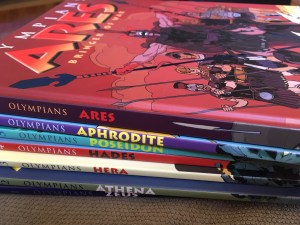
  1. Zeus: King of the Gods (2010)
  2. Athena: Grey-Eyed Goddess (2010)
  3. Hera: The Goddess and Her Glory (2011)
  4. Hades: Lord of the Dead (2012)
  5. Poseidon: Earth Shaker (2013)
  6. Aphrodite: Goddess of Love (2014)
  7. Ares: Bringer of War (2015)

But, because O’Connor is dynamic, the books focus on the central figure while introducing readers to others, both god and mortal along with the world in which they inhabit or fight for. The stories are concise and focused with beautiful images, simple text, and a story arch. But as an adult reader and high school librarian, I find the additional information after the story to rival the actual graphic novel. There are profiles of some of the main characters that could literally be posters hung on a wall (hint, hint :01 First Second). Then there are “Geek notes” that add the R above “geek” for a dash of humor, additional resources, discussion questions, and if that wasn’t enough, an author note which allows a glimpse into O’Connor’s world: his favorite gods and goddesses, the writing and illustrating process, and embarking on this monumental task. It’s a lesson in passion and perseverance. He serves the middle grade/YA reader along with the librarians and teachers who could use his content. As a package, it shows his mission is not to simply tell a good story, but to serve a larger purpose and that’s to educate kids about these mythical people and creatures with respect and research.

Memorable character: Without having read Apollo yet, the most memorable character was Persephone, highlighted in Hades’ story. Her transformation is like any teenager who fights with her mother and tries on many identities until she comes into her own. Having been whisked away by dark horses to the underworld, her reluctance is turned into acceptance as she creates an image and a name for herself (literally as her name was Kore until she named herself Persephone) as Hades’s wife. I’m also a fan of Demeter’s story in mythology anyway, so knowing that the focus of Hades’ story is almost about everyone else except him demonstrates that most do not know Hades because he chooses to remain elusive. He seems to prefer to be misunderstood.

Memorable scene: Like the Robert Frost poem in which “two roads diverged in a yellow wood”, Heracles had a decision to make, take the harder and more dangerous path with a woman waiting cloaked in darkness or the easier one with a beautiful woman standing bathed in sunlight. Heracles chose the darker path, on a road to become a god, but having to complete twelve labors before coming close enough. The language and imagery was among my most memorable thus far.

Memorable quote: In Aphrodite’s story, she brings to life Pygmalion’s statue named Galatea whom he created in Aphrodite’s likeness but who fell in love with his ivory statue and instead of offering it to her at her temple, asked that she may live. And Aphrodite willed it and attended his wedding to Galatea where she was cloaked. When he stopped at her feet with his new wife, Galatea felt compelled to thank her and her reply was “There is nothing to thank me for. Love like your husband has is love that must be shared. Be happy together. You were made for each other.” Oh how true that was!

I advise that everyone include this series on their shelves, whether it’s in mythology or graphic novels. It should make a rotation on end caps, in booklists, and book trailers. I’m glad I came to the party a bit late on these ones as I don’t think I could have waited each year for a new one to come out (like I’ll have to for the last ones in the series), but good things come to those who wait.