The last of three books referenced in Alexandra Alter’s New York Times article was John Boyne’s The Boy at the Top of the Mountain. There is no way to pick a favorite out of the three and specifically Boyne and Sepetys have both written other blockbusters, it is the magic of storytelling that they weave into the characters and situations during World War II that are intoxicating. I was worried that Boyne’s was going to be a repeat of his popular The Boy In the Striped Pajamas since the main character of The Boy at the Top of the Mountain is introduced to readers as a seven-year old boy. But readers quickly realize that we would be watching a boy turn into a man in this story. And I use the term man loosely because the reason this book will tug at your heartstrings and make you shout out in anger is that Pierrot makes a dangerous turn from being a loving French boy orphaned by his parents after their deaths into Pieter, a dangerous German boy who becomes Hitler’s protege. This transformation leaves anger, frustration, and death in its wake.
Memorable character: Of course it is the main character, Pierrot, born to a French mother and German father, the latter who survived World War I only to commit s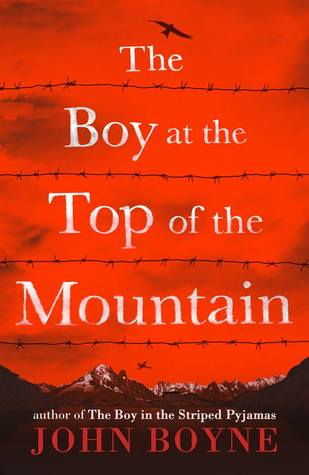 uicide because his post-traumatic stress overruns his mental health. Pierrot then loses his mother and after a short jaunt at a uniquely caring orphanage run by two sisters, Aunt Beatrix brings him to her place of employment, one of Hitler’s homes at the top of the mountain. Here she encourages him to change his French ways and cut off contact with his Jewish childhood friend to befriend her boss, Adolf Hitler. And befriend he does, leading to a visceral change: “It was Pierrot who had climbed out of bed that morning, but it was Pieter who returned to it now before falling soundly asleep.” This haunting sentence sets readers up for the heartbreak that Pieter will dispense at the hands of other employees at the home and even with a girl he says he cares for.
Memorable scene and related quote: Without any true spoilers, I will only say that the denouement is epic and similar to another old favorite: David Chotjewitz’s Daniel Half Human: And the Good Nazi that leaves readers deflated and fully-aware of the passage of time and how people change in the face of war with this exchange:
“Could we be children again, do you think?” I shook my head and smiled.
“Too much has happened for that to be possible.”
I already have ordered multiple copies of this, along with Hesse and Sepetys’ works both because of their intricate storytelling but their attention to details and voices that may not always be written about. I advise teens and adults to put this one on their list, but like Pierrot’s transformation, you as a reader will be transformed as well.


 I usually have to distance myself by a day or two after finishing an amazing book and truly being able to write about it. Haven’t we all been there where we close a book and stare at the cover thinking about all the ways we were moved by it and how it will affect our world view? Monica Hesse’s Girl in the Blue Coat is one of those books. You can








 Readers Be Advised