This post originally appeared on the Books Blog for the Times Union
The art of the booktalk. When a friend asks you about the book you’re reading or you’re sharing a recent fabulous read, how do you approach it? Do you ask a question? Perhaps have a pre-planned teaser or maybe you’d rather share an overview. Sometimes I’m so blinded by the emotion of absolutely loving a book that I clutch the book to my chest and whisper I love this book and then just hope that someone will take my word for it. Luckily I’ve got some street cred with this approach.
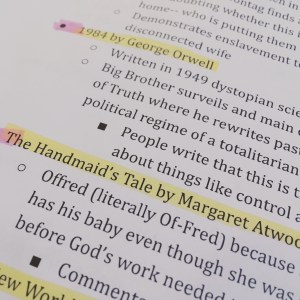 But, I was thinking about the art of the booktalk after spending two days in classrooms talking to tenth graders about choosing a classic book to read for their fourth quarter project. I had a lot of ground to cover and not all of the books I had read. Yet that is nothing new because I booktalk frequently on topics that I may only know slightly and I am a firm believer that you can booktalk a book you haven’t read. I organized the books into categories that helped channel the number that I was talking about and then prepared my cheat sheet (things like publication date, title characters, main ideas, themes or topics, or a relevant current topic that paired nicely). And while this is necessary, I generally don’t use it as much as occasionally reference it since Benjamin Franklin put it best when he said
“By failing to prepare, you are preparing to fail.”
It’s there if I need it, but the preparation solidifies my approach and then I don’t actually need it. Especially when I capitalize on others in the room who may have loved one of the books and ask them to share. When I talk about a book I may ask a hypothetical question or have a one-liner that intrigues someone, saying little more. And I learn from others. I facilitate a book group of local school librarians and everyone has a slightly different approach, all valuable in their own way. There are some I could listen to all day myself, admiring their vocabulary and word choice. I aspire to be better after each delivery and rework it until I hit booktalk gold. We only get better with practice.
So not only am I constantly honing my booktalking skills based on my audience, I also realized I have a lot of classic literature to read (or reread to refresh my memory). Maybe I can make this a monthly post to review a classic book as a way to kickstart this exploration. Which would you start with?

 The first thing I did after finishing Goodbye Days at 5am was plot how to connect with Jeffrey Zentner so that we can arrange a school visit for next year. Yes, Goodbye Days was that good. And after staying up past my bedtime months ago to read The Serpent King, it was apparent that Zentner is a skilled author that focuses his creativity on character-driven novels that speak to readers on a deeper level. This is the case with his newest, Goodbye Days where Carver feels like he has blood on his hands after texting his friends as they drove in a car, knowing that they’d likely text back while driving said car, and were killed when they crashed with a half-written text in the queue of the phone. In an instant, Carver lost his three best friends, the Sauce Crew.



 Readers Be Advised