
Librarians like to curate lists for sure, so I look forward to the monthly post on a listserv of what the upcoming month’s celebrations are both as a full month, weekly, and also daily celebrations. For instance, today is Husband Appreciation Day. So I started to think about his books but then other people’s books: their bookshelves, their reading habits, their likes and dislikes, and thought I’d share a few observations about other people’s books.
My husband
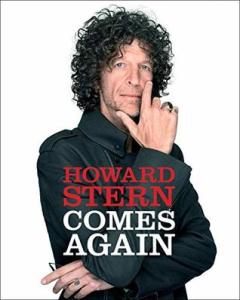
… is a logical guy. Computer science major with a math minor. Army veteran. Thinker. Health nut. A grill-obsessed cook that approaches it like a grand science and taste experiment. His reading materials include magazines like Ask This Old House and Prevention. He’s currently bouncing around in his personal copy of Howard Stern’s new Howard Stern Comes Again featuring his biography alongside his best interviews.


My boys
… are 5th graders who love humor and adventure. One wants more silly so he’s a Dog Man and Stuart Gibbs’ FunJungle series, serially listening to them while doing origami. One likes adventure and history who has read the Harry Potter series twice and pays attention to any new books in the I Survived series.

My mom
… has collected bodice-rippers at garage sales forever and she regularly trades them with one sister-in-law too. Occasionally she’ll read a book if I’m obsessively talking about it or I have an author coming in that I’m particularly excited about. And she dived in headfirst to books about “life after retirement” before hers almost two years ago.


A work colleague
… who has taught English for about twenty years who has a voracious appetite for fantasy and science fiction which has led to a house ripping at the seams with books. Now, I confess to having never actually been in her house but her constant descriptions of dusting, cleaning, moving, and reorganizing her books leads me to believe that if I walked in to any room in the house, there would be at least one book in it.

One technology guy in our district
… who I often trade emails and social media tags about books and reading with. And one he had shared probably sums up his books at home (I’m only speculating). It’s the Japanese word tsonduko which is the art of collecting books at home that you aren’t reading and likely won’t ever get to but must have anyway.
Everyone has their own taste and book collecting style. What’s yours? What are your favorite series? Do you buy or borrow or mix it up? Is there someone’s bookshelves or reading nook that you covet?

 On Saturday, April 25th and Sunday, April 26th, they will be putting on virtual panels, smackdowns, and keynotes that you can
 Fast forward to 2020 and my digital reading of The Dark Matter of Mona Starr which I had on my TBR on Goodreads since it was announced she’d be releasing a new graphic novel. Then boom. I sat down and in one sitting didn’t move an inch while I poured over the illustrations and words. I knew I’d be writing about it. My initial reviews always go up on Goodreads which are usually fresh and raw after reading (and as soon as I can string a somewhat coherent sentence together after being awestruck) and in that review I said that I needed Gulledge to do a series focused on female character struggles that can be used as guides just as both of these are.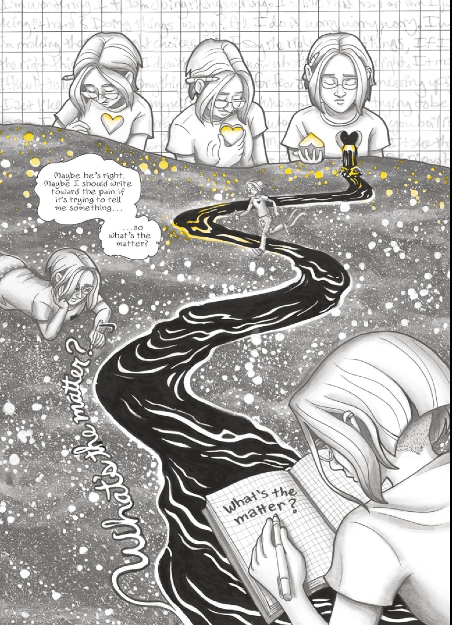
 Maybe it’s because I’m a woman or maybe it’s because I’m a librarian, but either way, I want to take a moment to celebrate books about periods. They’ve been kind of having a moment. And I knew I wanted to share a post about periods two days ago when I finished Lily Williams and Karen Schneeman’s graphic novel published by First Second this past January called Go With the Flow. It’s a celebration of menstruation and friendship alongside actively advocating for rights.
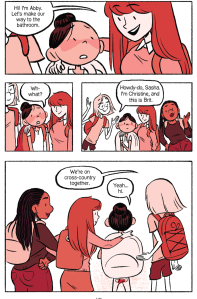 But let’s also give it up for the most memorable scene where Sasha’s blood-stained pants are showing as the girls usher her to the bathroom and why the book works so well in its graphic novel format. Most can empathize or sympathize with her situation and it’s the kind of thing that is discussed in other books discussing periods: the truthful portrayal.




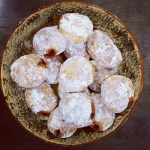 Fat Tuesday is also Paczki Day. Paczkis are Polish doughnuts usually with jelly filling and rolled in either powdered sugar or granulated sugar. They’re made on Fat Tuesday in preparation for the Lenten season’s austerity. This past Monday, I homemade them and was excited to share them with my family, colleagues, and neighbors who all know my love for baking.


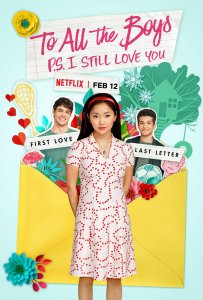 Romance is not a category of fiction that I seek out regularly. But give me a good romance on the small screen like Netflix has done with Jenny Han’s book series and I’m sold.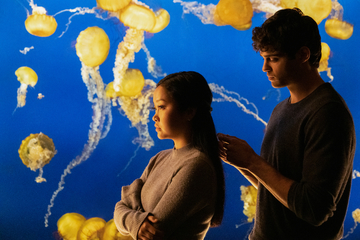


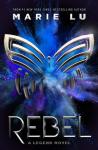 Marie Lu’s Rebel, the fourth book in the Legend world that takes place in the future in which Daniel’s brother, Eden, is attending university in Antarctica where they’ve settled while June is still working in the Republic. The story, like Lu’s others, have two narrators that are differentiated by the text color as they pace the book out with the developing conflict as it switches fluidly back and forth. The world she creates is superb and the futuristic action is heart-pounding.
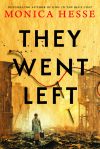 Monica Hesse’s yet-to-be-released They Went Left that’s anticipated for an April release. Not only have I read Hesse’s other YA historical fiction titles, but her adult nonfiction book American Fire. All showcase her skillful writing. This one fits in a newer focus of YA books on the liberation of Jews after World War II like the Morris finalist from last year, What The Night Sings by Vesper Stemper. Hesse dives into this world with Zofia, who has lost most of her family but still holds out hope that her younger brother Abek has survived. Shifting to several places before settling into a relocation camp where she meets a brooding boy, Josef, she is reunited with Abek but questions about what both boys have been through since the war broke out provide the riveting content of the book’s second half. Put this at the top of your list for April.


