This post was originally published on the Times Union Books Blog
This past October Chip and Dan Heath, brothers and co-authors published their fourth book called The Power of Moments: Why Certain Experiences Have Extraordinary Impact. It was a book that had a powerful impact on me like Reclaiming Conversation: The Power of Talk in a Digital Age by Sherry Turkle (2015) did when I read it over a year ago. These kinds social psychology books shed light on everyday topics and encourage conversation around why people do the things they do, but provide examples and context for understanding it on a deeper level and making changes or becoming more aware. Both of the books are regular references in conversation for me. And with The Power of Moments, there was a relatable opportunity to use the book in my work as well as personal life. (You can see my post about that here).
Then I went on a binge; I downloaded through the public library or borrowed the print copies of their other three: Decisive: How to Make Better Choices in Life and Work (2013), Switch: How to Change Things When Change is Hard (2010) and Made to Stick: Why Some Ideas Survive and Others Die (2006). And again, I was either ferociously highlighting on my eReader or Post-iting the print book when a concept or example struck a chord. There was full engagement with each of them.
Why are the books important? First and foremost, there is a relaxed humor that shows the personality of the brothers. Every now and then you get a taste of it and smile. Second, the books are well-organized. Each has a formula that makes them accessible to every reader. There’s the identified issue that they’re discussing, a quick acronym or mnemonic device to remember the steps, then subsequent chapters that dive into the steps individually. Within the chapters are subchapters that highlight tangible examples. Think businesses like Southwest or the military. Usually it’s followed by a clinic or “what should you do?” that you can investigate (or skip) to apply your newfound knowledge. And then the ever-present summary of the main points. Like I said: well-organized and comforting when moving from book to book. Third, the examples are succinct and useful. Nary is there a long-winded bad example. They’re inspiring which is why the books have received awards from business and leadership fields. Fourth, there is plenty of backmatter like additional reading material and their website with one-page cheat sheets of the concepts, podcasts, and “how to” manuals: they’re not hiding their genius but spreading it around.
What did I learn from Moments? That any moment can use one to all four of the concepts of EPICness, so think 1) elevation, 2) insight, 3) pride, and 4) connection. What did I learn from Switch? That self-control is an exhaustible resource and that if you 1) direct the rider, 2) motivate the elephant, and 3) shape the path you can work toward change. What did I learn from Decisive? To WRAP: 1) widen your options, 2) reality-test your assumptions, 3) attain distance before deciding, and 4) prepare to be wrong. And, what did I learn from Stick? Achieve SUCCESs for ideas by 1) keeping it simple, 2) unexpected, 3) concrete, 4) credible, 5) emotional, 6) through stories and again, keep it 7) simple.
Whether you pick up one of the books or all four like I did in a two-week span, you won’t regret the added insight you’ll gain, especially if you’re a fan of social psychology. Have I steered you wrong yet? Right now, the only question you should be asking is which one you’ll start with. And if you’re thinking that, you might want to pick up Decisive first.
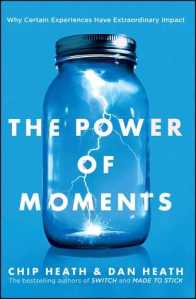 As I started to shape what I wanted to share in this post, I also remembered that a fellow New York State librarian, Sue Kowalski, often uses the hashtag #momentsthatmatter when she posts to Instagram, usually when sharing pictures of her mother, but friends and family. She knows the value of a moment. I wonder if she could have contributed to the book? In essence, the Heath brothers set out to demonstrate to readers how experiences in our lives have an “extraordinary impact” and drill down to the four elements of powerful moments: Elevation, Insight, Pride, and Connection. They reluctantly share the acronym to easily remember it as EPIC.
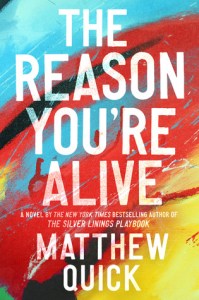 1. The Reason You’re Alive by Matthew Quick
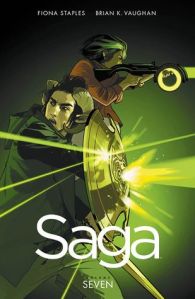 2. Saga by Brian K. Vaughan and Fiona Staples (artist)
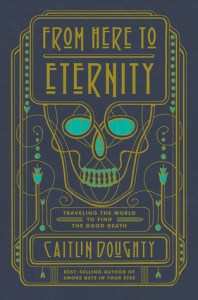 3. From Here to Eternity: Traveling the World to Find the Good Death by Caitlin Doughty
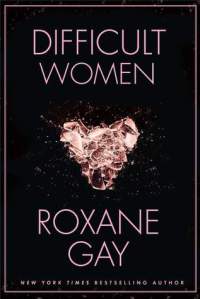 4. Difficult Women by Roxane Gay
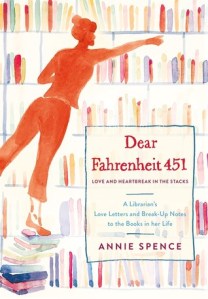 5. Dear Fahrenheit 451: A Librarian’s Love Letters and Breakup Notes to the Books in Her Life by Annie Spence
 6. The Sun and Her Flowers by Rupi Kaur
 Whether I’m coming or going, my home city is always a sight and was actually the center of quite a lot of

 Elephant Talk: The Surprising Science of Elephant Communication by Ann Downer-Hazell is exactly what the title and subtitle tell you it’s about as a short nonfiction explanation of how elephants communicate and how humans have studied and learned about these animals as people like Jane Goodall did with primates. It’s one of two reasons I went on a solo trip to Africa after I got my Bachelor’s degree– to see a wild elephant.
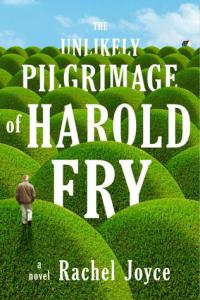 Europe
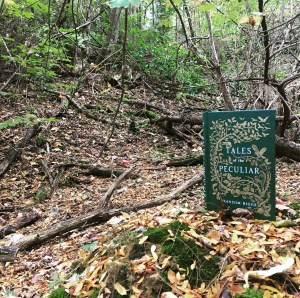 Tales of the Peculiar by Ransom Riggs is an addition to the Miss Peregrine’s series. This book is a collection of short stories written under the guise of a historian for peculiars and tells the tall tales that only another peculiar can tell. Some are light-hearted but some are downright depressing. But it brings out the best in Riggs’ creativity and is a perfectly natural (see what I did there?) addition to the family of books.
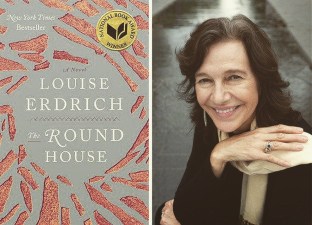 The Round House by Louise Erdrich is an adult novel written in 2012 that is a multi-layered and emotionally-draining portrayal of a family torn apart on the North Dakota reservation of the Ojibwe tribe. This is the kind of book you dive into with every fiber of your being and continue to think about after you’re finished. It’s likely a book I will re-read when I don’t often do that.
 Into the Bright Unknown by Rae Carson is the final book in her Gold Seer trilogy that I finished about fifteen minutes ago. I bought it on it’s book birthday because I had to have it and finished it within a few days, though if I could ignore adulthood, I could have been done the following day. Carson demonstrates the facets of immigration and race relations in the 1850s during the Gold Rush though it began years before that in the south after Leah’s parents were murdered and she needed to run, hiding herself in plain sight as a boy and meeting up with a band of interesting people all pushing their way west. If I can provide more encouragement to read the series, know that I had at least one night of dreams set in the wild West myself that demonstrates Carson’s command of setting.
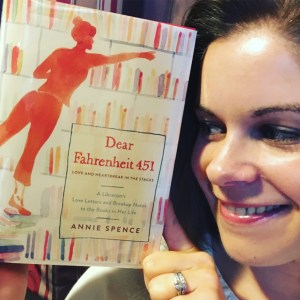 Dear Fahrenheit 451: A Librarian’s Love Letters and Break-Up Notes to the Books in Her Life by Annie Spence is a must-read for librarians (duh) and avid book lovers. Her uniquely humorous style provides glimpses into her reading habits and her life. Her and I are kindred spirits because we share an all-time book favorite The Virgin Suicides by Jeffrey Eugenides. Her approach had me laughing and smirking making for awkward public interactions. But readers certainly can find ways to incorporate this style– a love letter to your books– into some epic internal conversations or as part of your next book group meeting. Love, Alicia.
 And We Stay by Jenny Hubbard has one of my favorite covers. So while it’s not winter and I wasn’t going to dress in all-black, you get the point. This young adult novel features poetry and inspiration from Emily Dickinson in one of the ways I appreciate contemporary YA authors– bringing back the old by incorporating it into the new. The main character has experienced something tragic and is now at a boarding school and channeling Emily Dickinson to heal. The mystery unfolds over the course of the book and readers get to go back in time and revisit some of Emily Dickinson’s best poetry while Hubbard flexes her own poetry muscles and has Emily writing her own which is just as beautiful.
 Lab Girl by Hope Jahren is an adult biography that I have recommended widely since reading. While I will never know what it’s like to be a scientist, I felt like I understood the life of one, with the added benefits of chronicling Jahren’s personal life alongside her academic one. Without a doubt, it is eloquently written and organized in a studious manner, with three sections being named for plant life weaving these plants into the story of her own life and her lab partner. It’s as serious as it is cerebral with commentary on mental health, family, friendship, and science itself.


