
Whenever I’ve read something or a few somethings, I will usually throw up a sticky note on my computer, give it a working title for a future blog post and wait until the inspiration strikes to write it. I’m ready to write from my working title “emotional roller coasters” and talk about three titles I’d read recently that unequivocally fall under this heading: Nikki Grimes’ Ordinary Hazards, A.J. Dungo’s In Waves, and Jenni Hendriks and Ted Caplan’s Unpregnant.


First, the fictional Unpregnant. What more can you ask for than a book targeted toward teens talking about abortion. It isn’t often that we find books wholly centered on the topic. I think I remember Exit, Pursued by a Bear the first time that it felt really real in a contemporary YA book. And then there’s Girls on the Verge which I highly recommend. But what most people comment on after reading this book is that while it is a frustratingly painful circumstance that puts Veronica in this situation, there is a dark humor that provides the balance that not all hope is ever lost regardless of the choice made though the most memorable scene is one of sadness:
“And that was it. Dinner was no different from any other dinner we’d had. My brother went over every play he’d made in baseball that weekend. My mother shoveled more food onto our plates. My dad made noises at appropriate times to make it seem like he was participating in the conversation. They didn’t even bother to ask any more about my weekend. They weren’t interested. I was a known quantity. The good daughter. The hard worker. I should have been grateful. I was angry. They didn’t see me. If they did, they would have known something had happened. Instead they only saw the pieces I was made of. A question already answered.”
Then there’s Ordinary Hazards, Grimes’ memoir of a few years of her childhood struggling with her mother’s alcoholism and paranoid schizophrenia and her father’s intermittent absence which led to a childhood in the foster care system. But the biggest takeaway is the strength of memoir as a genre. Grimes explains memoir and really helps readers turn themselves into writers by showcasing that everyone has a story however joyous or heartbreaking. In addition, her choice to use verse is a touchstone text on its exemplary use in form, function, and lyricism.
Then last, is a graphic novel (I didn’t mean to represent two genres and a format under one umbrella of emotional stories but this is why books are amazing). It’s In Waves. I read this on my lunch at work about a month ago and was glad I was eating alone. Because I cried. Dungo’s tribute to his partner before her passing and while she was undergoing treatment shines in his visual choices in line, color, and symbolism. He also effortlessly weaves in a more factual story of the history of surfing yet it never once takes away from the roller coaster of his relationship as it weathered the storm of illness.
As everyone’s emotions are on similar roller coasters all across the world, I thought I would share three books that provide mirrors to the same mountains and valleys we’re feeling.

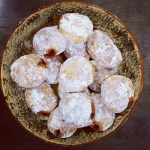 Fat Tuesday is also Paczki Day. Paczkis are Polish doughnuts usually with jelly filling and rolled in either powdered sugar or granulated sugar. They’re made on Fat Tuesday in preparation for the Lenten season’s austerity. This past Monday, I homemade them and was excited to share them with my family, colleagues, and neighbors who all know my love for baking.






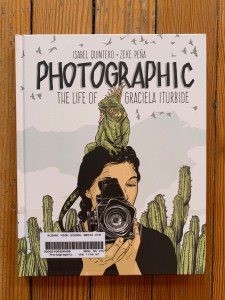 And it’s the likes of illustrator Zeke Peña combined with the words of Isabel Quintero that merge Iturbide’s photography with an illustrated style that brings it to life two-fold. The most memorable panel, the one in which Peña re-works the iconic woman with the iguanas side by side with the photograph courtesy of Getty Images, is striking. And there are other panels that captivate the reader in their presentation and solidifies Peña’s skill both individually and collaboratively working with Quintero’s storytelling. Plus, the font itself worked seamlessly for my eyeballs to move around the pages and panels. Even Peña recognizes the beauty of illustrations by thanking readers “you and your eyeballs for reading this book”. You’re welcome, Peña. Thank you for illustrating it. And it got me thinking about my own life at thirty-something– how would Peña draw mine? What would Quintero write about me? Perhaps the best kind of self-reflective writing prompts could come from this book.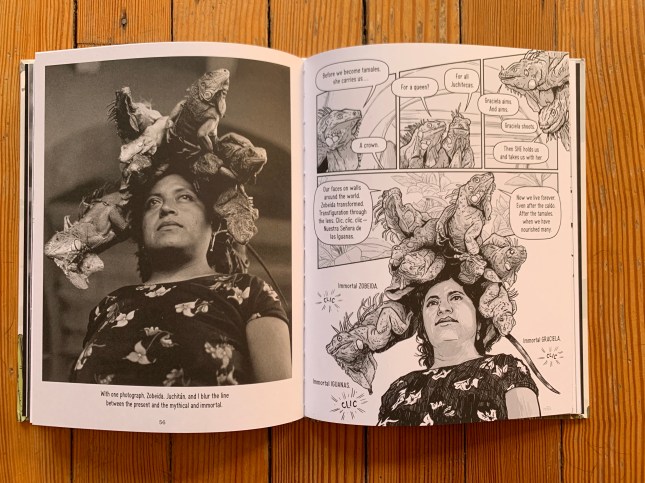
 Here were some of my favorites to discuss:


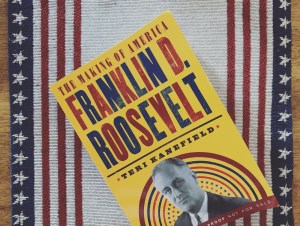 What works well for the series is the chronological organization of biographical information that is equal parts intrigue and straight facts. There’s a humanity in Kanefield’s delivery that does not dilute the truth, yet weaves a story of a person hellbent on creating an America that they had envisioned as they rose to notoriety.fame. With a mix of photographs and eye-catching covers, they’re as star-spangled as the flag.


 Readers Be Advised