Today I’ll be co-presenting with Jack Phoenix, a public librarian who wrote a book called Maximizing the Impact of Comics in Your Library for School Library Connection (SLC) via webinar. We’re walking through five practices to transform your libraries as it relates to graphic novels, so it goes without saying that I’m going to share some recently-read favorites in no particular order.
- Heavy Vinyl (Volumes 1 & 2) by Usdin
- The Tea Dragon Festival (Tea Dragon #2) by O’Neill
- Motor Crush #2 by Fletcher
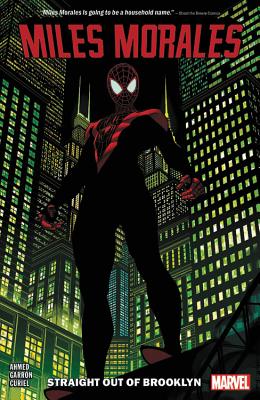
- Miles Morales: Spider-Man (Volumes 1 & 2) by Ahmed
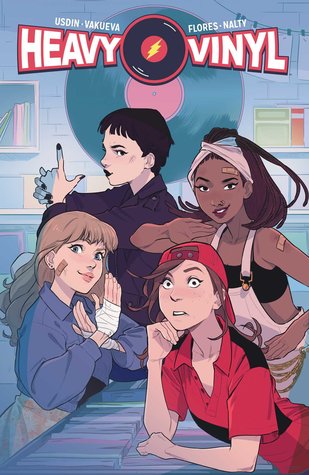
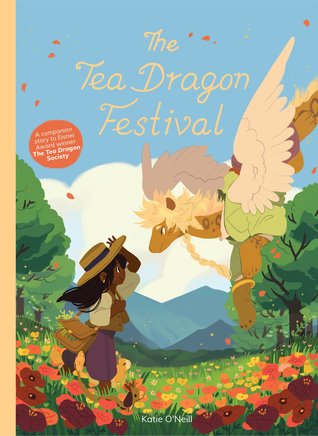
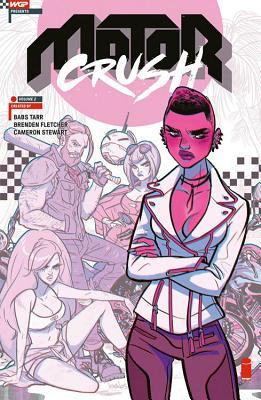
Yes, all of these happen to be fiction and I’ve definitely read a handful of nonfiction titles too that you can check out on my Goodreads account. Suffice it to say, these were the ones that stuck out because of their story and their artwork.
I have a huge student fan of Motor Crush, so when I saw volume 2 was out via Hoopla, I pounced in reading it. And it was just how I remembered the world from volume 1, just like Tea Dragon.
As for Miles Morales, you can’t go wrong with the action and adventure in addition to the humor amidst the seriousness. It’s probably also while I was so caught up in Heavy Vinyl. A less sci-fi version of Paper Girls, these ladies who work at Vinyl Destination in the 90s moonlight as a fight club working to solve a mystery. The strength of their individuality is made stronger when they’re together.
There’s nothing better than feasting visually on well-made graphic novels when the story is as strong as the illustrations which I can say is why I’m advising everyone take a look at these.

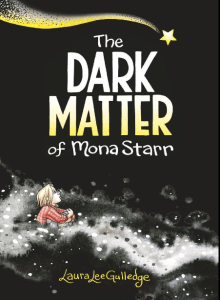 Fast forward to 2020 and my digital reading of The Dark Matter of Mona Starr which I had on my TBR on Goodreads since it was announced she’d be releasing a new graphic novel. Then boom. I sat down and in one sitting didn’t move an inch while I poured over the illustrations and words. I knew I’d be writing about it. My initial reviews always go up on Goodreads which are usually fresh and raw after reading (and as soon as I can string a somewhat coherent sentence together after being awestruck) and in that review I said that I needed Gulledge to do a series focused on female character struggles that can be used as guides just as both of these are.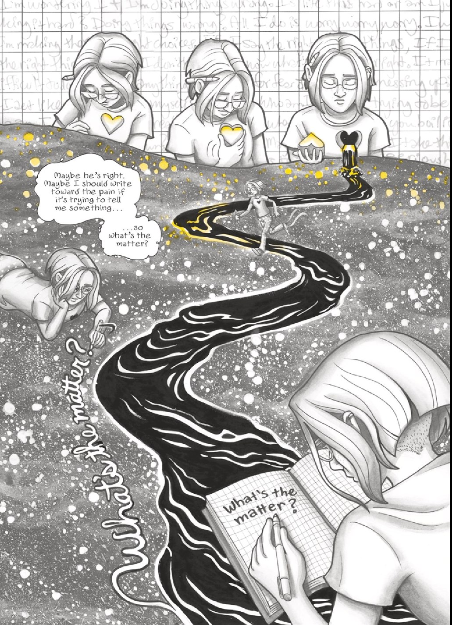
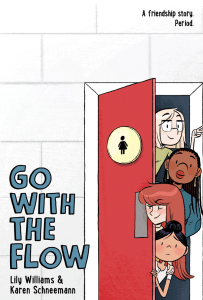 Maybe it’s because I’m a woman or maybe it’s because I’m a librarian, but either way, I want to take a moment to celebrate books about periods. They’ve been kind of having a moment. And I knew I wanted to share a post about periods two days ago when I finished Lily Williams and Karen Schneeman’s graphic novel published by First Second this past January called Go With the Flow. It’s a celebration of menstruation and friendship alongside actively advocating for rights.
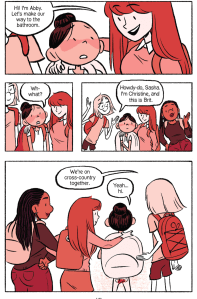 But let’s also give it up for the most memorable scene where Sasha’s blood-stained pants are showing as the girls usher her to the bathroom and why the book works so well in its graphic novel format. Most can empathize or sympathize with her situation and it’s the kind of thing that is discussed in other books discussing periods: the truthful portrayal.




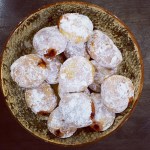 Fat Tuesday is also Paczki Day. Paczkis are Polish doughnuts usually with jelly filling and rolled in either powdered sugar or granulated sugar. They’re made on Fat Tuesday in preparation for the Lenten season’s austerity. This past Monday, I homemade them and was excited to share them with my family, colleagues, and neighbors who all know my love for baking.




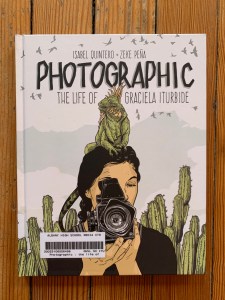 And it’s the likes of illustrator Zeke Peña combined with the words of Isabel Quintero that merge Iturbide’s photography with an illustrated style that brings it to life two-fold. The most memorable panel, the one in which Peña re-works the iconic woman with the iguanas side by side with the photograph courtesy of Getty Images, is striking. And there are other panels that captivate the reader in their presentation and solidifies Peña’s skill both individually and collaboratively working with Quintero’s storytelling. Plus, the font itself worked seamlessly for my eyeballs to move around the pages and panels. Even Peña recognizes the beauty of illustrations by thanking readers “you and your eyeballs for reading this book”. You’re welcome, Peña. Thank you for illustrating it. And it got me thinking about my own life at thirty-something– how would Peña draw mine? What would Quintero write about me? Perhaps the best kind of self-reflective writing prompts could come from this book.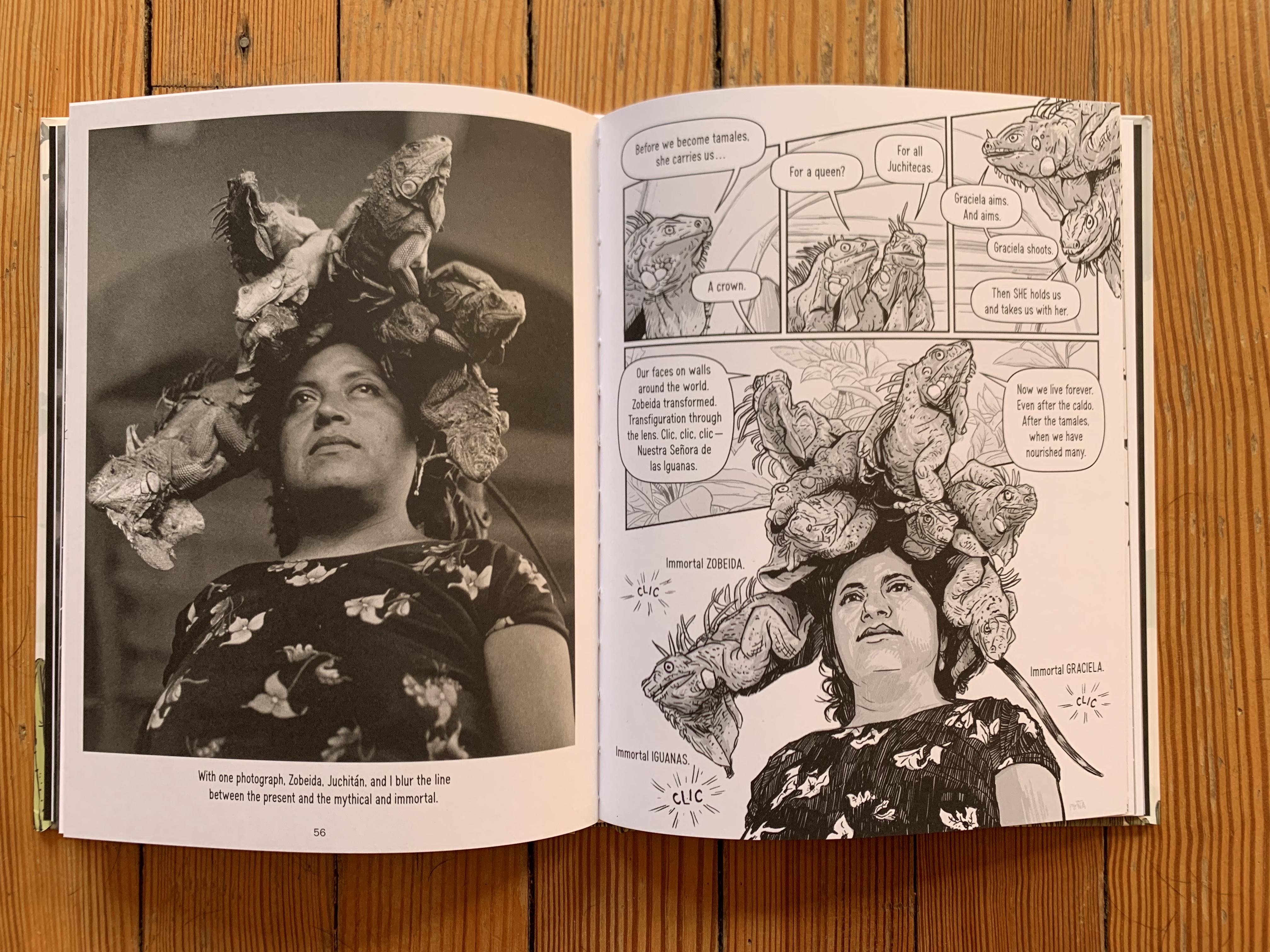


 Readers Be Advised