RSS

Category Archives: edublogsclub

Routines

As part of the #edublogclub year-long challenge to blog on education, this week’s topic focuses on time management and productivity.

Anyone who knows me, knows that I’m a policies and procedures type girl. There’s a reason that I’m a ISTJ also known as the duty fulfiller. So it won’t surprise anyone that I have routines. Not only to make me sane, but to make our household run smoothly, and work manageable. Here’s a basic outline of a typical day:2017-06-02 07.56.25
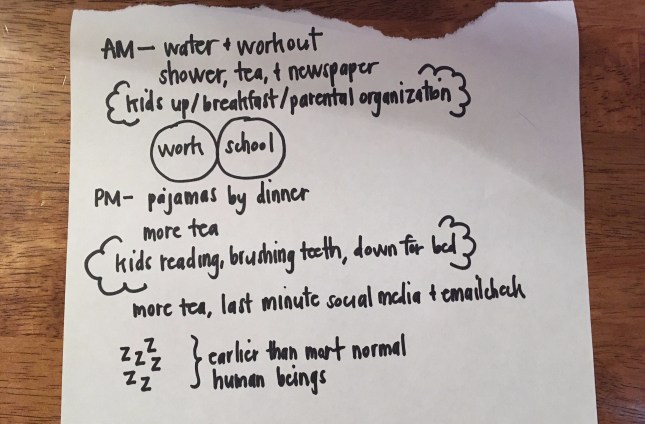
Clearly this isn’t everything and it shouldn’t be because life is isn’t always organized, but it sure makes it easier. In a separate post about my love of folders, I share an image with Martha Stewart’s quote that “life is too complicated not to be orderly.” This perhaps was my personality from birth and why I became a librarian. It’s also why I have baskets and bins around my home andboards on Pinterest that I continually re-organize. I’m also lucky enough to have married a man who also believes in organization, tidiness, and schedules. He was also born with it and probably why he joined the military and is self-employed: an intrinsic motivation for order and a get-it-done attitude that comes with it.

Likewise, it’s also why we have policies and procedures for everything in our HS library. Students know what to expect. My favorite line is “Miss, I know X, but…” to which my reply is “Yes, you know X, so…” Because we see between 20-60 kids or more each period, nine periods a day, plus before and after school, routines make it more manageable. Then, we can focus on the students and staff.

Maybe that’s why I find routines comforting and necessary. They allow me to take the thinking off of certain items and be able to really ponder the more important aspects of life. Routines are the opposite of making my life mundane, they enrich it by allowing me to focus on what matters.


1 Comment

Posted by on June 2, 2017 in Blogging, edublogsclub, Miscellaneous


Books with memories

For the last several years, I have only had a small (for a librarian) bookshelf in my home. This is not to be confused with the TBR stack that is stored in a footstool in the living room. The books that are on the bookshelf have been read and are there for very specific reasons. I’ll share a few of the backstories.

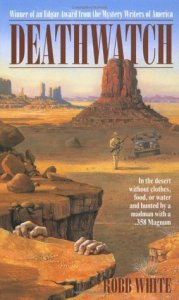
DeathwatchDeathwatch by Robb White is there because it was the first book, as a seventh and eighth grade English teacher that I recommended to a student who came back within days to tell me that it was the best book he has ever read and to thank me for recommending it. Could that have been the first inkling that I would make a good librarian? Perhaps.
Patrick Doyle is Full of Blarney by Jennifer Armstrong is shelved because it was a humorous gift received by my mentor as a middle school English teacher dealing with a particularly challenging parent and child in my first year teaching. Ah, memories I don’t wish to go back and relive, but absolutely learned from.

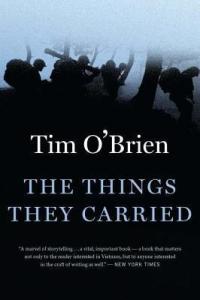
ThingsTheyCarriedThe Things They Carried by Tim O’Brien is sentimental as it was a book that a group of people spent one full year planning and implementing as a city-wide read. I am particularly proud of the months-long activities that accompanied the the book including a day at our high school library that included local veterans, art installations, and learning activities.

Stolen Lives by Bill Heller. This book has a dedication to me and another employee at the school I work in because we helped him find some answers to the questions he was seeking related to the second book in a series of investigations about a higher incidence of a specific cancer affecting graduates of our school after nuclear fallout during a rainstorm.

HarrisandMeHarris and Me by Gary Paulsen and Belle Prater’s Boy by Ruth White are both great examples of laugh out loud readalouds showcasing that not all stories have to be about dead parents and addiction. Instead, both are wonderful romps about kids being goofy.
And last, I would be remiss not to showcase the dozens of books I’ve amassed (and will continue to amass) when our high school library host author visits. Signed copies are the memories of a job done right and fantastic stories that highlight all that’s perfect in young adult literature.

So while I can do lists upon lists of great YA literature, which I do on this blog, I’ll highlight some of the special copies of books on my shelf.


I trust you

As part of the #edublogclub year-long challenge to blog on education, this week’s topic focuses on telling a story.

There is no sweeter three words that those three words said to a librarian– this is when you know you’ve hooked another reader, not that they weren’t a reader before, but because you finally understood what they liked and scored big on the last few recommendations that ultimately led to I trust you.

This student was a reader and clearly always has been and a few months back came into the library looking for a book for class. We didn’t have that book and we began talking about getting it from the public library. This led to a brief conversation in which I had to reach out to her branch librarian, but that she could check back. In the meantime, could I recommend something else? She seemed easygoing enough and decided to let me recommend something else. Usually this is also successful because I have earned the trust of the teachers in recommending substitutes for highly-sought books or books to adjust for a reading level in the past.

I started with my usual questions about books she read recently that she liked and who she was as a person to get to know her a bit better before we set her up with something she seemed happy to check out. Then, I saw her a few days later and before a “hello, how are you?” came out, she began to discuss the recent recommendation I had given her and how excited she was to continue reading it. She said she needed something else. She preferred to stick to series books (because who doesn’t love to get hooked on a group of books where you can live in a world for just a little bit longer?) and preferably a series where all the books have been published so she doesn’t have to wait. I lobbed a fast one. I told her I was sharing a series that wasn’t her “usual” but believe me, it was worthwhile.

And that’s when it happened. She finished the series within a week and a half and came in two days before our spring break for another recommendation. My usual line is “what are you in the mood for?” and that’s when she said “it doesn’t matter, whatever. I trust you.”

*heart melts into a puddle on the floor*

NapoleonDynamite


2 Comments

Posted by on April 19, 2017 in edublogsclub


Assessments for reading: “Miss, this ain’t English class”

As part of the #edublogclub year-long challenge to blog on education, this week’s topic focuses on assessment.

In this week’s suggested post topic around assessments, I’m going to connect with what I know best: reading and libraries. Specifically, finding an engaging way to assess reading rather than a book report, log, or journals. So I want to share what a science colleague and I have been doing for the last several years.

She became hooked on the Alane Ferguson forensic mystery series and came in to pick my brain about a way to incorporate reading into her forensics classes. I quickly shared dozens of ideas and pathways to get there asking questions about what product she wanted and what the objective was. What it became was a mix of reading, writing, speaking, and listening skills over the course of three to four weeks, twice a year. And our favorite line was spoken to her after our first attempt way back when when the student asked why they were reading in science class saying “Miss, this ain’t English class.” The process?

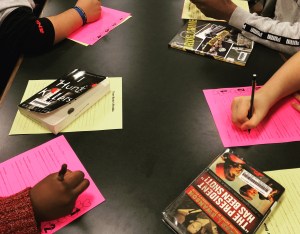
  • Come to the library for a book tasting where they get to interact with a diverse 2017-03-07 08.48.57group of fiction, nonfiction that included the graphic novel format and had a forensic theme. They would spend five minutes at each table and circulate until they found a book they wanted to check out.

  • They had two reading logs to complete throughout their reading time.
  • During this reading time (outside of class), science teacher would meet for brief intervals during a work day and ask them about how they were enjoying their book and sharing something interesting about hers to gauge their engagement. This was informal and not graded and provided an avenue to connect individually.
  • Students filled out a book profile card (similar to a dating profile) for their book to get down the basics and refresh their memory in preparation for the final activity with was book speed-dating. This preparation day included a brief video that modeled speed dating.
  • The following day, students would spend the forty minute period sitting for six minutes at a time one-on-one with a classmate sharing and questioning each other about their books. They’d be scoring their likelihood to want to read the book their classmate described and on the classmate’s “presentation” of the book. As the timer rang, they’d rotate again.

So, there are alternatives to a book report. Students must own their reading and be able to intelligently share out about their book to classmates. Their grade was based on their individual presentations to the classmates in a timed speed-date. An alternative to a book report? Absolutely! I’ll take these over a test about a book to show comprehension any day.

 
2 Comments

Posted by on April 12, 2017 in Authors, edublogsclub, Miscellaneous


Keeping them all to myself

As part of the #edublogclub year-long challenge to blog on education, this week’s topic focuses on a giveaway.

In a tongue-in-cheek address to this week’s #edublogsclub challenge that talks about ‘giving it away’, I’ll start with my need to keep it all to myself. With books that is. For many years (and I still struggle when a read is just that powerful), when I closed the book on a fabulous read, my next thought was literally, I want to keep this all to myself. I wanted to believe that the author wrote it just for me, that the book would sit only on my bookshelf, that it was mine, all mine. But it’s a preposterous thoughts because good books are meant to be shared and it’s kind of my job.

So in honor of my narcissistic belief that my favorite writers are writing just for me, I’m going to give some books away. I will send* a book box of sorts (within the United States) with one of my favorite books and a recently-reviewed galley with a bookish gift for good measure to the first person to answer correctly in the comments below: what porcelain item is on my personal bookshelf?

TruthKeepingBooksaSecret

Believe it or not, I didn’t actually create this, but I know I’m not the only one!

 
3 Comments

Posted by on April 6, 2017 in edublogsclub, Young Adult


The swinging pendulum

As part of the #edublogclub year-long challenge to blog on education, this week’s topic focuses on the swinging pendulum– trends in education.

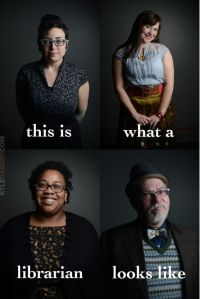
Things have settled down for a bit now, though every few years librarians, especially those in schools have a panic attack about what we’re called. Rest assured, I will never argue because I will never want to be called anything other than a librarian. The only qualifier I’d add is “school” librarian (versus public librarian or academic librarian) but even then, I’ve put too much effort into it.

LibrarianLooksLike

From the Cardies and Tweed WordPress blog

The panic can be attributed to two events: the infusion of technology in schools and the recession. The former called in to question what the role of the librarian was (or wasn’t) and the latter slashed jobs in reaction to tightening budgets at the expense of students (along with programs like music and art). So we wanted to keep relevant and with that came the need to reinvent ourselves a la Madonna or Sean Combs. Madonna did it with her music and fashion choices while Combs did it with name changes. Librarians followed Combs’ strategy. What if we called ourselves school media specialists? But we’re also instructors, so what about teacher librarians? Many couldn’t fathom staying librarians without a name change to go along with our changing role.

But I’ve never had this crisis. I’ve been a librarian for ten years and I will continue to be a librarian well into the future. Is it because I know what I’m about and therefore don’t need to fuss about a name? Probably and also it’s confusing to change names. Maybe that’s why many more women are also choosing to not change their names when marrying– there’s an ownership over who you were for years before meeting a significant other. I own being a librarian. I love being a librarian. I even had this conversation at a Board of Regents presentation several years ago.

And, it simplifies things when I go to work at the library every day. I’m a librarian and I work in a library? Mind blown! Plus, it translates well in their non-student lives because they have access to other libraries now and in their future and aren’t we about the same things? We’re sharing print and digital resources, providing community spaces, engaging in conversations and advocacy, and bringing people together.

That’s my mission, my passion, my job, my title. Period.


4 Comments

Posted by on March 29, 2017 in edublogsclub, Miscellaneous


Embed THIS!

As part of the #edublogclub year-long challenge to blog on education, this week’s topic focuses on embedding something.

Embedding is always exciting and sometimes aggravating but imagine my excitement when I realized that the Padlet I created to share resources on a presentation I was giving actually has a specific embed code for WordPress– as in, copy and paste this address rather than lines of code inside the body of the blog post and it will automatically embed. Cool, huh? When we talk about how integrated and networked devices, apps, and websites are, these are the shining examples.

Today I had the privilege of presenting at the New York State Council for the Social Studies. The first presentation centered on current books representing timely topics like child exploitation, trafficking, and social movements. And the second (back to back and in separate rooms leaving little room for error in disconnecting and reconnecting my laptop, cables, and bags) was about new literacy. For the attendees, I wanted to share websites, articles, videos, and images and decided Padlet was my mode of delivery. So if you’re interested in the topic, check out the collection of resources

Enjoy the resources and be happy that you were not me during the presentation (though I will say I think I handled it flawlessly) where many of the resources and videos I wanted to show live never happened since the Internet wasn’t working. But damn, my slides looked amazing! (see previous post about the importance of images for me)


1 Comment

Posted by on March 23, 2017 in edublogsclub, Events, Miscellaneous


Feedback face-to-face

As part of the #edublogclub year-long challenge to blog on education, this week’s topic focuses on feedback.

One of my favorite assignments when working with an upperclassmen group conducting research was when I came in to discuss the initial thoughts, tips, and tricks on “revving the engine for research”. For many teachers I worked with, I helped shape a document that set deadlines for parts of the research and subsequent paper that provided a realistic scaffold of conducting research but also helped demonstrate time management.

Specifically though, they had to submit several essential questions and a working thesis statement along with two complete citations of articles they had found so far. Then I graded this and went back into the classroom and talked with the students where they were given the next step: this was a formative grade, not summative. If students wanted to earn back points, they’d set up a meeting with me in the library and resubmit the assignment.

This served two purposes: first, students learned that revising and editing is as important as the process and the paper itself. Do not be afraid to revise. The second was that, we wanted them to grow as learners, which meant that reflecting on how well (or not well) something was working can be continually improved. So, providing an individual conference is a necessary step to provide reflection and also resources to help them move on, when sometimes students wouldn’t ask until it was too late, if at all.

As a school librarian, individual attention is just as important as group instruction, especially with upperclassmen. If in our large school of 2,500 students, their underclassmen teachers didn’t take advantage of the resources my colleague and I could provide, then students might not know the library was a resource. So as a sixteen, seventeen, or eighteen year old, individualized attention was almost a necessity to recoup some of that lost time from previous years.

And the levity they showed after a twenty-minute conference was a positive step in empowering them to ask questions, reach out, and reflect, so that they will return. So I leave you with a humorous meme from madamedefargeknits.tumblr.com:

LiveDangerously


I’m booked

There’s work that includes the regular stuff and the presentations both for students and upcoming ones for colleagues and other professionals. Then there’s home stuff that includes my kids’ birthday and a very large home renovation project. So while there are days when I must stare longingly at the books sitting on my end table or diligently tote around my Nook waiting fora  spare few minute that never comes to read, I am busy when I can be reading. Mainly graphic novels and mainly because I’m excited to be part of the American Library Association’s Young Adult Library Services Association’s Great Graphic Novels for Teens committee.

While we’ve done nothing more than exchange emails, they’re already a pretty awesome group and I’m already diving deep into graphic novels of every shape and size. So, I want as many recommendations as possible. What are you loving, what are you liking? What new ones are you anticipating for 2017?

I’ll listen, maybe not to the lady at the grocery store talking about her cat, but I will listen to anyone who has suggestions about their favorite new releases. Otherwise, I’m booked!

readersbeadvised


“Are those gray hairs?”

As part of the #edublogclub year-long challenge to blog on education, this week’s topic focuses on popular culture in the classroom.

Pocketwatch

Recently on a visit to see my parents, my mother asked me about those shimmering strands on my brunette head. Yes, I have a few silvery hairs that I believe that in the right light they look blonde. Still, true to my thirty-something years where I have never dyed or colored my hair, I will go gray gracefully and not such a single piece.

But, it was a few years back (before the grays) when I finally realized I wasn’t as connected with popular culture as I once was just by being a young teacher. Yet I’m also confessing that I’ve never been “one” with popular culture. I grew up listening to country music, technically lived in the country rather than the suburbia that made up my school district, didn’t like the clubs, and I usually could never tell you the names of celebrities or sports figures when asked. Plus, my own kids are still in elementary school. I use things like the urban dictionary and what’s trending and popular on YouTube to help a bit, but I want to focus instead on contemporary culture versus history, specifically 9/11.

At this point, any kid in high school (remind you I work in a high school library) would have been no more than a few years old, if not yet conceived, when the September 11th attacks occurred. So any book published about it and even Hurricane Katrina (2005) is considered historical fiction. This discovery a few years back was a game-changer for me. My experiences are no longer their experiences too: Generation Z are digital natives, while my group, the millennials, had technology but not as much social connectivity using it.

Clothing and hairstyle fads along with slang and music will always move fluidly, so I can never truly count on these as measurements of popular culture, but I think the idea of experiences connected to historical events is. Because former president Barack Obama was in office for two terms so most high school students haven’t known another president until now- they haven’t had to. Because our phones are digital, more students have a hard time using an analog clock (I won’t begin to explain how weird is was to explain how to use a rotary telephone to my friends when they visited when I was in elementary school). So the best thing to do moving forward it continue to adjust myself and thinking based on what I have experienced and what they have experienced to be able to connect rather than what they’re wearing and who they’re listening to

 
Leave a comment

Posted by on March 8, 2017 in edublogsclub, Miscellaneous