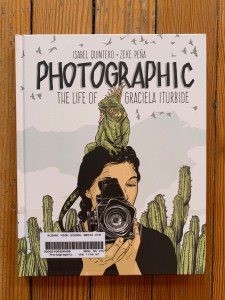
Spending a massive amount of time reading fiction for my year-long commitment to the Best Fiction for Young Adults blogging team means that I need a mental break once in a while to read nonfiction, poetry, short stories, and anything graphic to keep me fresh for fiction. And in the words of Frenchman Stendhal, “a good book is an event in my life.” Photographic: The Life of Graciela Iturbide is one such book from this past weekend. It hasn’t left me.
Published in 2018, I saw the cover frequently and wanted to get my hands on it. Focused on the life of Graciela Iturbide, she is the title character and the most memorable. A life that endured a tragedy, the death of a child, which she never talked about, it threw her into a tailspin and she became uber-focused on photography by specifically documenting her native Mexico.
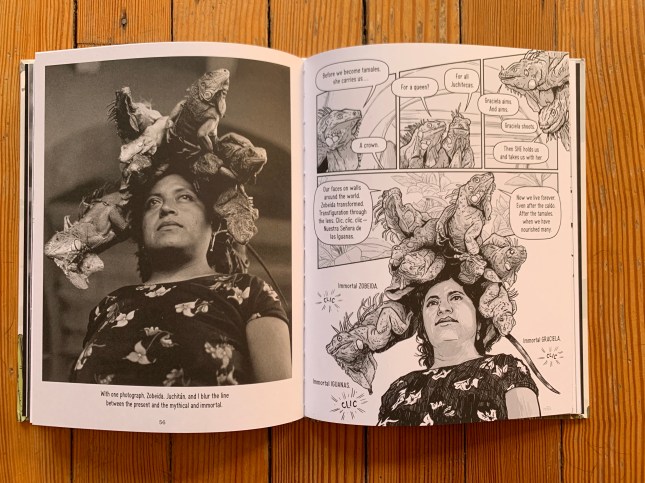
 And it’s the likes of illustrator Zeke Peña combined with the words of Isabel Quintero that merge Iturbide’s photography with an illustrated style that brings it to life two-fold. The most memorable panel, the one in which Peña re-works the iconic woman with the iguanas side by side with the photograph courtesy of Getty Images, is striking. And there are other panels that captivate the reader in their presentation and solidifies Peña’s skill both individually and collaboratively working with Quintero’s storytelling. Plus, the font itself worked seamlessly for my eyeballs to move around the pages and panels. Even Peña recognizes the beauty of illustrations by thanking readers “you and your eyeballs for reading this book”. You’re welcome, Peña. Thank you for illustrating it. And it got me thinking about my own life at thirty-something– how would Peña draw mine? What would Quintero write about me? Perhaps the best kind of self-reflective writing prompts could come from this book.
How can we know so little about Iturbide? I am grateful to author and illustrator for starting the conversation with this glorious ode to her life and skill. And nothing says it better than Quintero’s words on Iturbide’s travels in this memorable quote: “Traveling is lonely. Not a desperate loneliness but the kind that asks me to reflect more deeply about the place I’m in. The wings behind my eyes open wide; traveling helps me see my many selves better”.
I advise (that like me) you read this more than once, keep it close by to recommend often, order multiple copies, and encourage budding photographers with this graphic novel biography.

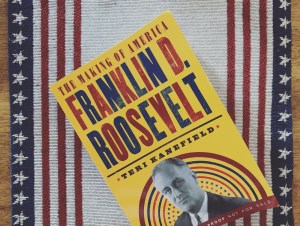 What works well for the series is the chronological organization of biographical information that is equal parts intrigue and straight facts. There’s a humanity in Kanefield’s delivery that does not dilute the truth, yet weaves a story of a person hellbent on creating an America that they had envisioned as they rose to notoriety.fame. With a mix of photographs and eye-catching covers, they’re as star-spangled as the flag.





 On May 20, 2018, my family and I embarked on a journey of epic proportions inspired by the Alison Deering book illustrated by Bob Lentz called
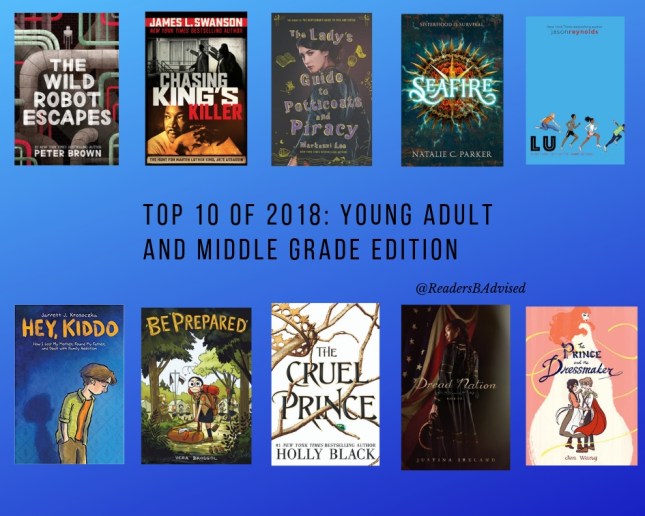
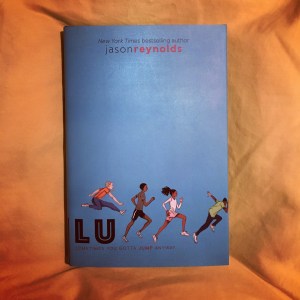 What was I thinking? Plenty of us avid readers have felt sadness in the last book of a beloved series and this one was no different. Reynolds is the GOAT, period. Whoever designed the covers needs a raise. Reynolds’ ability to create deep characters with authentic middle grade voices has been spotlighted in this series and shines again with Lu, another track star under Coach’s tutelage who is helping his father right his wrongs while hopefully looking toward a future with a baby sister when his mother should have never even been able to have him. Rich with inspiration and motivation, it’s the power of our human experience through Lu whose Albinism hasn’t changed his perspective much, in fact his newest job as big brother has allowed him to grow as he passes through the awkwardness of youth.


 Readers Be Advised