
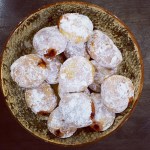
 Fat Tuesday is also Paczki Day. Paczkis are Polish doughnuts usually with jelly filling and rolled in either powdered sugar or granulated sugar. They’re made on Fat Tuesday in preparation for the Lenten season’s austerity. This past Monday, I homemade them and was excited to share them with my family, colleagues, and neighbors who all know my love for baking.
So it won’t come as any surprise that I also enjoy reading about books with cooking and baking in them. I’ve read Notes from a Young Black Chef (nonfiction biography) and With the Fire on High (young adult fiction) to Alone in the Kitchen with an Eggplant (nonfiction short story collection) and Maker Comics: Bake Like a Pro! (graphic novel) to name a few.


Recently I’ve read two others that I’d like to share a bit about: the Love Sugar Magic middle grade series and Salty, Bitter, Sweet.


While the rest of the series will be in the queue, I have only listened to the first book called A Dash of Sugar in which Leonora Legrono’s family owns a bakery preparing for The Day of the Dead when she accidentally discovers that she is a bruja, a witch of Mexican ancestry like her mother and the rest of her sisters who use magic in the kitchen. It’s a heartfelt mix of family, culture, and baking with a deliciously humorous plot.
The second, Salty, Bitter, Sweet, is firmly a young adult title that follows Isabella Fields to France on her father and stepmother’s cherry farm where she is going to be apprenticing with a famous chef and a group of teenagers vying for a spot in his Michelin-rated restaurant. Her passion for perfection in the kitchen is thwarted by the mishaps during her apprenticeship and her stepmother’s stepson visiting for the summer. It’s a solid, well-woven story with a beautiful backdrop and rich stories of fond family memories in the kitchen. Look for it on March 3rd.
In the comments below, please recommend any more books about food that I should read!


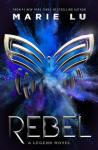 Marie Lu’s Rebel, the fourth book in the Legend world that takes place in the future in which Daniel’s brother, Eden, is attending university in Antarctica where they’ve settled while June is still working in the Republic. The story, like Lu’s others, have two narrators that are differentiated by the text color as they pace the book out with the developing conflict as it switches fluidly back and forth. The world she creates is superb and the futuristic action is heart-pounding.
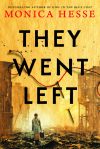 Monica Hesse’s yet-to-be-released They Went Left that’s anticipated for an April release. Not only have I read Hesse’s other YA historical fiction titles, but her adult nonfiction book American Fire. All showcase her skillful writing. This one fits in a newer focus of YA books on the liberation of Jews after World War II like the Morris finalist from last year, What The Night Sings by Vesper Stemper. Hesse dives into this world with Zofia, who has lost most of her family but still holds out hope that her younger brother Abek has survived. Shifting to several places before settling into a relocation camp where she meets a brooding boy, Josef, she is reunited with Abek but questions about what both boys have been through since the war broke out provide the riveting content of the book’s second half. Put this at the top of your list for April.



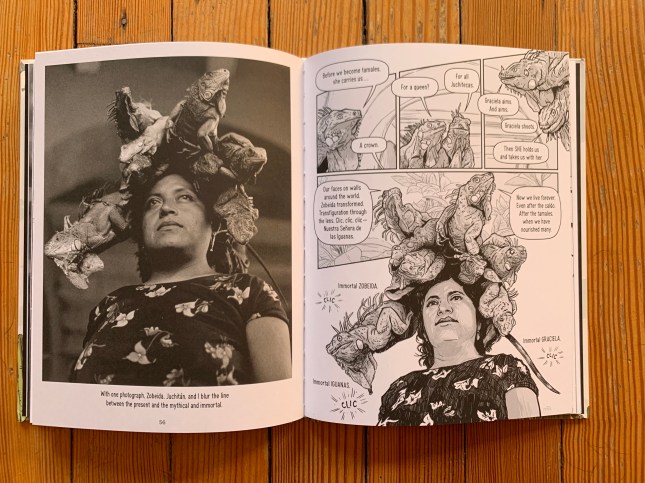
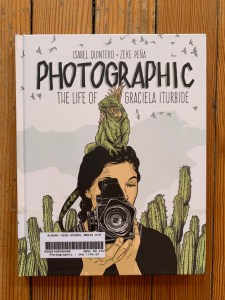 And it’s the likes of illustrator Zeke Peña combined with the words of Isabel Quintero that merge Iturbide’s photography with an illustrated style that brings it to life two-fold. The most memorable panel, the one in which Peña re-works the iconic woman with the iguanas side by side with the photograph courtesy of Getty Images, is striking. And there are other panels that captivate the reader in their presentation and solidifies Peña’s skill both individually and collaboratively working with Quintero’s storytelling. Plus, the font itself worked seamlessly for my eyeballs to move around the pages and panels. Even Peña recognizes the beauty of illustrations by thanking readers “you and your eyeballs for reading this book”. You’re welcome, Peña. Thank you for illustrating it. And it got me thinking about my own life at thirty-something– how would Peña draw mine? What would Quintero write about me? Perhaps the best kind of self-reflective writing prompts could come from this book.


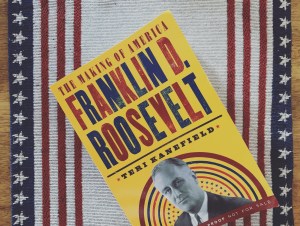 What works well for the series is the chronological organization of biographical information that is equal parts intrigue and straight facts. There’s a humanity in Kanefield’s delivery that does not dilute the truth, yet weaves a story of a person hellbent on creating an America that they had envisioned as they rose to notoriety.fame. With a mix of photographs and eye-catching covers, they’re as star-spangled as the flag.


