RSS

Author Archives: Alicia Abdul

Unknown's avatar

About Alicia Abdul

You'll find me drinking tea in a dress and reading... or making lists.

Hollow out time for Wolf Hollow

WolfHollowThere’s something about reading a beautifully-crafted and lyrical children’s book that instantly reminds you of the classics like Charlotte’s Web, Tuck EverlastingPeter Pan, and James and the Giant Peach.  Lauren Wolk’s Wolf Hollow will become a contemporary classic if I have any say.

Annabelle has tried to befriend Betty, a new girl living with her grandparents in their Pennsylvania town, but it’s difficult. Betty wants Annabelle to bring her things or she’ll beat her. And Betty does in addition to terrorizing a friend of Annabelle’s and a younger brother. But the absolute worst occurs when Betty begins blaming an innocent military veteran who lives on the outskirts of town. And mild hysteria comparative to a witch hunt ensues. Yet Annabelle knows the truth and is able to spend time with Toby, the veteran and neighbor, hearing stories about his life so moving that Annabelle’s confession to readers is that “I held very still and waited, trying not to hear it all, hoping, even at just eleven, almost twelve, that I would never have sons of my own.”

Tragedy is at the very root of the book in powerful scenes that transcend readership and touch on society’s reactions to marginalized individuals, but also what the power of kindness can do to overcome these baseless conclusions.

It should be on everyone’s reading list from children that is the intended audience to adults since they can connect instantly with Annabelle’s upbringing and Toby’s post traumatic stress. Yet one of the best elements is its resolution: messy, aggressive, powerful, and for most readers unsatisfactory in that while there is some hope, a lot was lost in the process. This ending is my kind of ending.
 

Six sensational cultural stories

This slideshow requires JavaScript.

After finishing Tara Sullivan’s The Bitter Side of Sweet two days ago, I was moved by sibling relationship between Amadou and Seydou, but also blown away by the atrocity that is child labor on cacao farms in African countries. It was pointedly apparent when the boys taste chocolate for the first time and are shocked that what they farm is a treat for children across the world, while they are beaten and starved and forced to work to farm the bean. So with a return to my six sensational lists– here are my favorite multicultural stories that span interest level.

  1. The Bitter Side of Sweet by Tara Sullivan: A tragic circumstance brings Khadija to the farm where Seydou and Amadou are forced into labor and her willful disobedience and a farming accident press the three to escape their captivity in a fast-paced action story with a powerful message.
  2. Touching Snow by M. Sindy Felin: Karina’s Haitian family is fearful of authority and being deported even after Karina’s stepfather visciously attacks her within inches of her life. As she heals, she is also coming of age and questioning both her sexuality and her purpose.
  3. Garden of Stones by Sophie Littlefield: With three generations of women involved in the story, it’s ultimately about the Japanese internment camps and the relationships, abuses, and survival techniques employed to be able to continue living.
  4. Esperanza Rising by Pam Munoz Ryan: Need I say more about why this book is on the list? A gorgeously lyrical story of Mexican immigrant farming lands in the United States with Esperanza’s beautiful descriptions of the earth’s heartbeat and her mother.
  5. Morning Girl by Michael Dorris: Having read this over ten years ago this character-driven story of Morning Girl and her brother Star Boy as they co-exist in their beautiful country through Christopher Columbus has other plans. The political undercurrent is useful in providing a perspective while the morality creates a complexity that is fitting for older readers.
  6. Keeping Corner by Kashmira Sheth: Leela has led a privileged life until the death of her husband who she’s never met. At her young age, she’s expected to traditionally mourn all while a revolution is taking place led by Gandhi both against British colonists as well as India’s caste system. It’s depth is moving and educational.
 

Diverse debut

Meredith Russo was recently interviewed by School Library Journal on diversity with her debut book If I Was Your Girl, which came at an awesome time as I’d just finished the book last week. Within the week, also making sure I returned it to the public library after booktalking it to a group of other librarians at a book club and adding multiple copies to our next order for the school library.

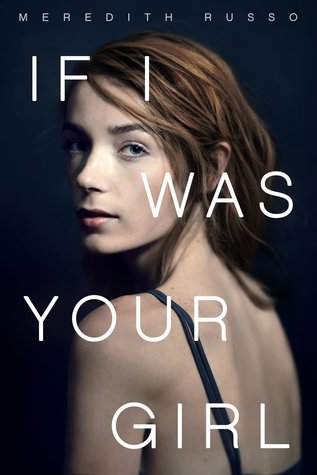
IfIWasYourGirlThe premise is that Amanda is going to live with her father after a beating in a mall bathroom in the town where she currently lives with her mother. Thinking that Amanda can start fresh in a new place, the obstacles of truly being accepted by her father and then being a girl in a new school are enough to wreck her nerves. But, things are settling in well and Grant, a kind-hearted boy, has already taken an interest in her. And while she wants to tell Grant about her being born a boy, his insistence that he’s not interested in any “secret” puts Amanda at ease. For the first time, allowing herself to truly enjoy being herself, though she has told another girl she befriended at school.

It’s a strategically told story with a crisp voice that is neither too flowery nor too pointed. There is a comfort in Russo’s storytelling that allows for a bit of complacency before another traumatic event unfolds, sending chaos into Amanda’s life yet again. It’s the characters, from Amanda and Grant to her father that explore the emotions of a trans experience. I think it’s a cut above others in its categorization, serving a more rounded understanding of transitioning still feeling guarded, a necessary measure to protect oneself. It explores religion and homophobia, secret-keeping, and family.

It’s got a provocative title and cover that compliment each other, which is where I always start with a book. Then add to it an author’s note about Russo’s own experience and it’s a book needing to be on everyone’s shelf to read and then share widely.

 
1 Comment

Posted by on June 5, 2016 in Authors, Fiction, Young Adult


“The Greatest”

With the passing of a legend, both in sports and in life, I would be remiss not to remind everyone to revisit his greatness in the Charles R. Smith book illustrated by Bryan Collier called Twelve Rounds to Glory: The Story of Muhammad Ali published in 2007. There’s a reason that it remains on our high school summer reading list with multiple copies sitting on our shelf: it’s the interest, the history, the personality, and the unbelievable understanding of who Ali was in a mere 80 pages.

What I loved about it then and continue to love about it now is how it captures Ali’s essence. It’s like watching director Baz Luhrmann re-create Romeo + Juliet for a contemporary audience, yet you’re still hearing Shakespeare’s lines and get it. Smith uses Ali’s prophetic lyricism and skillful word play to deliver punch after punch to the world and his opponents. Combine this with Collier’s skillful renditions of famous fights and it’s a knockout. Readers learn the chronology of his life and his impact during the Vietnam era. This is a bonus to learning about his athletic prowess, being delivered by Ali’s own words. Those who have seen and heard the clips or are old enough to have watched him during his illustrious career can hear his words spoken as they read them on the page.

If you haven’t picked up this book, you must.


Meeting new people

Over Memorial break, I had the chance to meet two people. James McBride’s mother and Ruth Bader Ginsburg. Yes, just like my fictional friends, I also believe I’ve conversed with real people who’ve been written about or written about themselves. How I would like to sit down for tea with both of them. And with both The Color of Water: A Black Man’s Tribute to His White Mother and Notorious RBG: The Life and Times of Ruth Bader Ginsburg, the writers completely capture the essence of the person… the magic of the person, certainly not an illusion of them.

Though this has been around for close to twenty years, I’ve only just read it and was sucked in in the first chapter. McBride shares the intimate details of his mother’s childhood through parenthood and alongside it narrates the story of his life. Yet, hers truly shines with a uniqueness that is just as apt as her description of God when asked by McBride, that God is the color of water in that he has no color. She is without description and the unraveling of it is skillfully executed.

Another skillful organization is in comparing Notorious BIG to Ruth Bader Ginsburg as Carmon and Knizhnik discuss. How could Tumblr make a pop icon out of the second female Supreme Court justice? It’s easy because Ginsburg is renegade. Using the theme of Notorious BIG’s songs and legacy readers see her power, her words, and her dedication to the law and fighting for equal rights. The variety of information is captivating, from her dissenting opinions (and notes on understanding them) along with images, and a chronology of her rise including plenty of quotes attributed to her. She embodies strength and it shows throughout the book.

In fact, both books focus on their inner strength and motivation to be better and make others better in the process. Both Ruth McBride Jordan and Ruth Bader Ginsburg not only share a name, but they share some magic too.

 
Leave a comment

Posted by on June 2, 2016 in Adult, Nonfiction


Pop Shakespeare

After having just read and posted about Exit, Pursued by a Bear and now just finishing after an obsessive day of reading Dreamers Often Lie by Jacqueline West, I am elated by the resurgence of Shakespeare-inspired YA fiction.

For this story, there is no doubt that Shakespeare seeps from the pages from the title to the incorporation of a main character who acts: you’d be hard-pressed to find an actor who hasn’t played a character in one of his plays. Jaye is now in high school and playing Titania in A Midsummer Night’s Dream opposite her childhood friend, Pierce, who has been distant over the last few years, but is taking up acting in his senior year. Yet Jaye’s life has been rocked by a brain injury during a skiing accident with her mother and sister. Not only does she want to leave the hospital to get back to the play and her friends, she’s feigning good-health when instead she’s seeing and hearing Shakespeare characters including the bard himself, Hamlet, and Romeo. Romeo turns out to be the new kid in town and a love interest for Jaye, while also epitomizing the possible bad decisions that Jaye has continuously made and that had disappointed her father before his untimely death. Insert the love triangle as Pierce becomes overprotective of the healing Jaye.

There is much to discover within the pages, from lines from the plays to Jaye’s family dynamics, healing from a brain injury, and healthy decision-making. The writing and pacing engage readers from start to finish with a seamless incorporation of the hallucinated characters. So once readers tune in to Jaye’s new normal, the book is easy to follow. It’s not about mental illness and it’s not true magic, it’s simply her brain’s reaction to the trauma. And she certainly doesn’t want to admit it to anyone either.

With the amount of drama between the pages, it doesn’t have to be a “literary” teen who will enjoy it because it’s contemporary realism with a pinch of canon. But you better be ready to hear from them once they turn the final pages. It wouldn’t be true Shakespeare without it.

 
Leave a comment

Posted by on May 31, 2016 in Authors, Fiction, Young Adult


Strength and sports

ExitPursued

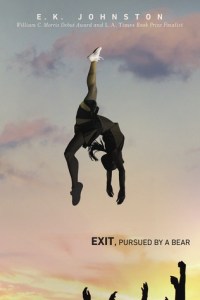
A buzzed-about book released in March, I was elated when it finally arrived in the library. It starts with the beauty of the back-lit cover of a cheerleader in flight and the title: Exit, Pursued by a Bear and ends with the significance of a story about a protagonist sexually assaulted. There are plenty of YA books that discuss sexual assault and their beauty is in the range of reactions and secondary characters that the writers incorporate to paint a picture where teen readers can learn, understand, empathize, and be educated in how to prevent, deal with, or help when conversations turn to rape.

Hermione’s reaction is off-putting to many in her school, on her squad, and even her therapist because she responds with strength and the resolution to keep moving forward. Their reaction to her is that she is not “dealing with” the rape if she has returned to school and her squad, even when the rapist has not been caught. It’s everyone’s response to her response that makes this book poignant. There’s also a deep appreciation for Hermione’s relationship with her best friend, Polly. Polly is there to say the word rape, Polly is there to stand by her friend and tell her that it’s okay to cry. It’s not another boy who is there to save the day or fall in love with her to lift her up, but a friend. Add to this that Johnston includes decisions regarding the option of an abortion and you have a well-rounded picture of the range of experiences, decisions, and emotions that victims of rape endure.

There are certainly situations that I take issue with including an over-reliance on her friend Polly to help in decisions more suited for Hermione’s parents or the resolution of the story itself, but it does not detract from the book’s message: you can be who you are, have a terrible thing happen to you, and still have the freedom to be who you are. Yes, experiences can change you or your worldview, but they don’t always have to. Stop thinking about what everyone else thinks you should be doing. It’s a powerful message for teens who are continually discovering who they are and what they’re made of while also still addressing important topics regarding safety and sex.

 
Leave a comment

Posted by on May 22, 2016 in Authors, Young Adult


Don’t “Look Past” Devine’s latest

Having been afforded the opportunity through Netgalley to read Eric Devine’s newest title that will debut this fall, I’m hopeful that the tide is turning on GLBTQ titles: instead of it being the sPrintole focus of the story with a weak storyline for the sake of having a GLBTQ character, newer fiction is going deeper. The stories are mysteries and fantasy and science fiction with characters that are GLBTQ. And that’s exactly what you get in Look Past.
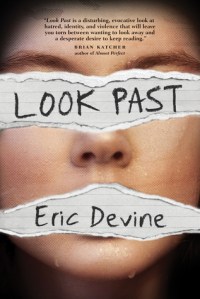
Avery is used to sideways glances and cutting comments, but he is past it affecting him. He has positive relationships and kind friendships, but in the opening scene, Avery is in the woods, linked arm-in-arm with others from the community searching for his friend Mary. Mary is missing and while no one wants to think “presumed dead”, that’s exactly what happens when her body is discovered.

Now Avery’s mission is to solve the crime, especially now that he’s been pulled in and his love for Mary propel him to push through the animosity and hatred. He’s willing to put himself in harm’s way and this keeps us up at night.

Chills and thrills. Religion. Hopefulness? And we pause and hold our breath when Avery is patted down. Angered, frustrated. We know. They know. It’s moments like this that make Devine’s book thoughtful, rich, and empathetic. I can’t wait to share this widely– it is not a niche book, not by a long shot.

 
Leave a comment

Posted by on May 19, 2016 in Authors, Fiction, Young Adult


I’ll take it sunny-side up too

You know that feeling when you clutch a book to your chest and relish in the delight of reading something so lovely and wonderful and graceful? Yes, that just happened today when I finished reading Jennifer and Matthew Holm’s Sunny Side Up, a graphic novel set in the 1970s featuring Sunshine aka Sunny. I’m not surprised that it’s winning accolades and ending up on recommended reading lists.

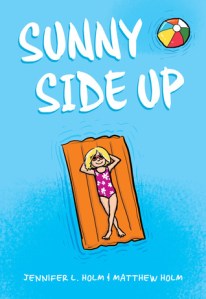
In the vein of Raina Telgemeier and Victoria Jamieson, our main chSunnySideUparacter is tween/teen and dealing with life. The realistic, down-to-earth kind of story that makes it an “every person” book, not for a specific subset of readers. In addition, like the other graphic novels’ illustrations, I am on board with the vivid coloring and rounded illustrations that are in stark contrast to darkly explored stories in black and white.
Sunny is staying with Grandpa in Florida for the summer and while it’s not the best fun, meeting the groundskeeper’s son who is fanatical about superheroes, provides an avenue for Sunny to find her voice. After a summer of sleeping on a squeaky, uncomfortable pull-out bed, eating dinner at 4pm, finding her grandfather’s stashes of cigarettes, and feeling like she separated her family, Sunny’s shining moment is when it all comes out. She confesses her frustrations to which her grandfather responds with the most-appropriate sentiments: he’ll stop smoking, they’ll go to Disney World, find a different bed, and that her brother’s issues are not her fault. And as their summer comes to an end, he reminder her to “keep her sunny side up”, which is an endearing sentiment that plays both on how attitude is everything and on her unique, hippie name.

Everyone should remember to keep their sunny side up.


Logical read

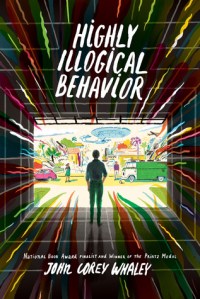
The younger brother book to Nicola Yoon’s Everything, Everything, Highly Illogical Behavior by John Corey Whaley is endearing and fascinating. A snapshot of Solomon’s life living withHighlyIllogicalBehavior agoraphobia, Whaley  focuses as much on Solomon’s life functioning indoors after an anxiety attack pushed him over the end and he became “that kid” who took off most of his clothes and went into the school’s water fountain. The debilitating mental illness keeps him inside, going to school online and entertaining himself with books and Star Trek. His parents are in tact. And now he is befriended by a former classmate, Lisa, who has an ulterior motive along with befriending Solomon.

The realistic conversations both spoken and unspoken by Solomon and Lisa along with Lisa’s boyfriend Clark, Solomon’s parents, and grandmother lend itself to an authentic exploration of agoraphobia and anxiety disorders. Solomon is content having not left the house in three years. He also realizes that he’s gay– this discovery is neither life-altering or unexpected– rather just another layer to the story. It’s juxtaposed by the insistence by all of Lisa’s friends that her boyfriend, Clark, is gay.

Readers explore the world as Solomon sees it, how his parents are reacting to it, and the friendship forged by Lisa and Clark with him. Each character has a strong voice, all with a vested interest in Solomon’s health and well-being. This can be added to the growing body of YA literature that focuses on mental health and mental illness and does it well.

 
Leave a comment

Posted by on April 28, 2016 in Authors, Fiction, Young Adult