
Our high school hosted its first author visit in 2011. I’ll never forget it both as a first for the school and a first for my librarian career. It was also Ellen Hopkins (go big or go home, right?) And it just seemed to stick. I can honestly say that it is a part of our school culture now. It’s not if we have an author visit, it is when.
Jeff Zentner was our second author visit of this school year, with our first being Nic Stone as part of a partnership with The New York State Writer’s Institute. Zentner visited this past Thursday and resoundingly captivated our student and staff attendees with his stories from music, publishing, and law. It’s one thing to write for teens and it’s another to know what kind of stories they’ll be engaged in during school visits. Zentner certainly knew our teenagers, regaling them with snapshots of cases he’s tried, a few chords on a guitar, and a no-flash-photography cover reveal for his upcoming book Rayne and Delilah’s Midnite Matinee. In return, our students shared their concerns with writing their own stories, played their music for him, and queried him on politics. He spoke Portuguese with a student, signed posters inspired by his books, and sat “between two ferns” interview-style in a conversation about leading a creative life.
I took notes on inspiring messages he shared, teared up watching our students show off their sound recording studio and music, and smiled from ear to ear at another successful author event when I sipped my tea after the day was done in the darkness of my living room viewing pictures taken by our school’s communications staff.
Days before the visit, an art teacher shared a few images on her social media account with a group of students touring an art museum on a field trip. She quoted her colleague who said “this is why I became an art teacher” as she watched her students enjoying themselves at the museum. I had commented that we all need days like these. And not more than two days later, that day was again knocking at my door because nothing can beat the connection that students make with authors: it could be from reading their books. It could be the motivational messages imparted by them. It could be validating our teenagers’ struggles. Zentner’s words struck a chord when he mentioned that Toni Morrison was 39 when she published her first book, and she is a pillar in the literary world– writing knows no age. Readers want mirrors, windows, and sliding glass doors. Everyone has a story to share.
Are author visits stressful? Absolutely. No matter how many we do, they’re still nerve-wracking. Are they worth it? Every last moment spent on them because I get to talk to the students for days and years after the visit about what we learned from their visit. I still reference Jason Reynolds’ message from his with us two years ago. Plus, I feel more connected to my colleague as we support each other in our efforts to build the best library program we can for our school because they deserve it.
As I close, I’ll share several of my favorite pictures courtesy of our communications person, Jake. And, a picture of a sweet treat I made to celebrate the sweet success of the visit.


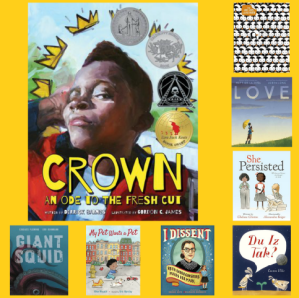


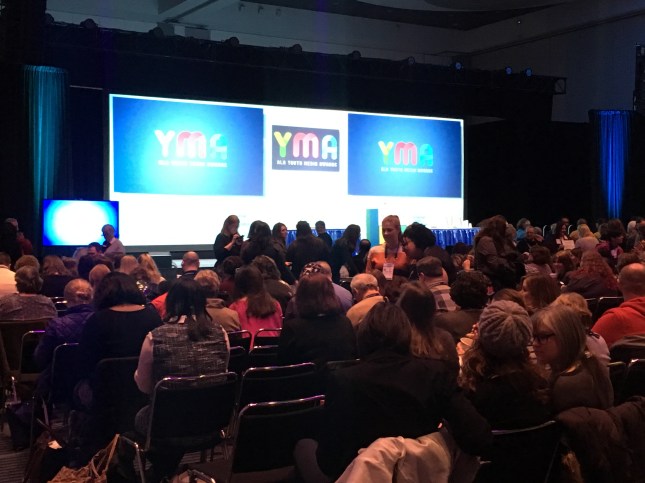
 Some of these will get their own posts, but like I said to the teacher today when I was dropping off some books for her to peruse in preparation for our new adventure, “you made my librarian heart full today, thank you!”
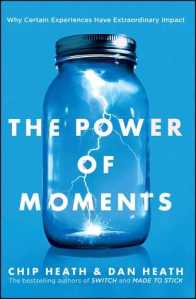 As I started to shape what I wanted to share in this post, I also remembered that a fellow New York State librarian, Sue Kowalski, often uses the hashtag #momentsthatmatter when she posts to Instagram, usually when sharing pictures of her mother, but friends and family. She knows the value of a moment. I wonder if she could have contributed to the book? In essence, the Heath brothers set out to demonstrate to readers how experiences in our lives have an “extraordinary impact” and drill down to the four elements of powerful moments: Elevation, Insight, Pride, and Connection. They reluctantly share the acronym to easily remember it as EPIC.
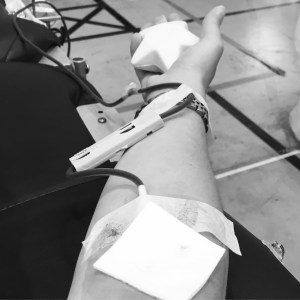 As a large city school district, we have the ability to host three drives a year: October, January, and May and collect about 100 units per drive which is amazingly powerful. A smattering of staff, but the majority of these units are donated by upperclassmen looking to help our community.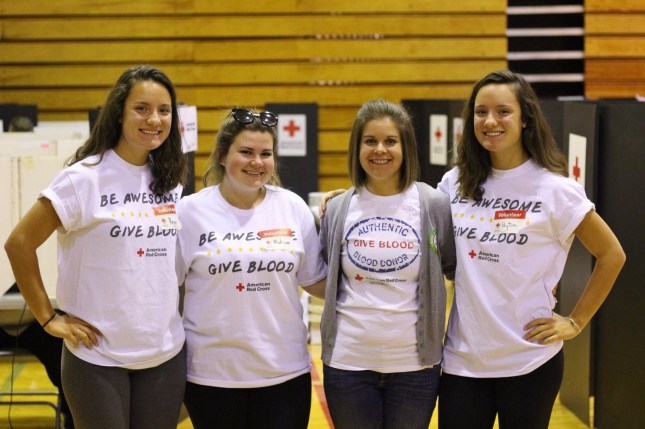







 Readers Be Advised