Inspired by my good friend and elementary school librarian, Stacey Rattner, who has been blogging each weekday to reach her students, I decided that each day in April I’d blog to engage with the blogging community, school librarians, and readers.
While I’ve had this blog for six years and made 240 posts, I’m going to start at the beginning, like any good story, and re-introduce myself.
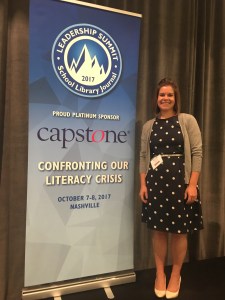 I’m a high school librarian going in to my fourteenth year, all at the same high school. Previously, I taught a year of middle school English (7th and 8th grade) in a rural district near my hometown before I moved to my current home and city. I share my librarian duties with a fabulous co-librarian because our high school boasts 2,600 students and 10,000 in the district. Besides being the school librarian, I also advise for our school’s Anime Club, coordinate our school’s three American Red Cross blood drives annually, coordinate the CAS component for our IB diploma candidates, and co-chair our school’s professional development committee. While it may seem like a lot, it all balances out pretty nicely because I keep myself fairly well organized. You’ll notice my favorite quote is Martha Stewart’s “Life is too complicated not to be orderly,” which is really my life motto.
And if I had to pick a favorite aspect of my professional life, it’s sharing, talking, and knowing about books which has led to opportunities on YALSA award and selection committees and presenting locally, state-wide, and nationally about various topics that relate. Because without reading, no learning can truly take place. And I find that I enjoy presenting because I learn more in the process of teaching others– I like the challenge. I keep track of it all on my website: a track record of where I’ve been and what I’m up to along with this blog.
Personally, I love spending time at home as we remodel our old house with my husband and our two newly-turned 11 year old boys, plus a big dog named Gunner. Usually there’s a sweet aroma of something being baked. My personal Instagram is littered with my baking while my public Instagram is usually all about the books. Follow me!
There you have it, a re-introduction. I’ve got plans for posts daily but if there’s anything you’d want me to talk about, share it in the comments below or reach out on social media. In the meantime, how are you celebrating (and Happy!) School Library Month!







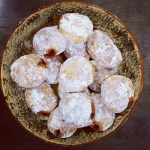 Fat Tuesday is also Paczki Day. Paczkis are Polish doughnuts usually with jelly filling and rolled in either powdered sugar or granulated sugar. They’re made on Fat Tuesday in preparation for the Lenten season’s austerity. This past Monday, I homemade them and was excited to share them with my family, colleagues, and neighbors who all know my love for baking.


 Romance is not a category of fiction that I seek out regularly. But give me a good romance on the small screen like Netflix has done with Jenny Han’s book series and I’m sold.