How do I begin this post? Do I start by profiling and detailing my love for Carrie Arcos’ We Are All That’s Left and go from there? Or do I start by sharing a bit about the students that I work with every day and then talk about her book? Or third, start with a chapter of my husband’s story and then talk about her book? Better yet, let’s talk about all three.
Years ago I ran a “Warring Worlds” book club at our high school library that was in direct response to having read a senior’s common app essay about escaping the war in Bosnia when she was a child and I was stopped in my tracks thinking that my husband, an Army veteran who spent time in Bosnia with the 10th Mountain Division could have been close by. It dawned on me how interconnected we all are. And even though some of our students had been born in the United States, we were sill embroiled in a war in Iraq and Afghanistan at the time, so everyone experienced war, just in different ways.
Every day I get to listen to our refugee students whose experiences are so different from my own. They know what it is like to be in fear for their life, they know what hatred looks like, they know how important education is when it’s often denied to them in their native land before coming to the United States.
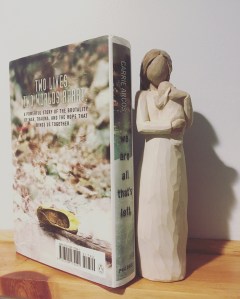 So when I began reading Arcos’ book and the first flashback chapter told from Zara’s mom, Nadja’s point of view in 1992 in Visegrad I knew there was something special. It took a little bit to build as there was an uncertainty between the dysfunction of Zara and Nadja’s mother-daughter relationship, but it ballooned once readers began to connect Nadja’s war-torn young adulthood and Zara’s discovery of Nadja’s hardships as Nadja lays comatose after a bomb detonates at the farmers market they were visiting. Zara is wounded and suffering from post-traumatic stress while again, her mother is hospitalized unable to communicate. It becomes less about the present day and more about Nadja’s survival against the atrocities of war while trying to hold on while the trauma of murder and rape burns through their family, neighborhood, and country.
Arcos eloquently details these dark times that keep from being morose because we know that Nadja survived and has a family, though her daughter is now just coming to realize what her mother experienced. It’s a powerful emotional tool to foil Zara’s life and Nadja’s and set against the backdrop of the Bosnian War delights me in that this event is rarely detailed in young adult literature. While it was neither here nor there that Arcos was not born or raised in Bosnia, her extensive research demonstrates command of the events and a powerful need to share it with others by connecting the generations. It’s masterful. And reminiscent of other titles like Erika L. Sanchez’s I Am Not Your Perfect Mexican Daughter and any of Ruta Sepetys’ historical fiction that shed light on imperfect times in our past. And heartbreaking the way Ashley Hope Perez’s Out of Darkness was. It belongs on the shelf with these pillars of historical fiction because of it’s profile of the darkness (and light) of humanity when all light seems to have been lost.
So I advise young adults and adults to savor this gem of historical fiction that brings the present and past together with heart and tenacity among the darkness.


 Readers Be Advised